
Last updated September 20, 2026
Full 25-point door and opener safety check with every visit - springs, cables, rollers, tracks, and your LiftMaster or Chamberlain opener included
You get a price before we start. It does not change when the truck arrives.

 Before
 After
After Before
 After
After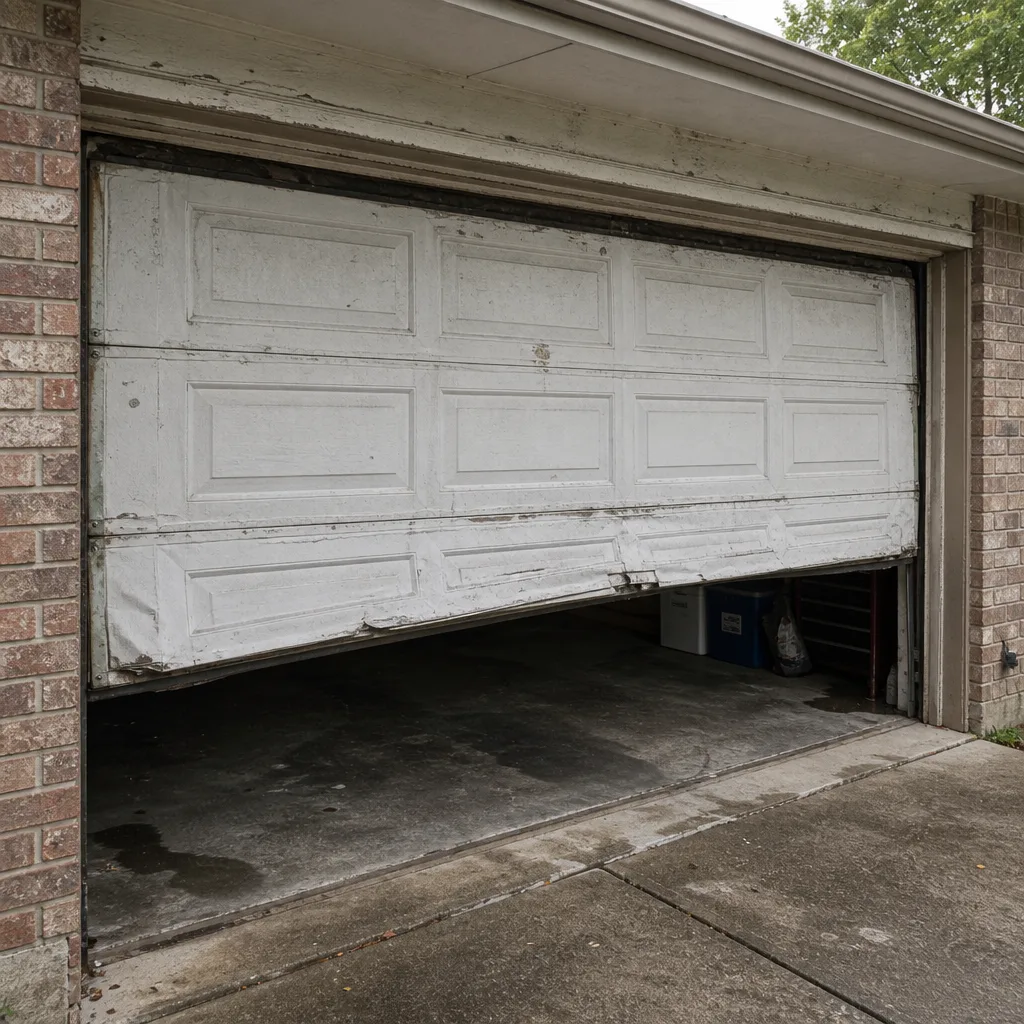 Before
 After
AfterDIY vs Professional Garage Door: The Fort Worth Homeowner’s Decision Guide
A wound torsion spring stores between 100 and 200 foot-pounds of torque. That’s enough energy to fracture a wrist if the winding bar slips, which it does when the cone set screw is corroded, which it is on most Fort Worth doors over eight years old. This guide is not about whether you’re handy. It’s about which components are on your door, what they weigh, what they store, and what happens when the release isn’t controlled. By the time you finish, you’ll know exactly which jobs you can do with a socket set on a Saturday morning and which ones need a professional with winding bars and a torque spec.
Quick Answer
DIY garage door work in Fort Worth is reasonable for low-risk components like weatherstripping, bottom seals, keypads, and rollers on extension-spring doors, but torsion springs, cable drums, and any track hardware under load require professional tooling and should not be attempted by a homeowner. The line is drawn by stored energy, not by skill level. Professional torsion spring replacement in Fort Worth typically costs $180 to $340, and that price includes the liability transfer, the calibrated winding, and a documented record of what was found. For a deeper look at pricing, see our Garage Door Cost Breakdown: The Fort Worth Homeowner’s Reference for 2026.
Table of Contents
- The Component Risk Classification: Where the Line Actually Is
- Torsion Springs: The Stored Energy Problem
- What Professional Tooling Actually Means: Winding Bars, Torque Specs, and Vise Grips
- The Honest Dollar Comparison: DIY vs Professional Roller Replacement
- Texas Liability: What Your Insurance Does and Doesn’t Cover
- How to Prepare for a Professional Visit and Cut Diagnostic Time
- Why Fort Worth Clay Soil and Summer Heat Matter for Garage Door Work
- Common Mistakes to Avoid
- When to Call a Professional
- Frequently Asked Questions
BeforeAfterThe Component Risk Classification: Where the Line Actually Is
Most garage door guides talk about DIY like it’s a personality trait. It isn’t. A homeowner who rebuilt a deck can still get hurt badly on a torsion spring because the failure mode is different: a deck fails slowly. A spring releases instantly. In our experience across Fort Worth, from Ryan Place to Saginaw, the homeowners who hurt themselves aren’t the ones who lack mechanical aptitude. They’re the ones who applied car-repair logic to a system that stores energy differently than anything else in the house. Understanding what’s actually in a garage door assembly makes every decision that follows cleaner.
Here’s the classification we use when we show up to a Fort Worth door. It’s the same framework a good technician applies before touching anything, and it’s organized by the one variable that matters most: stored energy.
Low Risk: Serviceable by a Careful Homeowner
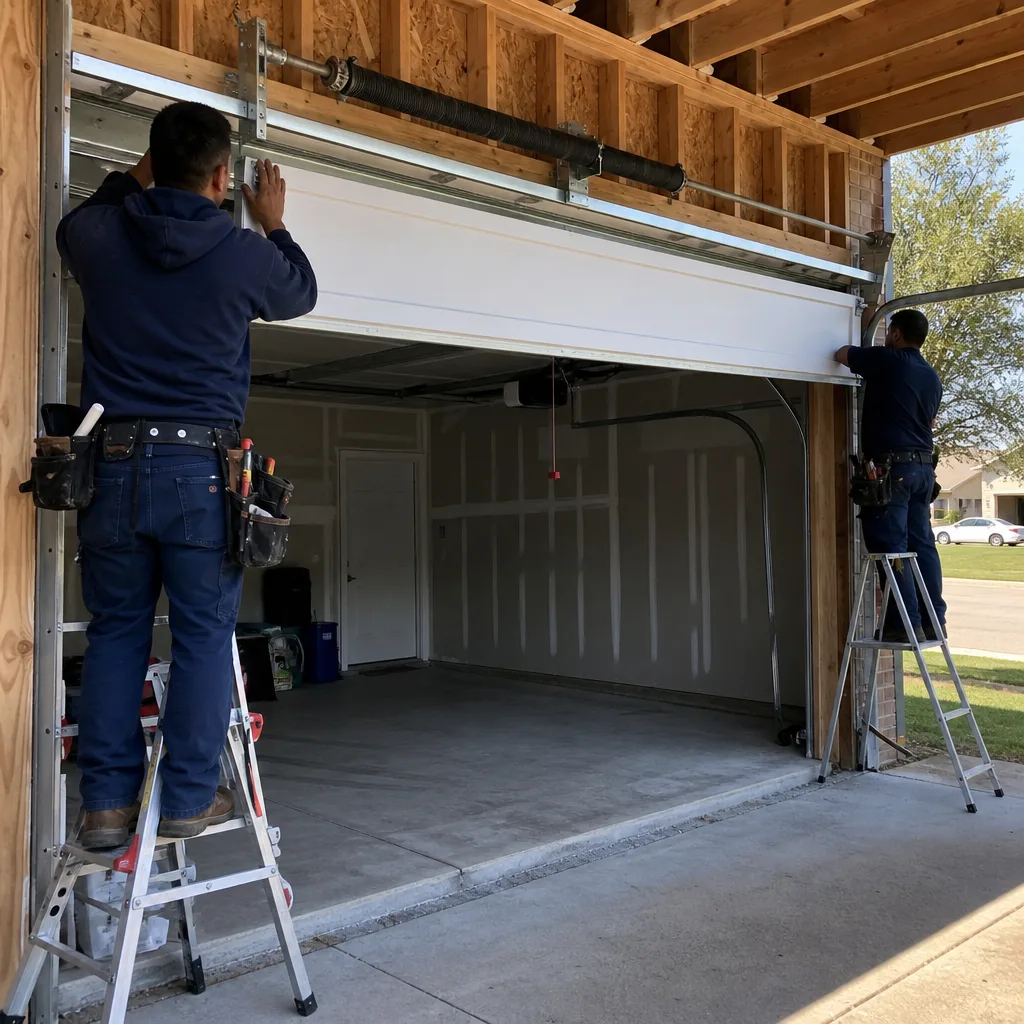
These components carry no meaningful stored energy. A mistake costs you time and a trip to the hardware store, not a hospital bill. The garage door system itself is a set of panels guided by rollers in tracks, moved by springs that offset the weight of the door. When the springs are extension springs, they’re the older style that run along the horizontal tracks, and once the door is fully open, the spring load on most of these parts drops to near zero.
- Bottom seal and weatherstripping. The rubber strip at the door’s base and the flexible edges along the frame. These wear from Fort Worth heat and are replaced with a utility knife and a ladder. No spring involvement at all.
- Keypad programming. LiftMaster, Chamberlain, and Genie keypads follow a learn-button sequence that the manual spells out. You press a button on the motor head, enter a code, and press enter. The opener’s logic board handles the rest.
- Rollers on extension-spring doors. If the door has springs visible along the horizontal tracks, the rollers can often be replaced without touching the spring system, provided the door is fully open and the roller comes out of the track with the door braced. More on this below.
- Lubrication and tightening. A can of white lithium grease on the hinges, rollers, and the torsion tube bearing plates is a legitimate maintenance task that prevents the kind of squealing that says “metal on metal” long before it becomes a call.
High Risk: Professional Tooling and Liability Transfer Required
These components store or transfer the door’s weight and spring force. They fail violently when handled wrong, and the injury doesn’t come from being weak or careless. It comes from not knowing the exact sequence, which you can’t get from a video because every door is slightly different in track wear, spring age, and frame level. The garage door repair process on these parts involves a calibrated torsion system that is not forgiving of improvisation.
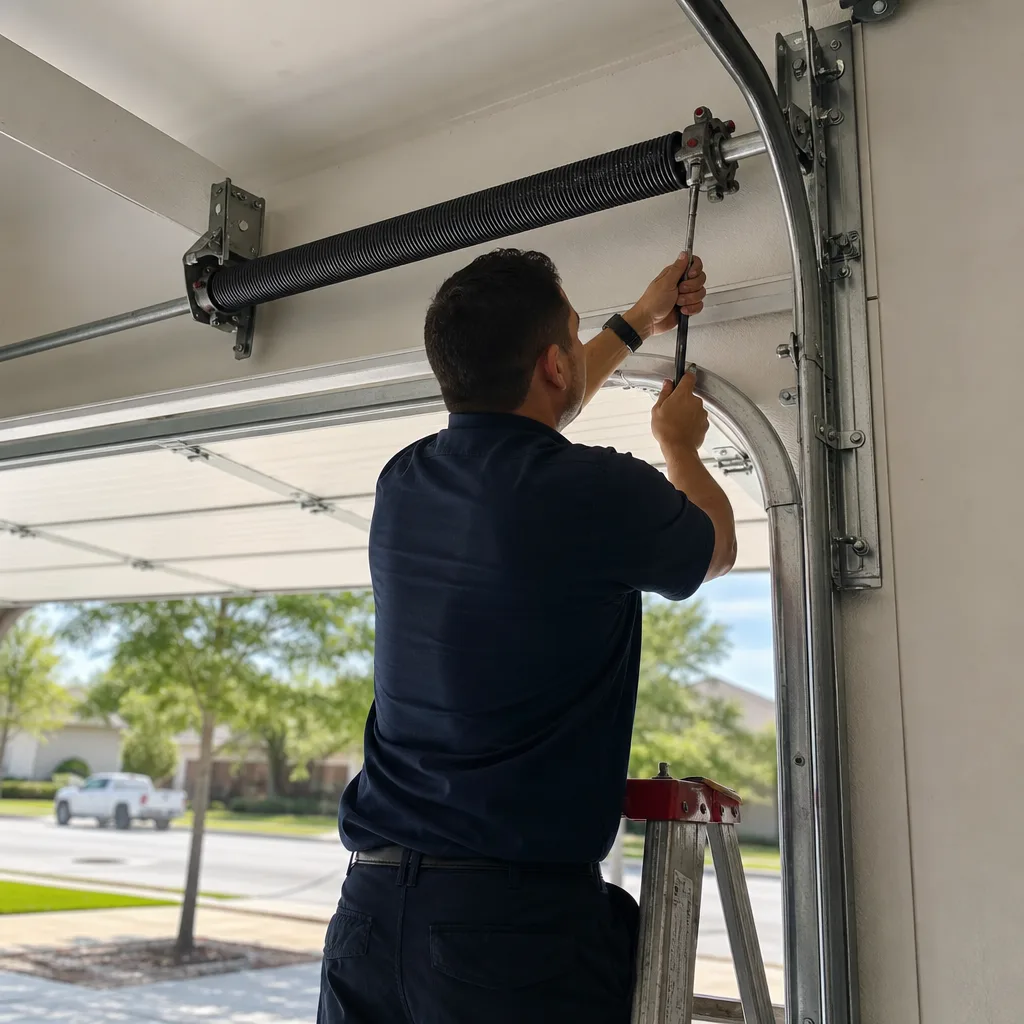
- Torsion springs. The springs mounted on the metal tube above the closed door. These are the high-risk component. Torsion spring replacement requires two winding bars, a specific winding sequence, and an understanding of how many quarter-turns correspond to the door’s weight and drum setup.
- Cable drums and lift cables. The cables run from the bottom brackets, up the sides of the door, and wrap around drums at the top. These cables are under full spring tension even when the door is closed. A cable that slips off the drum while under load can become a projectile.
- Track hardware under load. The vertical and horizontal tracks that guide the rollers. When the spring system is intact, these tracks are bearing the side loads of the door’s travel. Loosening or removing track bolts without first transferring the load to support stands is how you get a door dropping on a car or a person.
- Bottom brackets with cable attachment. These brackets connect the lift cables to the door. They fail from rust and metal fatigue, and when they fail, the door’s weight transfers suddenly to whatever is underneath it.
Torsion Springs: The Stored Energy Problem
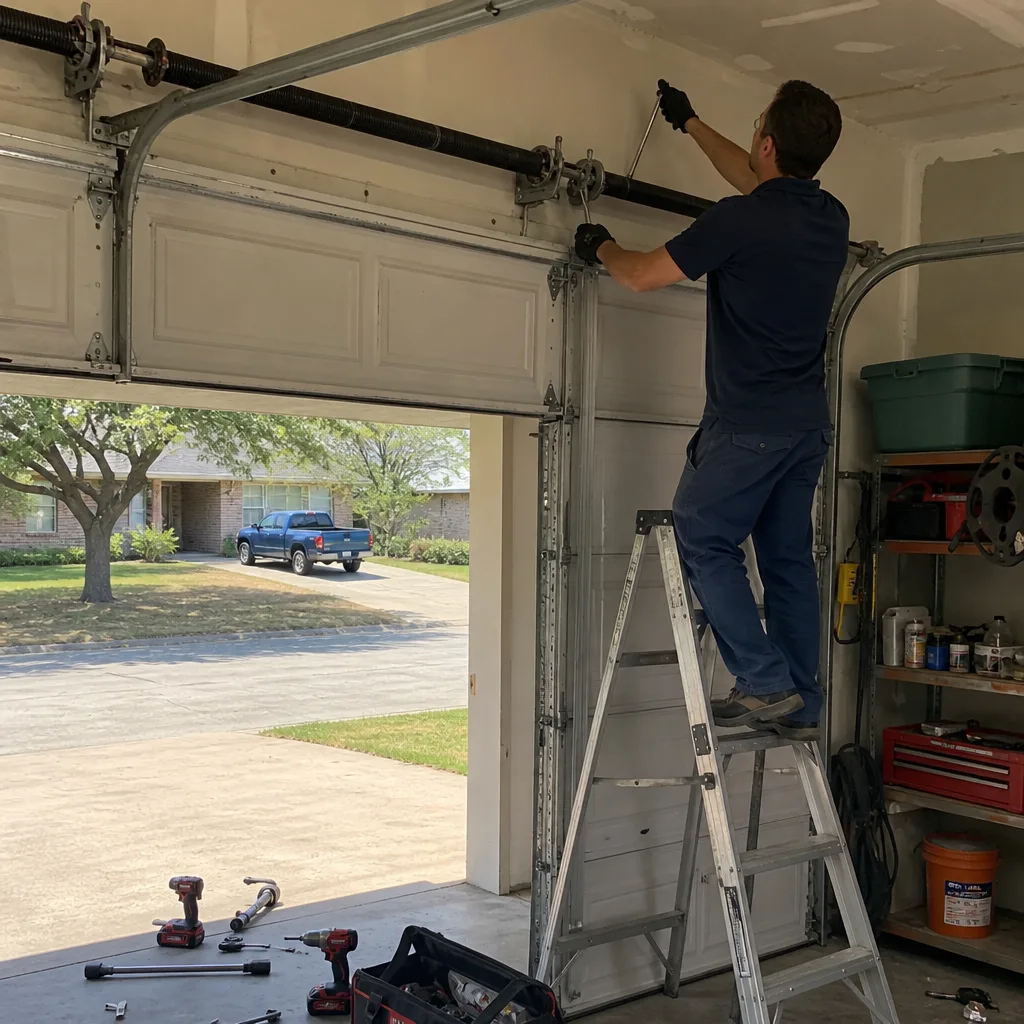
A torsion spring on a standard two-car garage door in Fort Worth is wound to store roughly ten to twelve quarter-turns of energy. Each turn increases the torque the spring exerts on the torsion tube. When the door is closed, that’s the maximum stored energy state. The winding bars are the only safe interface between your hands and that stored energy, and they’re not a tool you already own. The garage door spring repair process on these systems is governed by torque math, not feel.
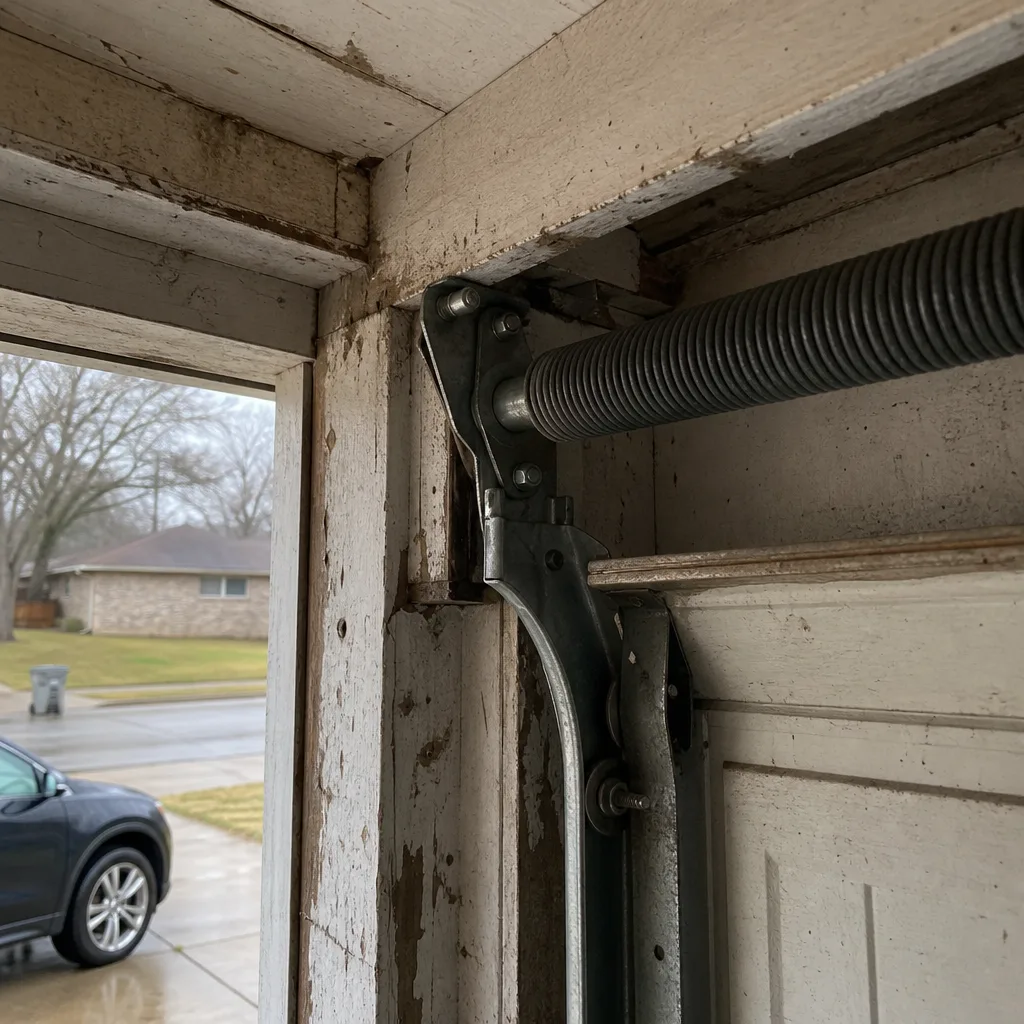
The failure mode that matters is the cone set screw. The cone is the metal fitting at the end of the spring where the winding bar inserts. The set screws hold the cone to the torsion tube. On a Fort Worth door that’s been through eight summers of heat and humidity cycles, those set screws corrode into the tube. When a homeowner applies force to a winding bar on a corroded cone, the bar can slip out of the cone socket mid-turn. The spring, now unwinding, spins the bar. That’s the moment the wrist fractures are documented. The bar doesn’t need to fly far; it just needs to move faster than a withdrawing hand.
The injury is not hypothetical. The U.S. Consumer Product Safety Commission has tracked garage door-related injuries for decades, and the torsion spring is the component most commonly involved when a DIY repair goes wrong. In our experience in Fort Worth, we’ve been called to doors where a homeowner got two turns into a winding job before the bar slipped and the spring unwound against the door, bending the torsion tube and popping a roller out of the track. The spring looked fine. The tube wasn’t. The repair cost tripled from what it would have been as a straightforward spring replacement.
If your door has two springs, one broken, you might think you can replace just the broken one. You shouldn’t. The other spring is the same age and has the same cycle count. It will fail soon, and when it does, the new spring will be doing all the work until it fails too. Paired replacement is the standard practice. You also need to match the wire diameter, inside diameter, and length to the door’s weight. All three measurements are on the old spring, and all three determine the correct winding count. This is why professional garage door repair in Fort Worth starts with a measurement, not a guess.
What Professional Tooling Actually Means: Winding Bars, Torque Specs, and Vise Grips
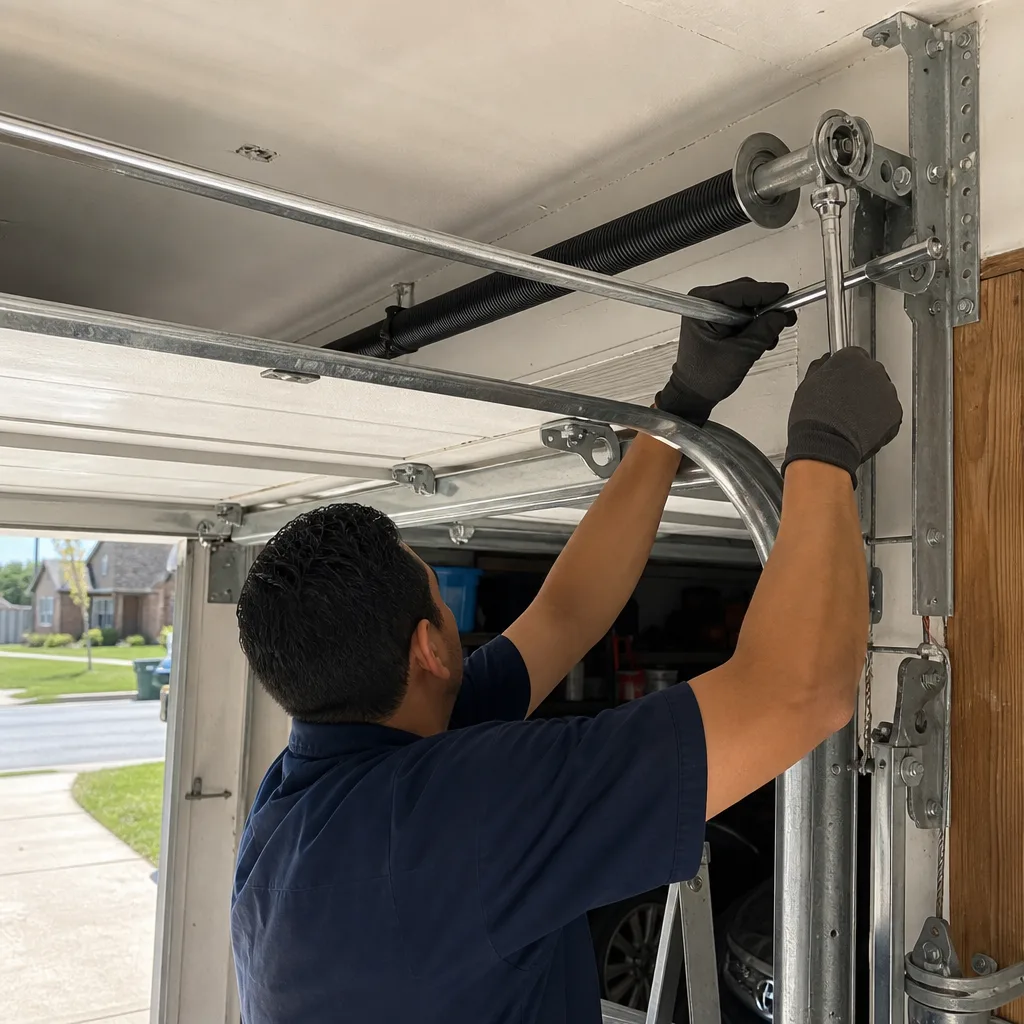
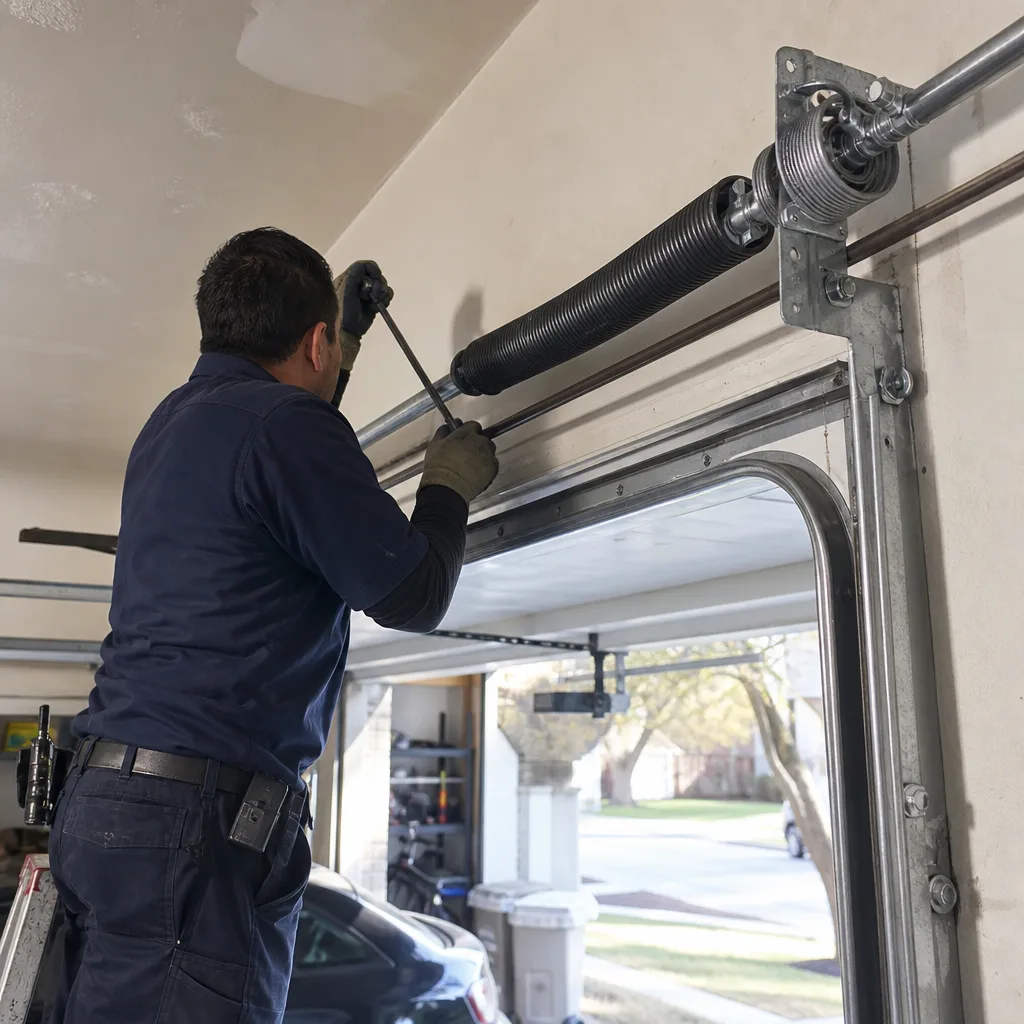
When a technician arrives at a Fort Worth home to replace torsion springs, the tooling is specific for a reason. The winding bars are not screwdrivers or pry bars; they’re solid steel rods with a diameter matched to the cone sockets, typically ½ inch. They come in pairs for a reason: you always keep one bar in a cone while you reposition the other. The torque spec on the set screws matters because an undertightened cone slips on the tube and an overtightened one cracks the cone or strips the threads.
Here’s the sequence a professional follows, so you understand exactly what you’re paying for. This is not an instruction to do it yourself. It’s an explanation of why this is not a socket-set job.
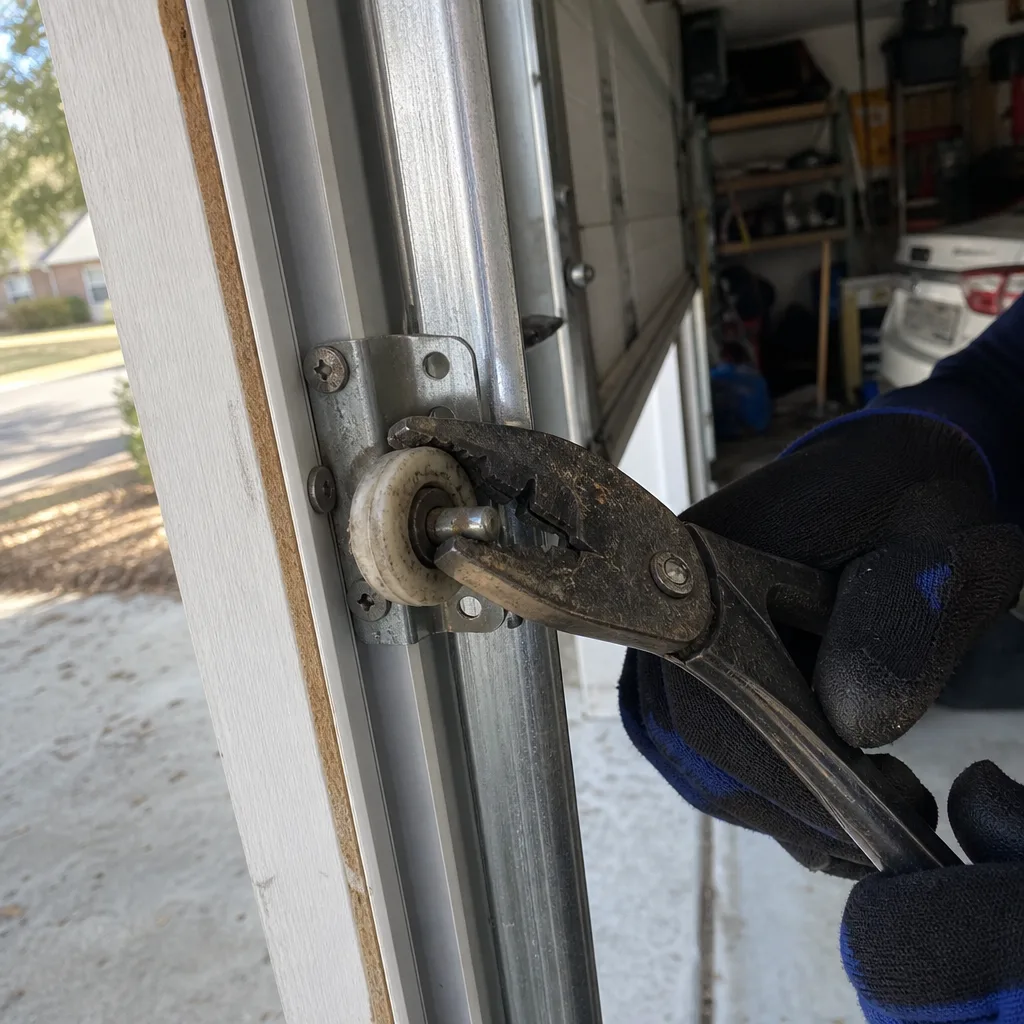
- Door is secured in the open position with locking pliers (vise grips). The pliers clamp onto the track below a roller to prevent the door from moving while the spring tension is being worked. If the door moves during spring removal, the cables can come off the drums and create a secondary failure.
- Winding bars are inserted into the still-intact spring’s cone. The spring that’s not broken still holds energy. It must be unwound deliberately, a quarter-turn at a time, or it will release all at once when the set screws are loosened.
- Set screws are loosened in a specific order. The technician loosens them a half-turn at a time, alternating between screws, while the winding bar holds the load. This controlled release is the entire difference between a controlled unwind and a sudden one.
- The broken spring is removed and measured. Wire diameter is checked with calipers or a gauge. Length and inside diameter are measured. The old spring’s dimensions map to the replacement spec.
- New springs are installed with the correct winding count. The count is determined by door height and spring spec. For a standard 7-foot door, it’s typically between 7¾ and 8¾ full turns, but that number changes with door weight and drum size. Counting is exact, not approximate.
- Set screws are torqued to spec. Typically 30 to 50 foot-pounds depending on the cone design. Overtightening is as dangerous as undertightening.
- The door is cycled by hand and then with the opener. The technician checks balance at multiple positions. A door that doesn’t hold at mid-height has the wrong spring selection or winding count. The job isn’t done until balance is confirmed.
This is why the professional call exists. The tools cost less than $100. The knowledge of the sequence, and the discipline to execute it exactly, is what you’re paying for. A garage door spring replacement isn’t expensive because the parts are expensive; it’s expensive because the failure mode of an error is a hospital visit or a mangled door.
The Honest Dollar Comparison: DIY vs Professional Roller Replacement
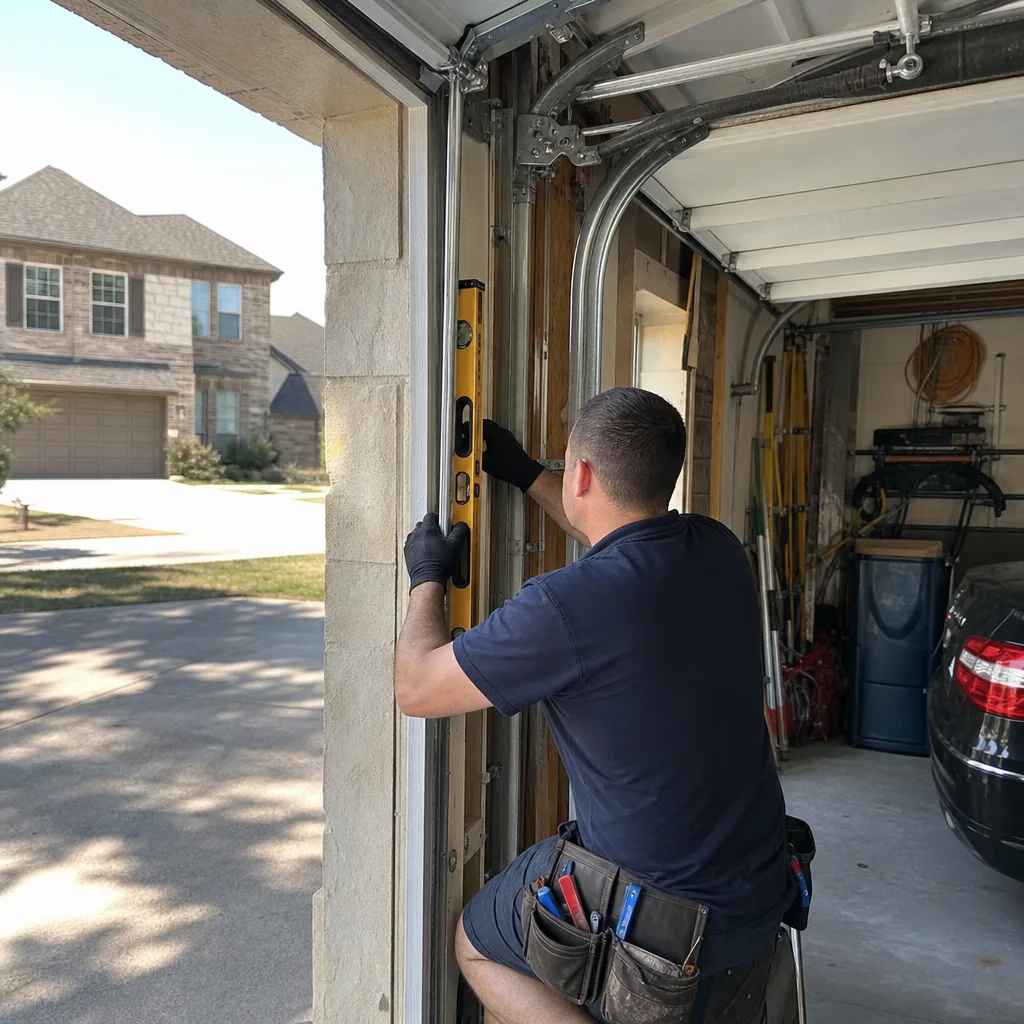
Let’s do the dollar comparison on a legitimate DIY task, because this is where the honest answer gets interesting. Roller replacement on a door with extension springs is a job a careful homeowner can do. You need the correct rollers, a few basic tools, and the patience to work with the door fully open. Here’s the actual cost breakdown for a single panel’s worth of rollers, which is the typical DIY scope.
| Item | DIY Cost | Professional Cost |
|---|---|---|
| Replacement rollers (6 nylon-bearing rollers) | $25 to $45 | Included in service |
| Vise grips (one-time tool purchase) | $15 to $20 | Not needed |
| Socket set (one-time, if not owned) | $25 to $60 | Not needed |
| Time invested (2 to 3 hours at $30/hour realistic value) | $60 to $90 | 0 |
| Labor rate for 6 rollers | N/A | $90 to $160 |
| Total | $125 to $215 (first time, including tools) | $115 to $205 (including parts) |
The numbers are closer than most people expect. On first-time DIY, you’re basically paying yourself $10 to $20 an hour once you subtract tool purchases and parts. The second time you do it, the tool cost disappears and you’re at $85 to $135 in time and parts, which is real savings. But there’s a catch every Fort Worth homeowner should know: this math only works on extension-spring systems. If your door has a torsion tube across the top, the rollers are under spring tension at multiple points in the door’s travel, and the safe replacement procedure involves releasing spring tension at specific positions. That’s no longer a Saturday job.
The same honest math applies to openers. A Chamberlain or Genie opener installation is genuinely DIY-able if you’re replacing an existing opener with the same brand and mounting pattern. But the programming, the travel-limit setting, and the safety sensor alignment are the parts where DIY installs go wrong, and each one of those is a callback that erases the savings. Garage door opener repair and installation in Fort Worth is one of those services where the professional version includes the calibration that makes the opener actually work like it’s supposed to.
Texas Liability: What Your Insurance Does and Doesn’t Cover
Here’s the part most DIY guides skip. In Texas, your homeowners insurance covers sudden and accidental damage to your property and liability for injuries to others on your property, subject to your policy terms. For specifics on local requirements, see our guide to Garage Door Permits, Codes & Inspections in TX: What You Need to Know. That’s the broad rule. The specific rule for DIY repairs is less generous: if a DIY garage door repair fails and causes injury to a third party, the insurance company will investigate whether the work was performed by a qualified person. If a torsion spring you installed fails and injures a neighbor or a delivery driver, your carrier has grounds to deny the claim on the basis that the repair was undertaken without the proper qualifications and created a foreseeable hazard.
This is not a hypothetical. Insurance adjusters in Texas look for this. The question they ask is whether the homeowner knew or should have known the work was dangerous. A wound torsion spring is not a hidden hazard; it’s a documented one. The CPSC has been publishing warnings since the 1980s. When a professional performs the same repair, the liability transfers to their commercial insurance, not your homeowners policy. That’s part of what the labor rate buys you: a paper trail that says a licensed, insured entity performed the work to an established standard.
There’s another angle. If a DIY repair fails and damages the door itself, your homeowners policy may cover the resulting damage, but the deductible applies, and the claim history follows you. What you saved on labor can be wiped out by a $1,000 to $2,500 deductible and a premium increase at renewal. The garage door installation and repair work done by a professional includes warranty coverage that doesn’t touch your insurance at all.
How to Prepare for a Professional Visit and Cut Diagnostic Time
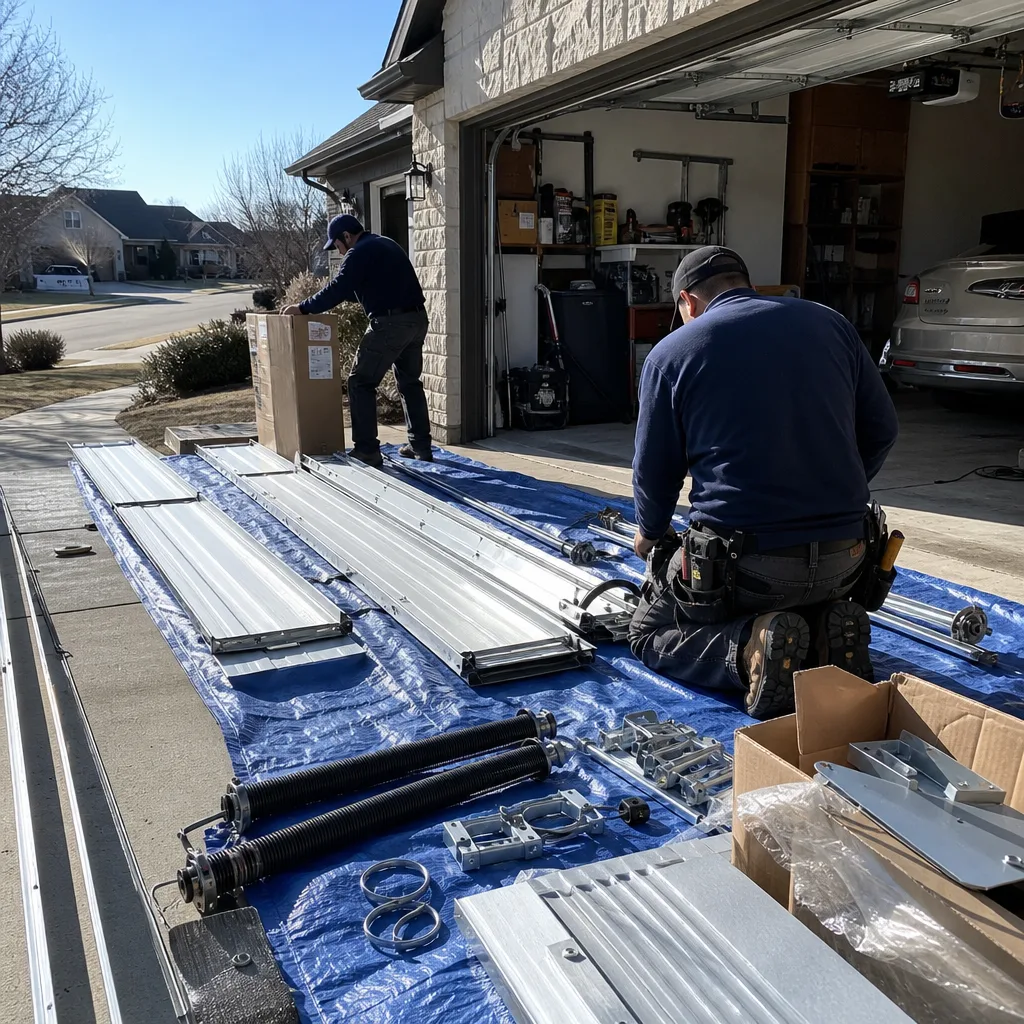
Here’s where the prepared homeowner saves real money. When you call a garage door company in Fort Worth, the technician’s first task is diagnostic: figure out what failed, measure components, and identify the door’s brand and spring configuration. You can do some of that before they arrive, and the better you do it, the shorter the call. A shorter diagnostic call doesn’t reduce the written price, but it does mean the repair happens faster, and if the company charges a diagnostic fee with the repair, a clean diagnosis gets you to the repair phase sooner.
- Photograph the spring system. Take a clear photo of the spring or springs above the closed door. If it’s a torsion spring, the technician can see the break location, the wire diameter, and the cone condition before they even arrive. Torsion spring breaks photo beautifully, and the photo tells us the exact spring type.
- Photograph the door label. Most doors have a manufacturer sticker on the end stile or the inside panel. It lists the door model, size, and sometimes the weight. Clopay and Amarr labels are usually on the bottom section or the top edge of a panel.
- Note the opener brand and the door’s approximate age. The opener’s motor head has the brand printed on it; the door’s age is often in your home purchase paperwork or on a city permit if one was pulled. In Fort Worth, most doors over eight years old are candidates for paired spring replacement.
- Test the door manually once. Pull the red emergency release handle and try to lift the door by hand. Can you lift it halfway and let go without it dropping or flying up? The answer tells the technician everything about the spring condition before they touch it. If the door is too heavy to lift, the spring system is not functioning.
- Measure the door opening. Width and height, to the nearest inch. For most Fort Worth homes, it’s 16 feet wide by 7 feet tall, but 8-foot doors are common in newer builds, and the spring spec changes with door height.
This preparatory work cuts 15 to 20 minutes off your service call. More importantly, it lets you speak the language. When you call Servo Garage Doors Fort Worth home and say “the right torsion spring is broken at the cone, the door is a 16×7 with a visible Clopay label, and it won’t lift by hand,” the conversation is already at the solution stage.
Why Fort Worth Clay Soil and Summer Heat Matter for Garage Door Work
Fort Worth is not a neutral environment for garage doors. The clay soil beneath most neighborhoods, including Wedgwood, TCU-West Cliff, and the newer developments north of Loop 820, expands and contracts with moisture. In a dry summer, it shrinks. Foundation movement of even a fraction of an inch translates to a garage door that’s slightly out of square, and an out-of-square door puts uneven load on the springs, rollers, and the top brackets. This is a Fort Worth-specific wear pattern that a generic DIY guide never mentions.
The summer heat does its own damage. Garage door interiors in Texas can exceed 120 degrees in August. Heat accelerates the fatigue cycle on torsion springs because the metal’s structural properties change with temperature. The spring steel that holds 10,000 cycles at 75 degrees may fail sooner when every cycle happens at elevated temperature. The industry standard spring is still rated for 10,000 cycles, but in actual Fort Worth conditions, an older spring on a door opened four times a day is on borrowed time after six or seven years.
There’s also the wind factor. Fort Worth gets spring storm winds that push against a closed door and shake it in the tracks. Over years, this loosens track bolts and shifts the tolerance on the roller-to-track interface. The result is a door that’s audible, vibrating, and wearing rollers unevenly. A Fort Worth homeowner who hears a new grinding sound after a storm is usually hearing a roller that’s been knocked slightly out of alignment. The garage door installation work on a new door in Fort Worth often includes track bracing that accounts for this wind load.
What this means for the DIY decision: the environmental conditions in Fort Worth make the door behave less predictably than the manual suggests. A torsion spring calculation that works perfectly on a level door in a stable foundation can be wrong for a door that’s fighting a settled slab. That’s a professional judgment call, not a chart-lookup.
Common Mistakes to Avoid
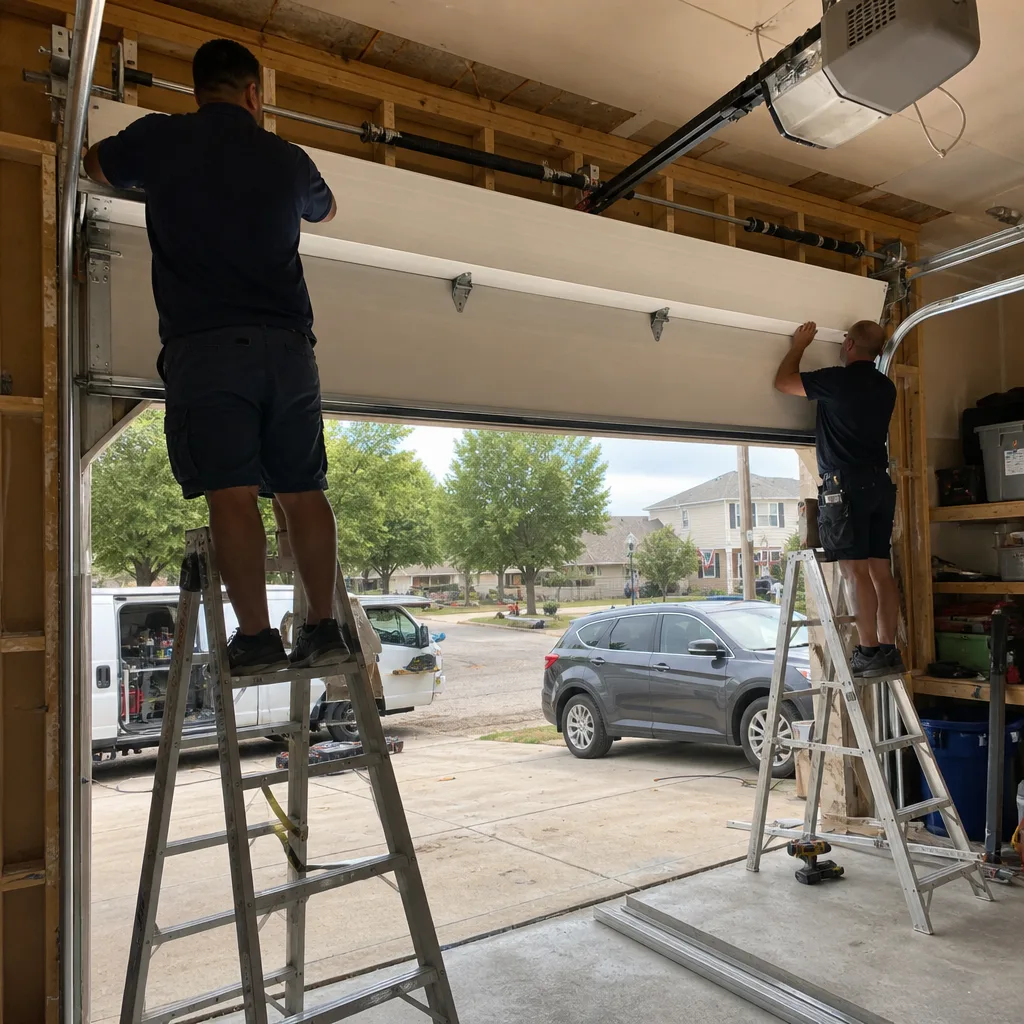
- Watching a YouTube torsion spring tutorial and thinking it transfers. The video shows one door, one spring spec, one set of conditions. Your Fort Worth door has its own spring dimensions, its own corrosion level, and its own foundation-induced misalignment. The sequence is the same; the conditions are not.
- Replacing only one spring in a pair. The other spring has identical cycle count and identical fatigue. You’ll be back in six months with the same problem, and the new spring will have worn unevenly in the meantime. Paired replacement is standard for a reason.
- Using a screwdriver as a winding bar. The cone socket is a precise fit for a ½-inch bar. A screwdriver tip doesn’t seat correctly, slip out under load, and becomes the projectile that injures you. This mistake is so common it’s practically a rite of passage, but the consequences are permanent.
- Disconnecting the opener without securing the door. When you pull the red emergency release, the door is now controlled only by the springs and the cables. If a cable is already off the drum, the door can free-fall. Always know the door’s balance state before releasing it.
- Ignoring a loud door hoping it goes away. A garage door that’s suddenly loud in a Fort Worth spring is often a roller that’s binding or a cable that’s fraying. Both failures get more expensive the longer they ride. The garage door repair call is cheaper before the failure cascades.
- Buying parts before diagnosing the problem. The bottom seal you bought to fix a draft might not matter if the draft is actually coming through a gap at the top caused by a misaligned panel. Diagnose first, then buy. The diagnostics are often free.
When to Call a Professional
Call when the component stores energy you can’t safely release. That’s torsion springs, cable drums, cables under tension, and any track work that requires the spring load to be transferred. These aren’t jobs where you learn by doing; they’re jobs where the cost of a mistake is severe. Call when the door is out of balance, when a cable is off the drum, when the door won’t open and you hear a humming opener, or when you see a visible gap in a torsion spring. All of these are failure states, not maintenance tasks. Servo Garage Doors Fort Worth offers free estimates in Fort Worth, call (682) 297-6476. We’ll give you a written price before any work starts and a warranty on everything we install.
Frequently Asked Questions
No, we recommend against it. Torsion springs store 100 to 200 foot-pounds of torque when wound, and the release of that energy through a slipped winding bar causes serious injury. The tools cost around $70, but the knowledge of the winding sequence, cone inspection, and spring matching is what prevents the injury. Professional torsion spring replacement in Fort Worth carries a labor rate of $180 to $340 including the parts, and that includes the liability transfer to a licensed, insured company.
Torsion spring repair in Fort Worth typically runs $180 to $340 for a paired spring replacement on a standard 16×7 door, including the service call, labor, and the springs. Extension spring repair is often in the $130 to $230 range. The exact number depends on the spring spec; call (682) 297-6476 for a written quote, and the price is final before any work starts.
Bottom seal replacement, weatherstripping, lubrication, keypad or remote programming, and roller replacement on extension-spring doors when the door is fully open and the spring system is not tensioned against the rollers. Any component that stores or transfers spring force, including torsion springs, cables, drums, and track hardware under load, should be left to a professional. The distinction is stored energy, not difficulty level.
In Texas, your homeowners insurance may deny a liability claim if a DIY repair on a known-hazardous component, like a torsion spring, causes injury to a third party. The investigation will focus on whether the work was performed by a qualified person and whether the hazard was foreseeable. When a professional performs the work, the liability is on their commercial policy, not your homeowners coverage.
Look for a company that gives you a written price before work starts, shows you the failed part before quoting a replacement, and provides a documented record of what was done. Those three things eliminate the common contractor problems of surprise pricing, phantom repairs, and no accountability. Garage door installation in Fort Worth works the same way, with a written scope and a written price before any work begins.
A paired torsion spring replacement on a standard Fort Worth door takes 60 to 90 minutes from arrival to a balanced, tested door. That includes measuring the old springs, installing the new ones, winding to the correct count, tightening to spec, cycling the door by hand, and confirming the opener’s travel limits and force settings still work correctly. The repair is same-day, and the price is fixed before the first tool comes out.
The Bottom Line
The DIY vs professional decision for garage door work in Fort Worth reduces to one question: does the component store energy? If the answer is no, you can handle it with basic tools and patience. If the answer is yes, the professional call isn’t about skill; it’s about physics and the consequences of an uncontrolled release. The honest dollar math shows that DIY saves real money only on the low-risk components and the second-time repetition of simple tasks. For more guides & resources on making smart repair decisions, explore our blog. Everywhere else, the professional repair is within $50 of the DIY cost on a first-time basis. Given that the professional version includes the liability transfer, the warranty, and a documented record, the choice writes itself for anyone doing actual arithmetic instead of ambition.
If you’re anywhere in Fort Worth, from Benbrook to Hurst, call (682) 297-6476 for a written estimate. We’ll quote the job before we start, show you photographic evidence of what we found, and give you a warranty on every part and labor hour. The estimate is free, and the documentation is standard.
Written by Marcus Deller, Owner at Servo Garage Doors Fort Worth, serving Fort Worth since 2015.