
Last updated September 20, 2026
Full 25-point door and opener safety check with every visit - springs, cables, rollers, tracks, and your LiftMaster or Chamberlain opener included
You get a price before we start. It does not change when the truck arrives.
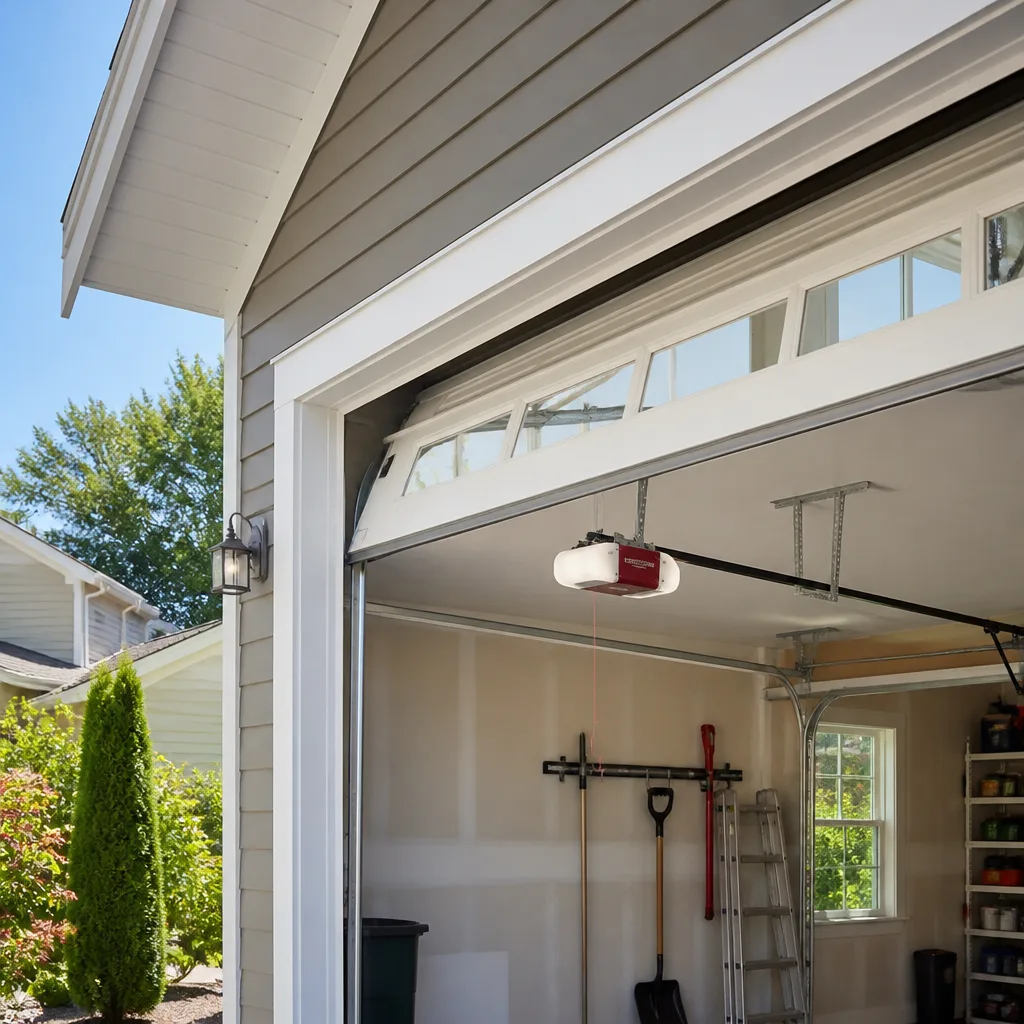
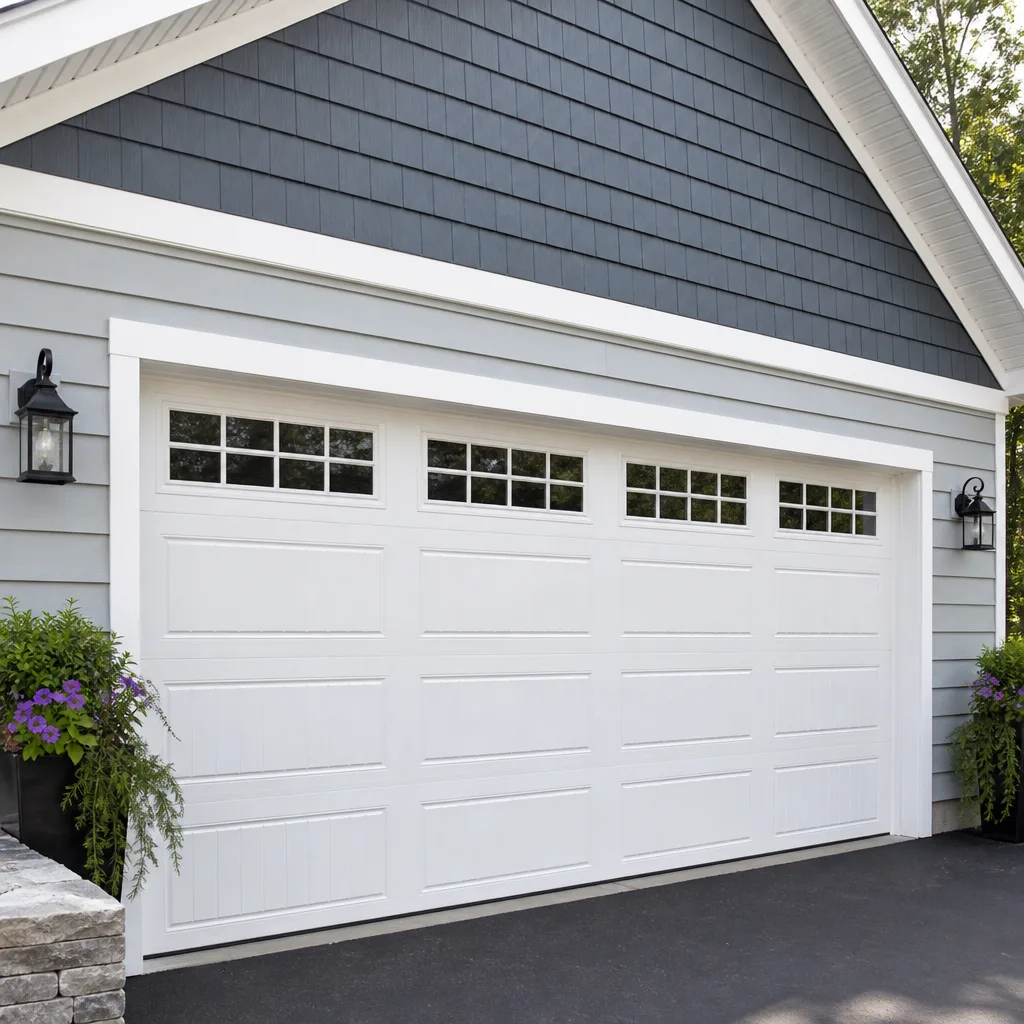
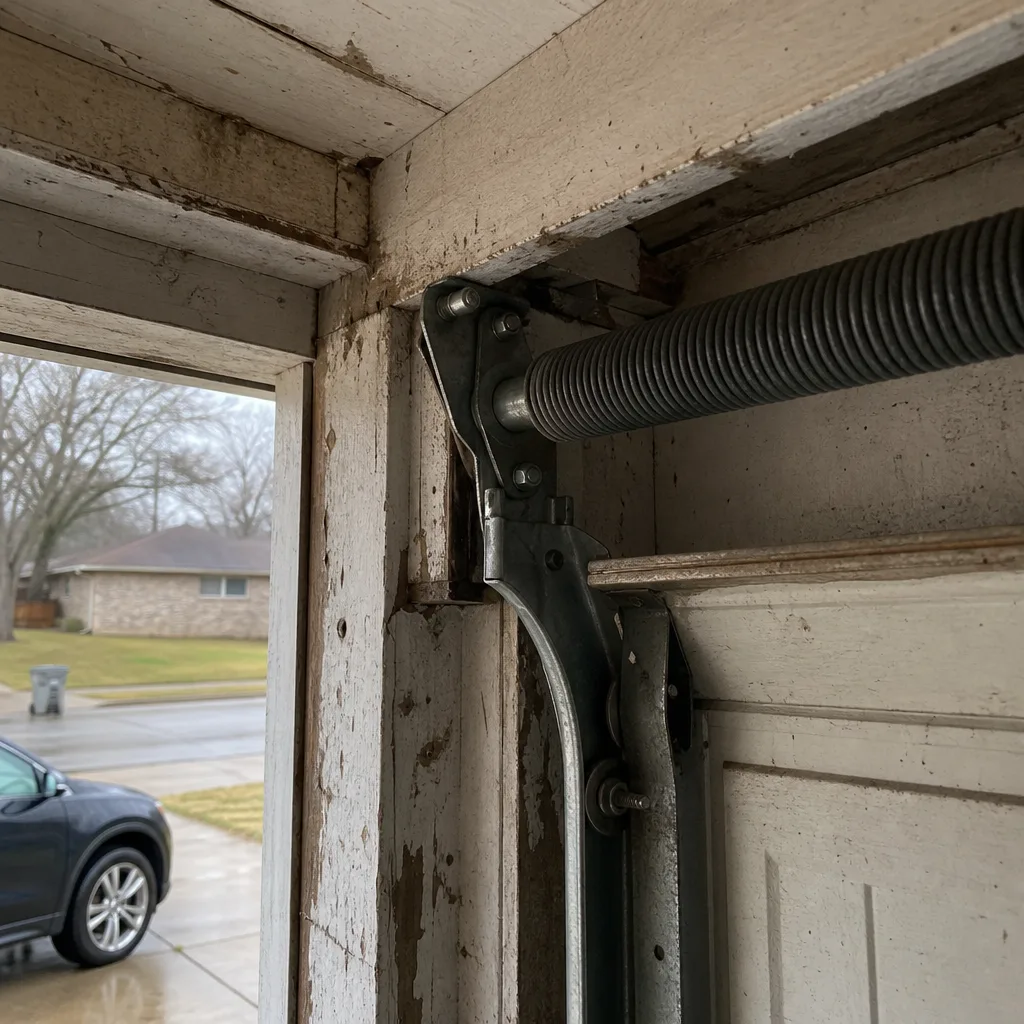 Before
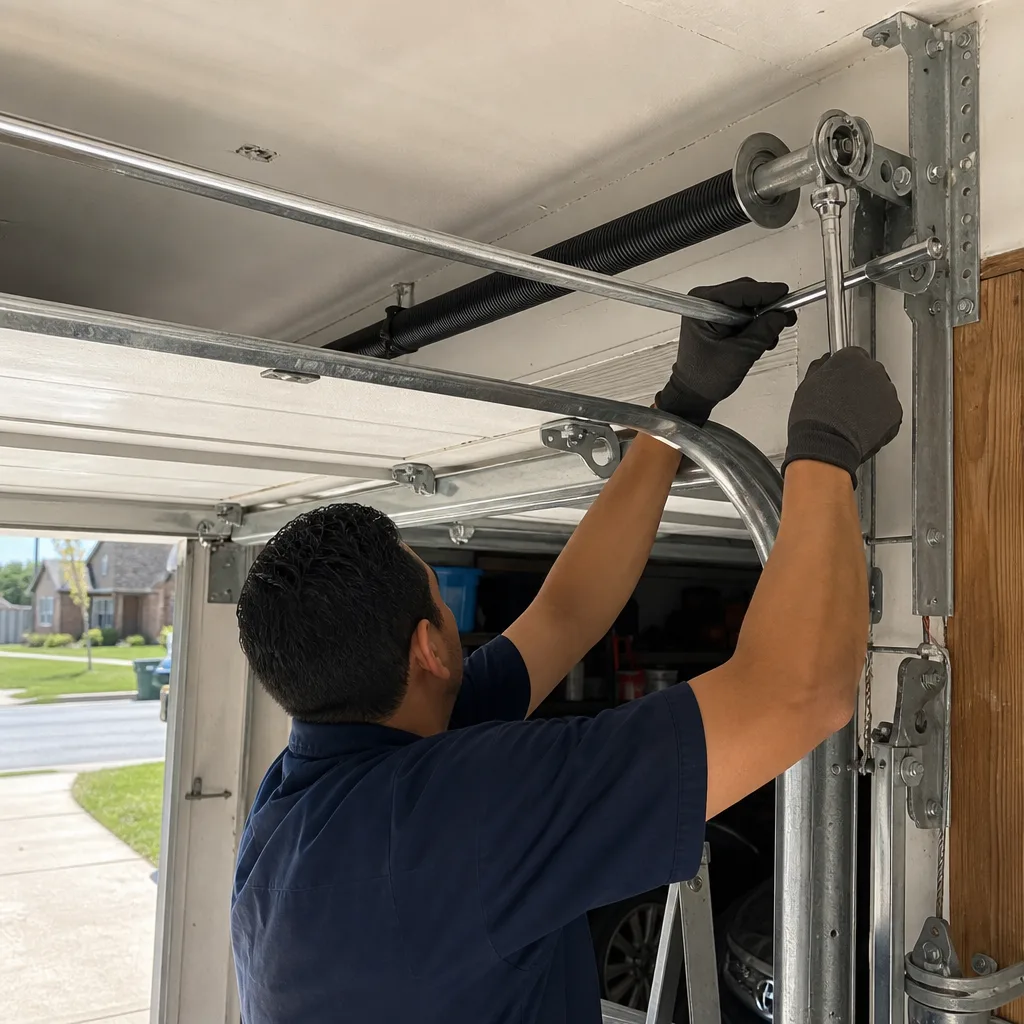 After
After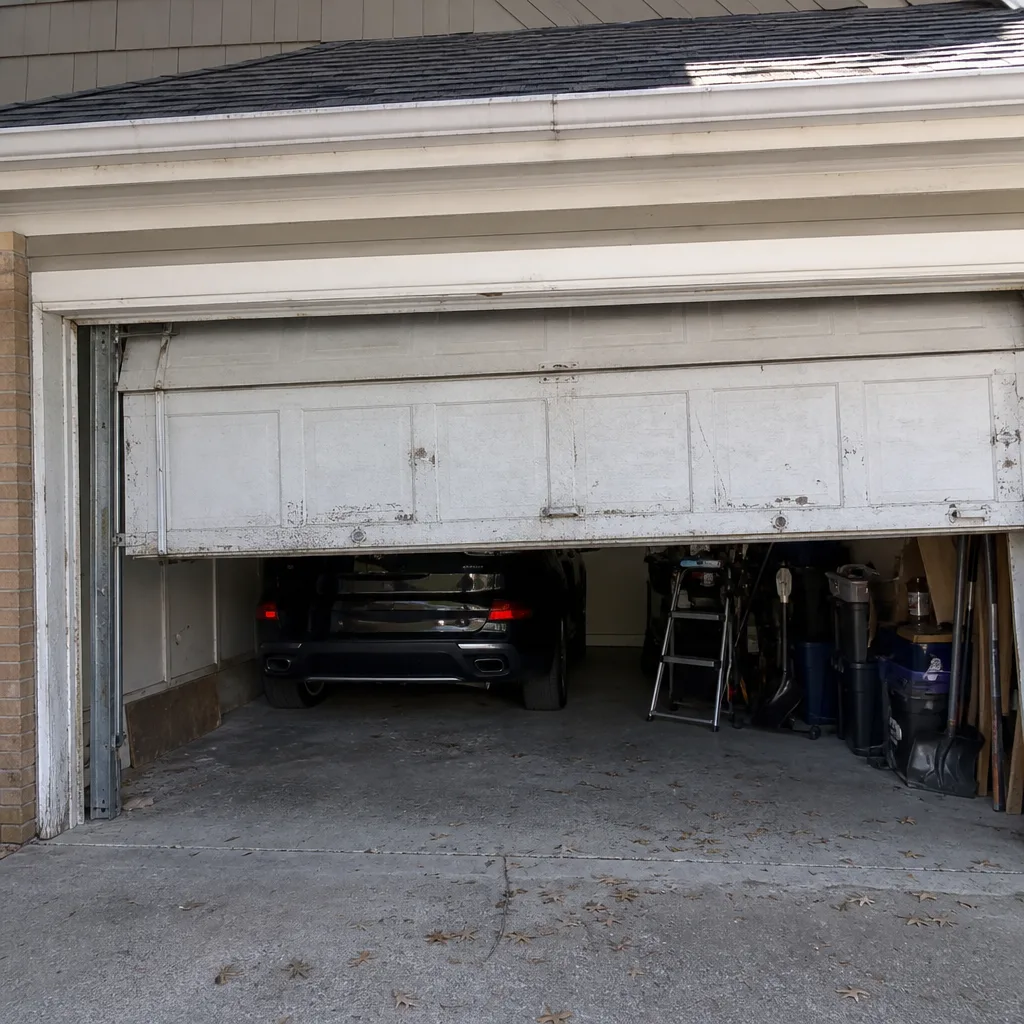 Before
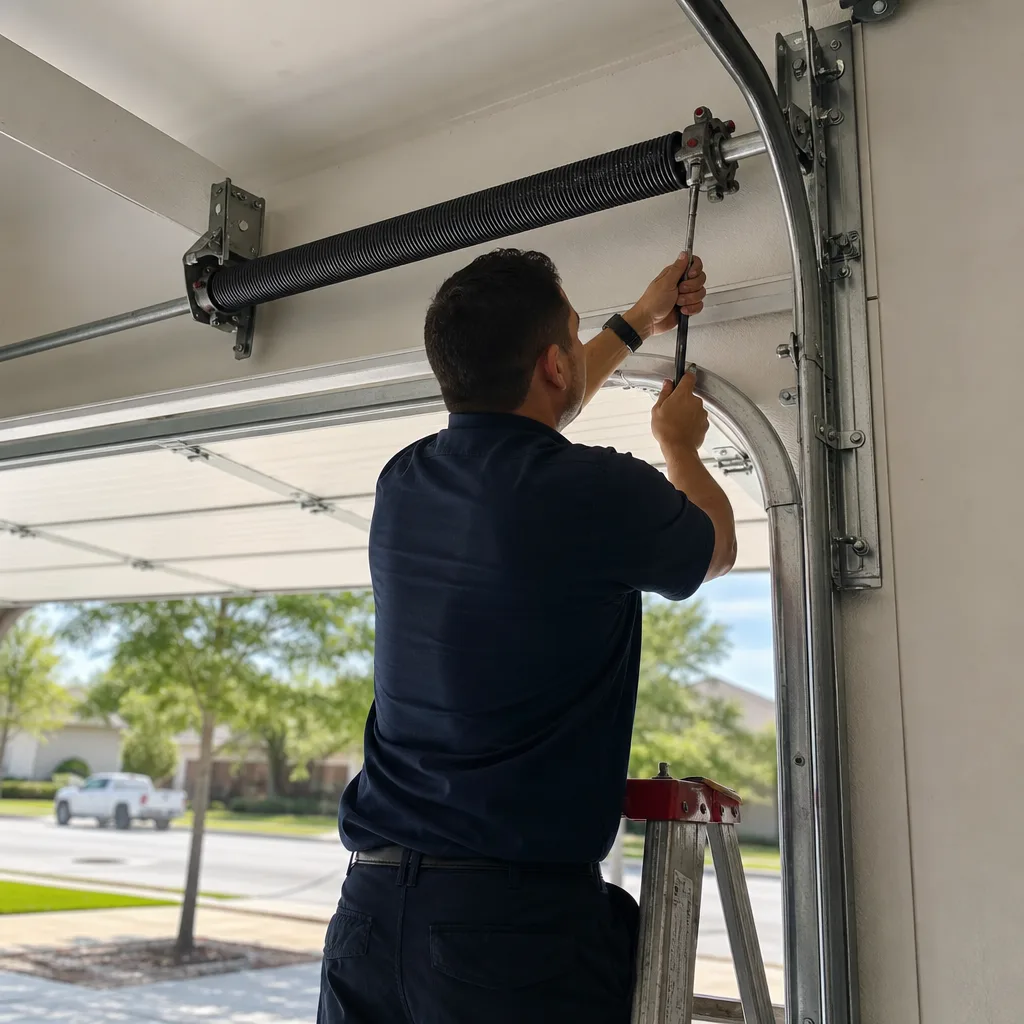 After
After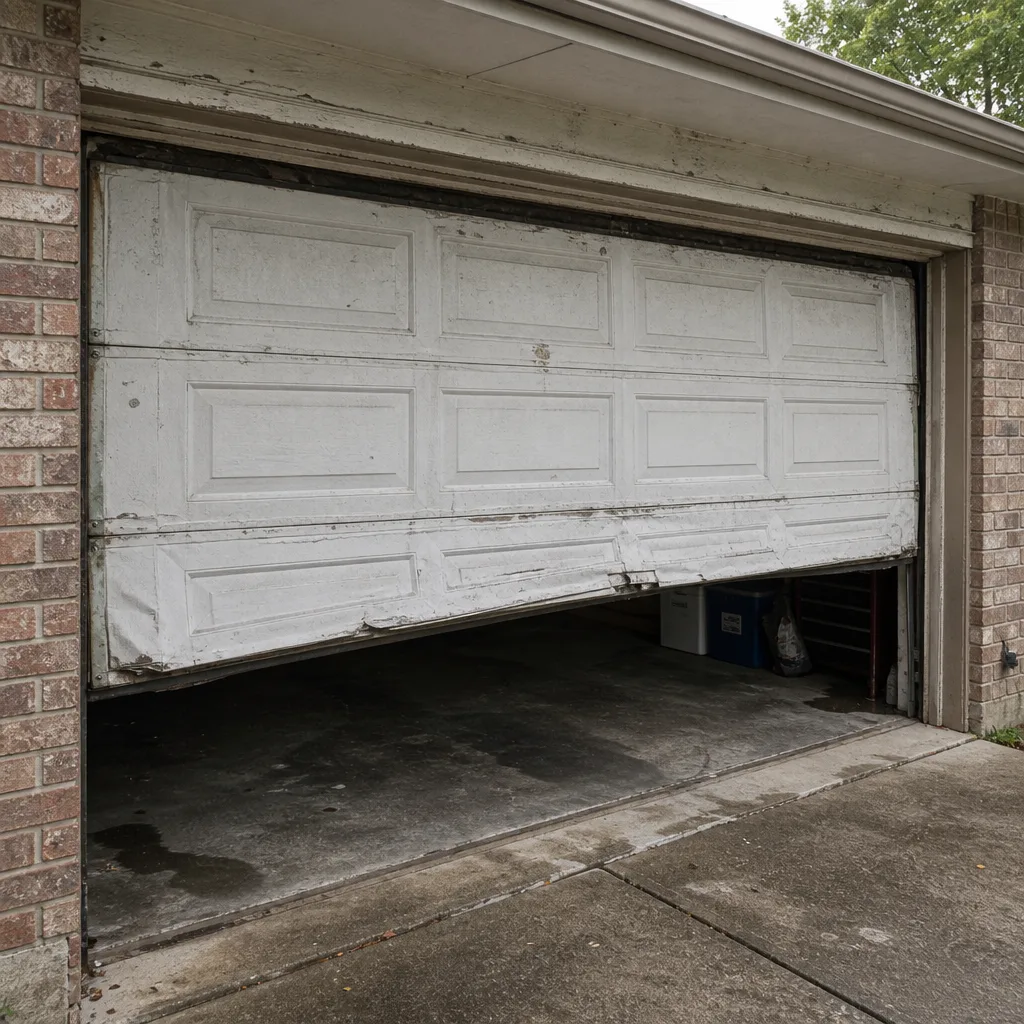 Before
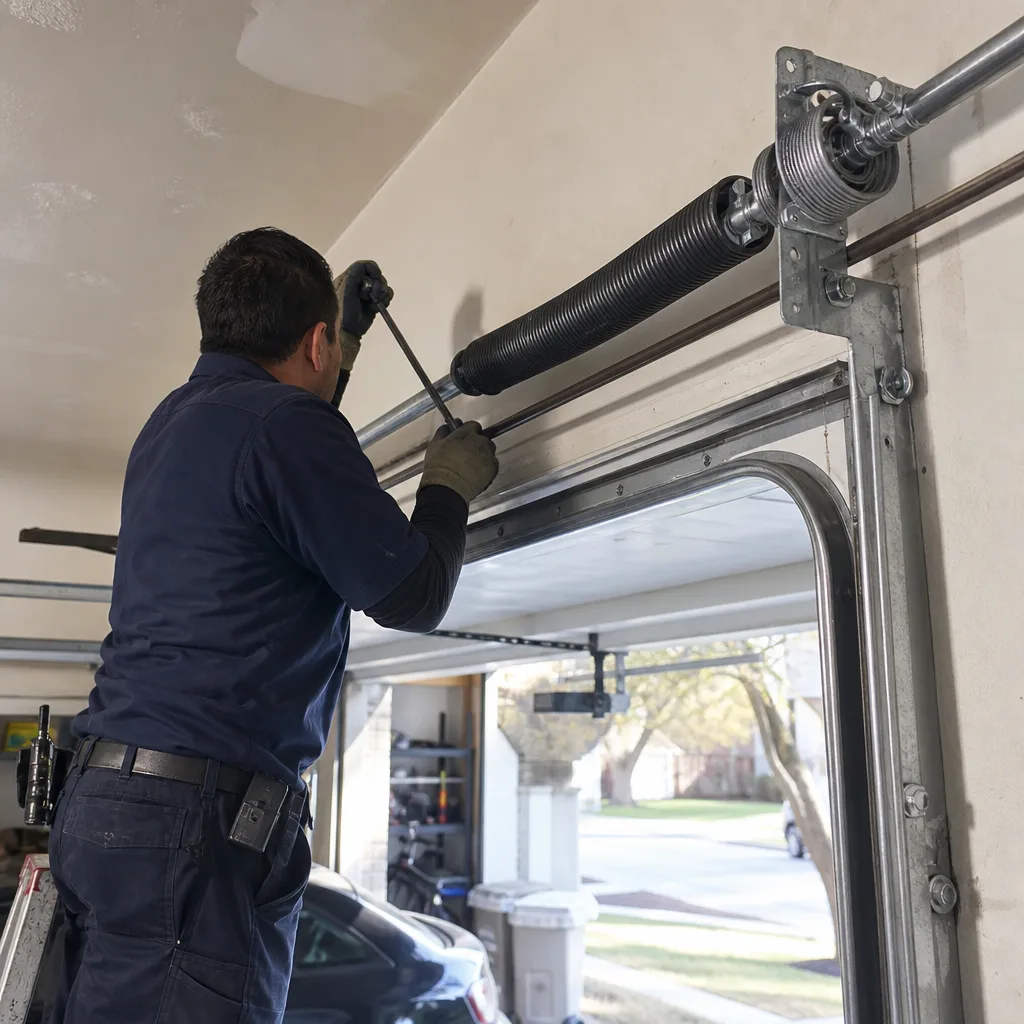 After
AfterThe Complete Guide to Garage Door in Fort Worth
Here’s a number most Fort Worth homeowners have never seen: the cycle-life rating stamped into their torsion spring’s wire gauge. It’s the difference between a spring that lasts 7 years and one that fails at 4. And it’s written on the part itself, sitting above your car right now. This guide gets into what you actually own, what the specs mean, how Fort Worth’s climate changes the math on panel materials, and what to have on file before a technician ever rings the bell. We’re writing this from Fort Worth, and we’ll cover the details other guides skip.
Quick Answer
A garage door is a system of cycle-rated parts built to specific measurements. The six dimensions that matter are rough opening width and height, headroom, sideroom, backroom, and track radius. Knowing these, plus your spring type and panel material, means an accurate written quote in minutes instead of an estimate after a site visit. In Fort Worth, panel choice matters more than in most markets because the summer heat cycle degrades thinner steel faster than homeowners expect.
Table of Contents
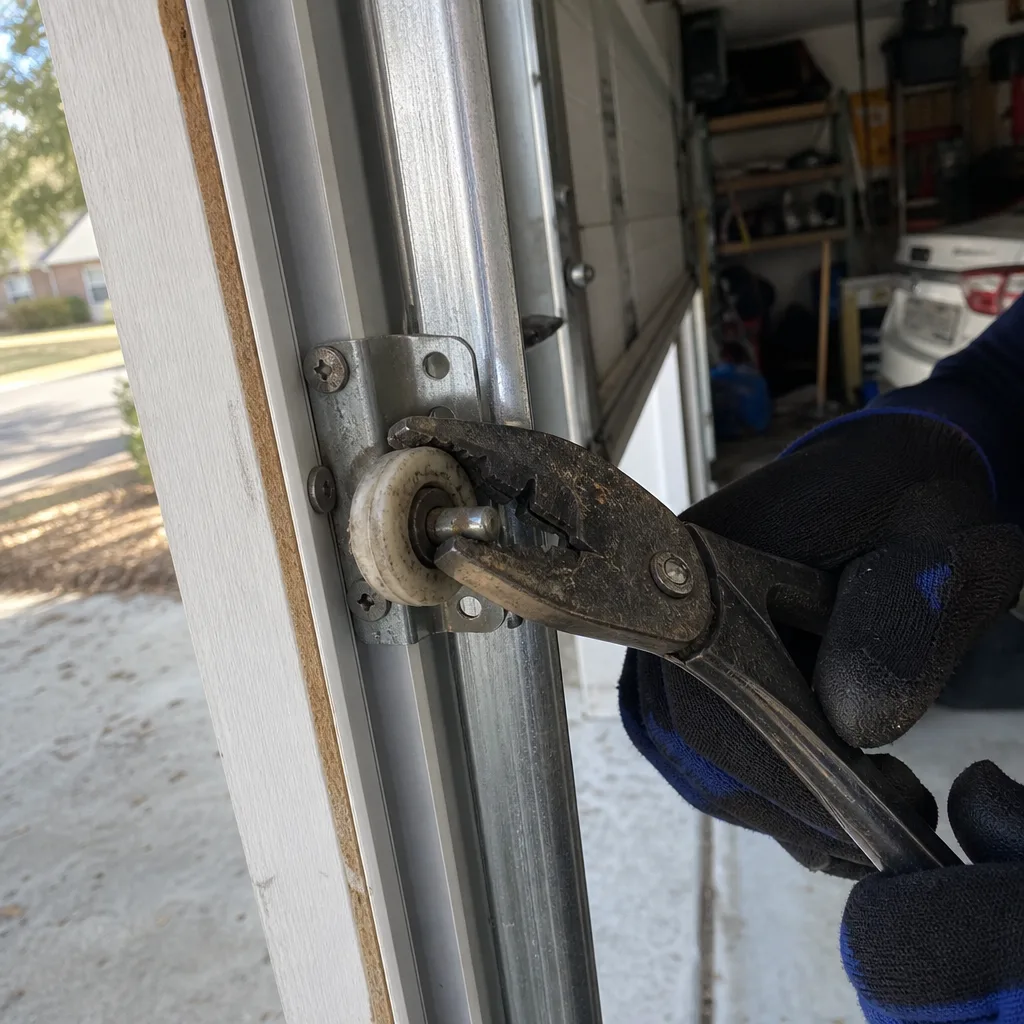
- Identifying Your Spring System Before Any Technician Arrives
- Fort Worth-Specific Panel Considerations: Steel, Composite, and the DFW Heat Cycle
- What the Nameplate and Bottom Seal Code Actually Tell You
- The Six Measurements Worth Having on File
- Why Cycle-Rated Components Cost More and When They Pay Off in Fort Worth
- Drum Types and Cable Anchors: The Parts Nobody Explains
- Common Mistakes to Avoid
- When to Call a Professional
- Frequently Asked Questions
BeforeAfterIdentifying Your Spring System Before Any Technician Arrives
Here’s the part most Fort Worth homeowners skip: knowing whether you have a torsion or extension spring system. It changes the quote, the parts, and the safety conversation. A torsion system uses one or two springs mounted on a metal shaft directly above the door opening. An extension system uses two springs stretched along the horizontal tracks on either side of the door. The distinction matters because the two systems use different hardware, different cable paths, and different price points for repair.
Torsion springs are the modern standard on doors installed after roughly 2005. They sit across the header, perpendicular to the door panels, and wind and unwind to lift the door’s weight. Extension springs run parallel to the tracks and stretch when the door closes. Both use cables, but the cable anchor points differ. On a torsion system, cables wrap around drums at each end of the shaft. On an extension system, cables run through pulleys and anchor to brackets near the track’s rear.
What about single versus double torsion springs? A single-spring setup has one spring centered on the shaft. A double-spring setup has two, one on each side, typically with a center bearing plate between them. Double-spring systems are spec’d for heavier doors and wider openings, but they also mean that when one spring breaks, the other is the same age and usually near the end of its life. A technician who recommends replacing both isn’t padding the invoice. They’re matching the cycle-life math. If you’re not sure what you have, our Garage Door Repair in Fort Worth page walks through common spring failures and what they cost to fix here.
The wire gauge on a torsion spring is the number to learn. Standard residential springs run 0.207 to 0.250 inches in diameter, with heavier gauges offering more cycle life. A 0.225-inch spring on a typical 16-by-7-foot door might be rated for 10,000 cycles. A thinner 0.207-inch spring on the same door might be rated for 7,000. In Fort Worth, where most doors cycle three to five times a day between morning commutes and evening returns, that difference shows up as 18 months of service life. The rating is physically printed on the spring or on the winding cone. You don’t need to inspect it yourself, but knowing it exists is half the battle.
One safety note that belongs early: torsion springs hold enormous tension. A spring that lets go under load can cause serious injury. This is not a system to adjust without training. A technician photographs the component before quoting a replacement, which is exactly why our documentation standard includes a photo record of every failed part before any work is quoted. Clause 4 of The Haven Standard exists because of how often homeowners are told a spring is “bad” without ever seeing evidence.
Fort Worth-Specific Panel Considerations: Steel, Composite, and the DFW Heat Cycle
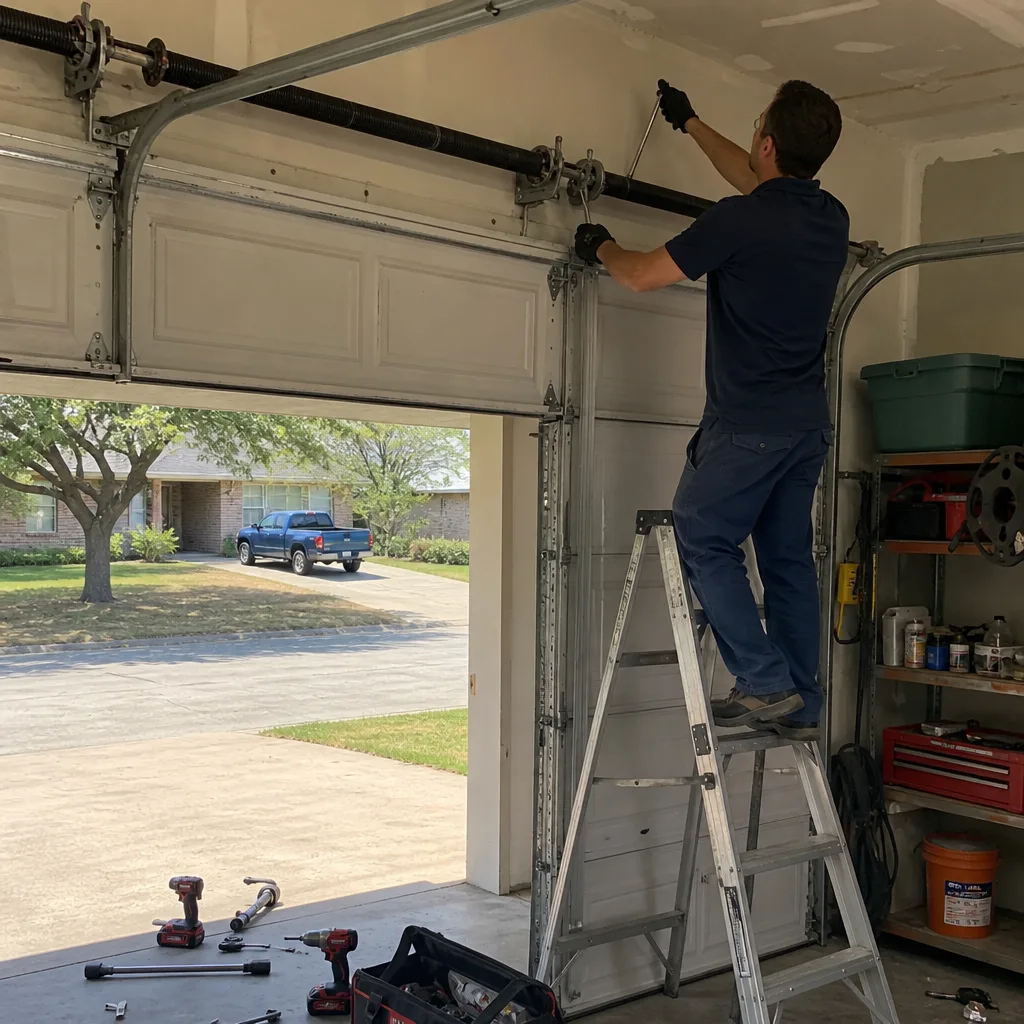
Panel material matters more in Fort Worth than in most markets, and the reason is the thermal cycle. A steel garage door on a west-facing wall in Benbrook or southwest Fort Worth absorbs direct afternoon sun five months out of the year. The panel surface can reach 150 degrees in July, then cool to 75 degrees overnight. That daily expansion and contraction is what eventually separates the steel skin from its foam or polystyrene core, creating a door that goes “bong” instead of “thud” when a tennis ball hits it.
Steel panel thickness runs from 24-gauge to 27-gauge, and here’s the counterintuitive part: heavier is better, and it’s worth the money here. A 24-gauge panel on a Clopay door resists oil-canning, the wavy distortion that shows up on cheaper panels after a few Fort Worth summers. Amarr and Wayne Dalton also build quality 24-gauge doors, and the spec is usually listed on the product page or in the quote documentation. If a quote says “steel door” without specifying gauge, that’s a flag.
Insulation adds another layer to the calculation. Polystyrene is the budget option, typically R-6 to R-9. Polyurethane is the denser option, R-12 to R-18, and it’s what we recommend for any garage that shares a wall with living space or sits under a bedroom. Fort Worth garages are unconditioned space, and the difference between a polyurethane-insulated door and an uninsulated one is measurable in the room above it during August.
Composite and wood-look doors hold up differently. A composite panel with a steel core and a molded exterior resists denting better than thin steel, and it doesn’t warp the way a solid wood door will in North Texas humidity. But composite also costs more, typically 15 to 25 percent above a comparable insulated steel door. If you’re comparing material types, a full breakdown of options appears in our Garage Door Installation in Fort Worth guide.
The Fort Worth-specific advice is this: if your door faces west or southwest, and it’s 25-gauge or thinner steel, plan for oil-canning and skin delamination within 8 to 10 years. If it’s 24-gauge or composite, that lifespan extends to 12 to 15 years or more. The material line item on a quote isn’t just an upsell. It’s a climate calculation.
What the Nameplate and Bottom Seal Code Actually Tell You
Every garage door has a nameplate or a manufacturer label, usually riveted to the interior face of a section near the top or stamped on the end stile. It holds information that changes how parts are sourced. The manufacturer name is obvious. The series number is not. A Clopay door’s series code, for example, identifies the panel construction, the insulation type, and the track profile that belongs on that door. The same principle applies to Amarr, Wayne Dalton, and Craftsman units.
Here’s what to pull off the nameplate before you call anyone: the manufacturer, the series or model number, the door size (often listed as width by height, like 16×7), and the door weight if it’s printed. The weight matters because torsion springs are matched to door weight, not door size. A 16-by-7-foot door can weigh anywhere from 150 to 300 pounds depending on panel material, insulation, and strut configuration. A spring spec’d for a 150-pound door will fail early on a 300-pound door, even if the measurements are identical.
The bottom seal is a separate detail. Most residential doors use a T-style or bulb-style seal that slides into a retainer channel on the bottom panel. The seal itself has no part number usually, but the profile is what matters. A Craftsman door from 2016 might use a 1/2-inch T-end seal, while a 2022 Amarr door might use a 3/4-inch bulb seal. The wrong profile won’t seat, and the door loses its weather seal against Fort Worth’s dust and rain. Take a photo of the seal’s cross-section before replacing it. A written record beats a guess.
Compatibility is the other reason the nameplate matters. Lock cylinders, cables, bottom brackets, and track radius all vary by manufacturer and series. When you call with the nameplate in hand, the conversation shifts from “what kind of door is it?” to “a Clopay 4050, 16×7, 24-gauge, with standard lift track.” That’s the difference between a same-day repair and a second trip for parts. It’s also why our technicians record the nameplate photo as part of the documented photo record on every visit. You get the evidence, and we get the spec.
The Six Measurements Worth Having on File
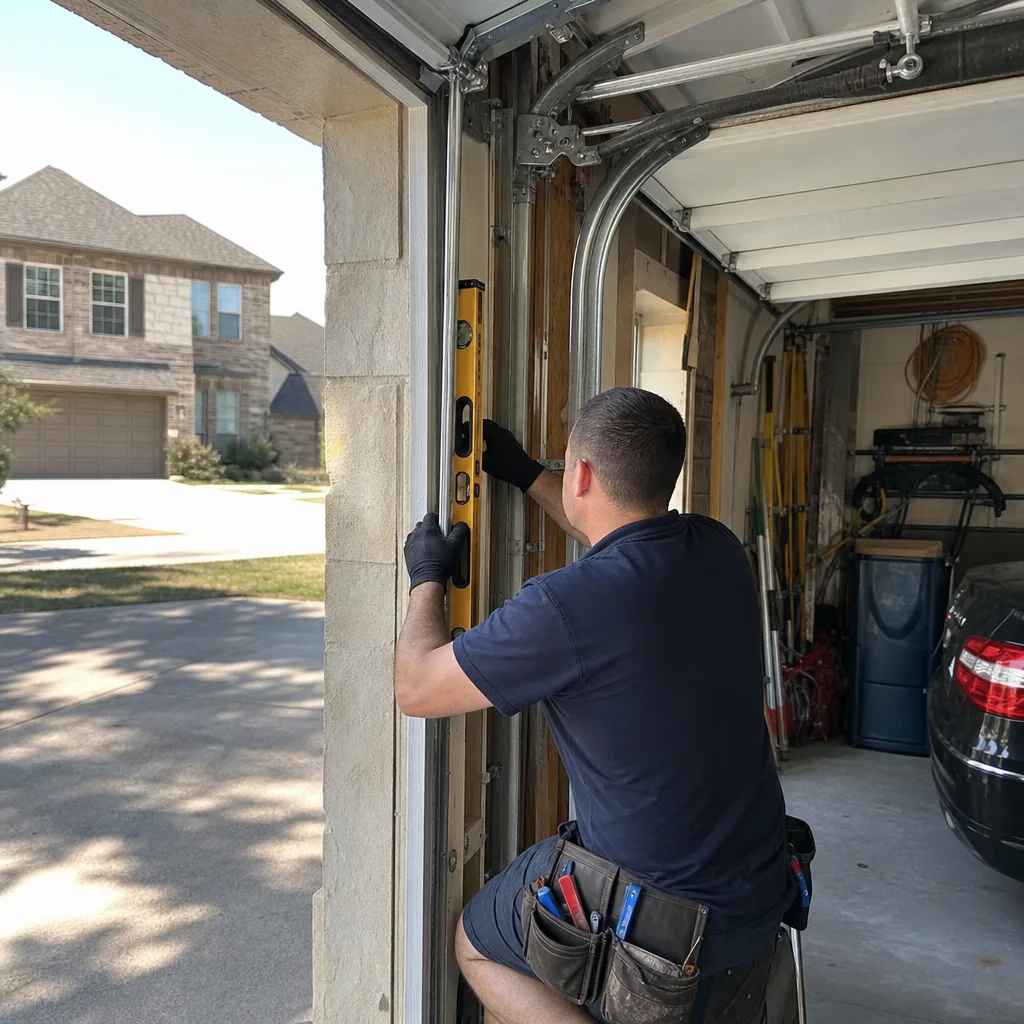
If you do one thing after reading this guide, take these six measurements and save them in a note on your phone. They turn a vague phone call into a written quote with real numbers, and they’re the difference between a 10-minute conversation and a technician spending 20 minutes with a tape measure before any pricing exists. Every residential garage door fits within these dimensions, and they’re what any installer uses to determine track type and spring configuration.
Here’s the full list, in order of importance:
- Rough opening width: The distance between the two vertical jambs, measured from inside edge to inside edge. Standard is 8, 9, 16, or 18 feet.
- Rough opening height: The distance from the concrete floor to the header, where the wall framing crosses above the door. Standard is 7 or 8 feet.
- Headroom: The space between the top of the rough opening and the ceiling or lowest obstruction. This determines whether standard 12-inch-radius track or low-headroom track is needed. Minimum for standard track is typically 12 inches.
- Sideroom: The distance from the jamb to the nearest side wall, measured on both sides. Standard track needs 3.5 to 4.5 inches for the track brackets and cable drums.
- Backroom: The depth of the garage from the door opening to the back wall. An 8-foot door needs roughly 8 feet of backroom for standard track. Low-headroom or high-lift configurations change this.
- Track radius: The curve of the vertical track as it transitions to horizontal. Standard is 12-inch or 15-inch radius. High-lift doors use larger radii or vertical tracks that run closer to the ceiling.
These six numbers unlock accurate quoting for both repair and replacement work. They’re also the foundation of a flat, written price delivered before any work starts. That’s Clause 1 of The Haven Standard, and it’s the reason we can quote a spring replacement or a new door install over the phone without a site visit in most cases. The measurements are the spec. The spec drives the price. The price is written down.
If measuring feels like more than you want to tackle, our installation team handles the full measurement during the free estimate, and that measurement is documented in writing. The page on Garage Door Installation in Fort Worth covers how the estimate process works step by step. But for the homeowner doing research first, having the numbers on file means every quote you collect is comparable, and no one can give you a fuzzy number that inflates later.
Why Cycle-Rated Components Cost More and When They Pay Off in Fort Worth
Every moving component on a garage door has a cycle-life rating: springs, rollers, hinges, cables, and even the opener’s rail drive. The rating tells you how many open/close cycles the part is built to handle before its predicted failure point. Budget parts might carry a 10,000-cycle spring and 5,000-cycle rollers. Cycle-rated upgrades push those numbers to 25,000 or 30,000 cycles. The difference in price is visible in the quote. The difference in lifespan shows up years later.
Here’s the Fort Worth math. A typical commuting household cycles the door four times a day: leave in the morning, come home in the evening, maybe a second trip midday, and the occasional weekend project run. That’s roughly 1,460 cycles a year. A 10,000-cycle spring lasts about 6.8 years under that load. A 20,000-cycle spring runs 13.7 years. The cycle-rated spring might cost $60 to $90 more installed, but it doubles the service interval. Over a 13-year period, you’ve skipped one full spring replacement, which in Fort Worth runs $180 to $340 depending on the door and spring configuration.
The same logic applies to rollers. Steel rollers with ball bearings are the budget default, and they’re noisy. Nylon rollers with sealed bearings run quieter, last longer, and are the better choice for attached garages where bedroom space sits above or beside the door. The upgrade from basic steel to heavy nylon rollers is usually $30 to $60 per door installed. Given that a single roller failure can jam a door mid-travel and leave the garage open to the street, that’s inexpensive insurance.
Where cycle-rate math gets murky is when a door is used less than twice a day, which happens in Fort Worth neighborhoods with alley-loaded garages and households that park in the driveway. If a door cycles 300 times a year, a 10,000-cycle spring theoretically lasts 33 years. The math still favors the budget part in that scenario. That’s why the honest recommendation is based on your actual usage, not a blanked upsell. Tell the technician how often the door moves, and the parts spec follows from that number.
The cycle-rate conversation is also why the spring’s wire gauge and rated cycle count are documented in the photo record we deliver after every visit. You can verify what was installed against what was quoted. The number is on the part. If a technician can’t show you the rating, ask why not.
Drum Types and Cable Anchors: The Parts Nobody Explains
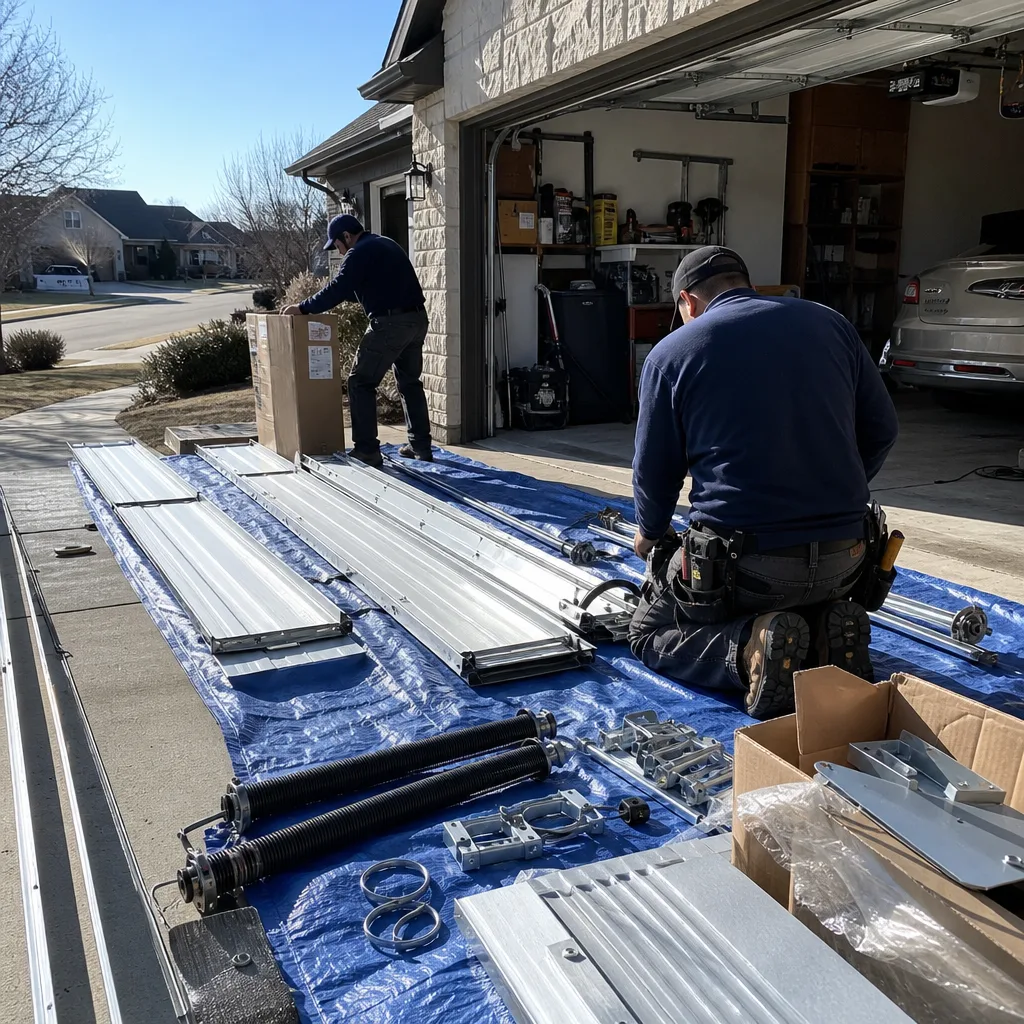
Most Fort Worth homeowners can point to the spring. Almost no one can identify the drum. The drum is the grooved spool at each end of the torsion shaft where the lifting cables wind and unwind. Drum type determines cable spooling, and the wrong drum on a door causes cable stacking, uneven lift, and premature cable wear. There are three common drum profiles: standard lift drums, high-lift drums, and tapered drums. Each matches a specific track configuration.
Standard lift drums are the default on 7-foot and 8-foot doors with 12-inch or 15-inch radius track. They have a consistent groove pitch and work with the door’s weight profile across its full travel. High-lift drums have a different groove geometry designed for doors that run closer to the ceiling before transitioning to horizontal track. Tapered drums are less common in residential work, appearing mostly on doors with unusual weight distributions or custom track profiles.
Cable anchors are the other overlooked component. On a torsion system, the cable terminates at a bottom bracket bolted to the lower corner of the bottom panel. That bracket is under constant tension, and it’s a rust point on older Fort Worth doors because it sits inches from the concrete floor, where humidity collects and standing water from car tires sits. A rusted bottom bracket that fails under load is a sudden failure: the cable releases, the door droops or jams, and the panel can crack. This is not a part to inspect casually. If the bracket shows visible rust scaling, a professional should look at it.
The cable itself is aircraft-grade galvanized steel, and it has a service life tied to the door’s cycle count. Cables rarely break from age alone. They fray from abrasion, usually because the drum grooves are worn or the cable is misaligned. A frayed cable is visible as a fuzzy section or a few broken strands where it wraps the drum. If you see that, stop using the door and call someone. The failure mode is sudden and the door is under spring tension the entire time.
For readers in the research phase, the practical takeaway is this: the spring gets all the attention, but the drums and cables are the system that transfers that tension safely. Our Garage Door Repair in Fort Worth service page covers cable and drum repair specifically, including what a cable replacement costs in this market. The photo record on that work shows the drum grooves and cable condition before and after, so the evidence is part of the file.
Common Mistakes to Avoid
- Buying a spring based on door size only. Door width and height are not the same as door weight. A 16×7 door can weigh 150 or 300 pounds depending on panels and insulation. The spring must match the weight, not the dimensions. A mismatched spring fails early and can damage the opener.
- Ignoring the track radius when ordering parts. Standard 12-inch and 15-inch radius track use different hardware. Ordering a drum or cable set for the wrong radius means a reorder and a second trip charge on your invoice.
- Replacing one spring on a double-spring system. Both springs accumulate the same cycle count. If one breaks, the other is statistically close behind. Replacing both at once costs more up front but avoids a second service call within 18 months.
- Choosing 27-gauge steel for a west-facing door in Fort Worth. The thermal expansion and contraction of a thin panel under full afternoon sun produces oil-canning and skin delamination faster here than in any other Texas market except El Paso. Step up to 24-gauge or composite.
- Not photographing the nameplate before calling for service. The manufacturer, series number, and door weight are all on that plate. Having it on hand means the technician arrives with the right parts on the first trip, which means a lower invoice and a same-day fix.
- Letting a rusted bottom bracket ride. That bracket carries constant cable tension and sits near floor moisture. Rust scaling is a visible warning. If it fails, the cable releases under load and the door can come down hard or jam open. This is a safety item, not a cosmetic one.
- Accepting a verbal estimate without a written scope. A price quoted over the phone without measurements and without a written line-item scope is not a quote. It’s a guess. A flat, written price before any work starts is the only number worth comparing.
When to Call a Professional
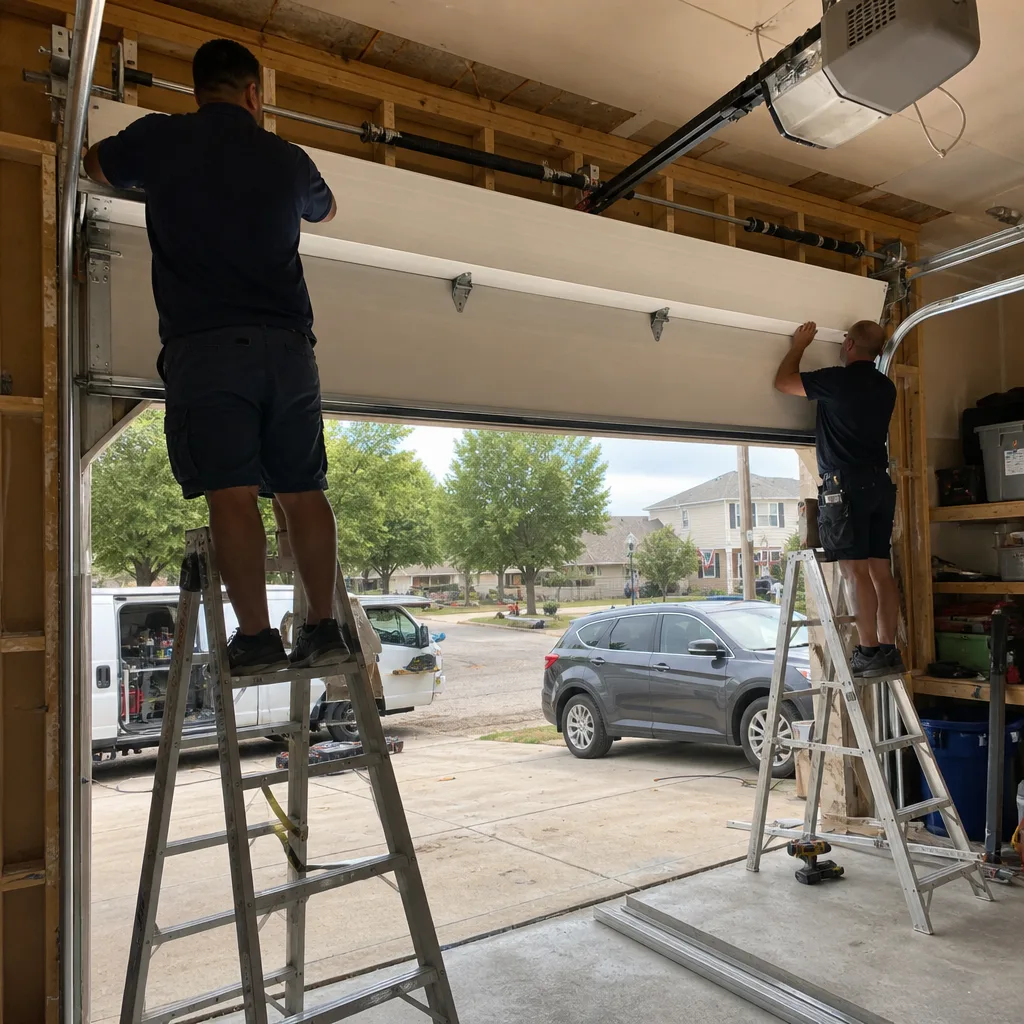
Torsion spring work, cable replacement, and track adjustment all involve parts under tension that can cause serious injury if mishandled. A door that’s sagging, grinding, slamming on close, or refusing to balance at the halfway point is signaling a mechanical problem that won’t resolve with lubrication or adjustment videos. Any visible fraying on a cable, rust scaling on a bottom bracket, or a spring with a visible gap in the coil means the garage door should stay shut and a technician should be the next call. Servo Garage Doors Fort Worth offers free estimates in Fort Worth, with a written price and written scope before any work begins. Call (682) 297-6476 and a live person answers, day or night.
Frequently Asked Questions
A torsion spring replacement in Fort Worth typically runs $180 to $340 for a single spring installed, depending on the spring’s wire gauge, cycle rating, and whether the door uses one or two springs. The price is written and agreed before any work starts. Call (682) 297-6476 for an exact quote on your door’s spring spec.
Look above the closed door. If you see one or two springs mounted horizontally on a metal shaft across the header, it’s torsion. If you see two springs stretched along the horizontal tracks on either side, it’s extension. Torsion is the modern standard and the safer design.
An insulated 24-gauge steel door in Fort Worth lasts 12 to 15 years on average, with west-facing doors trending shorter due to the summer heat cycle. Thinner 25-gauge or 27-gauge panels typically show oil-canning or delamination within 8 to 10 years. Composite panels can outlast both.
Most spring, cable, and roller repairs are same-day jobs when the parts are on the truck, and our technicians carry the common spring wire gauges and drum types used in Fort Worth homes. The nameplate photo and measurements speed up parts matching before the truck ever leaves the shop. Call (682) 297-6476 and we’ll confirm the window.
No. The written quote includes the price and the scope, and it’s agreed before any work starts. If an additional issue is found during the job, that’s quoted separately in writing before anything else is touched. Clause 1 of The Haven Standard means the number on the page is the number on the invoice.
Our technicians carry torsion springs in the most common Fort Worth wire gauges, standard and high-lift cable sets, nylon and steel rollers, bottom seals, and standard replacement hinges. For unusual series-specific parts, the nameplate photo and measurements taken during the first visit allow a second trip with the correct part, quoted in writing before the first trip ends.
A new insulated steel garage door in Fort Worth installed typically ranges from $1,200 to $2,800 depending on the panel gauge, insulation type, size, and track configuration. The price is quoted flat before any work starts, and the quote includes the measurements it’s based on. Call (682) 297-6476 with your six measurements for a written price.
Yes. We service LiftMaster, Chamberlain, Genie, Clopay, Amarr, Wayne Dalton, Craftsman, and Raynor, which covers the brands installed in the vast majority of Fort Worth homes built since 1990. Brand-specific part series are sourced from the manufacturer’s spec sheet, not generic aftermarket substitutions.
The Bottom Line
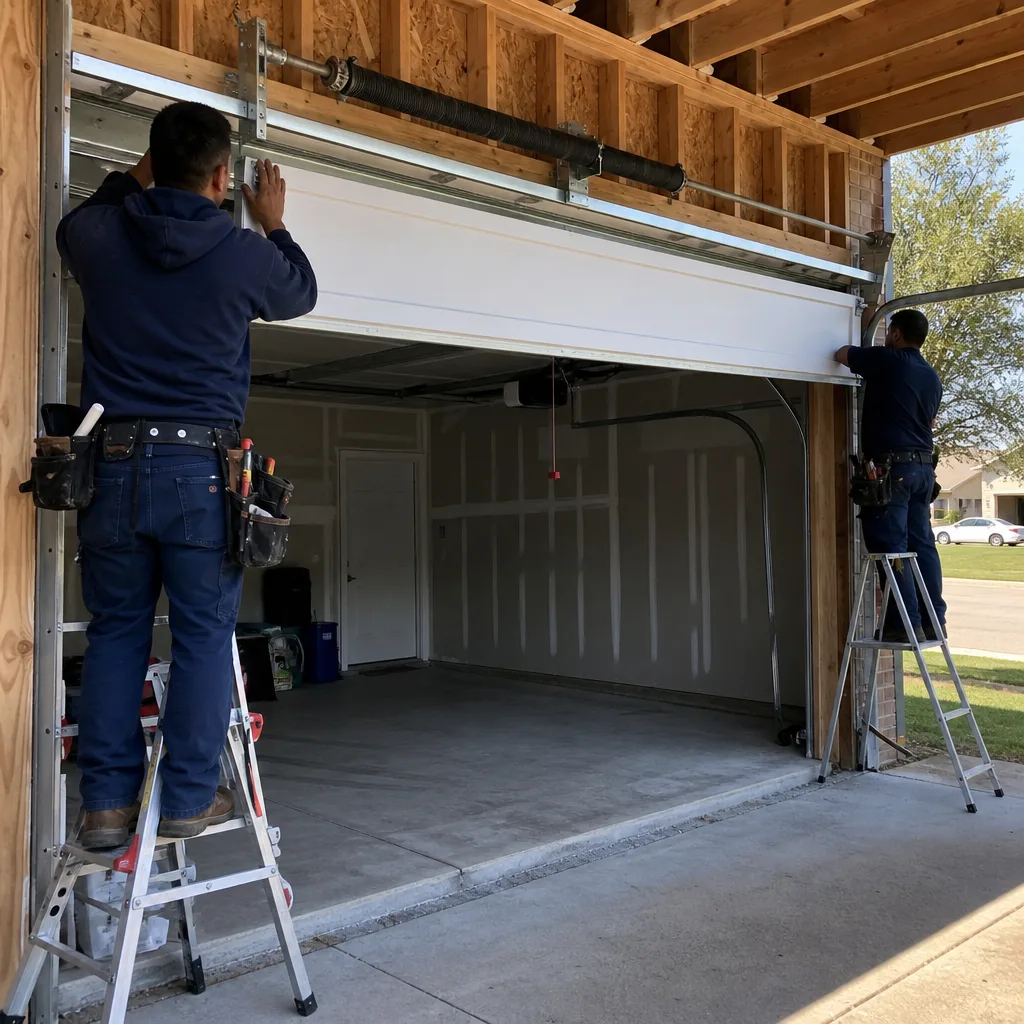
The garage door is a system of cycle-rated, measured components, and the more you know about what’s installed, the better your repair or replacement decisions become. Have your spring type, panel material, nameplate photo, and six measurements on file before the next conversation about your door. That information turns a vague estimate into a written price with a scope. For any garage door work in Fort Worth, Servo Garage Doors Fort Worth home service area includes the full metro, and our Garage Door Opener Repair & Installation in Fort Worth team handles the mechanical side as well. Call (682) 297-6476 for a free estimate with a flat, written price before any work starts.
Written by Marcus Deller, Owner at Servo Garage Doors Fort Worth, serving Fort Worth since 2015.