
Last updated September 20, 2026
Full 25-point door and opener safety check with every visit - springs, cables, rollers, tracks, and your LiftMaster or Chamberlain opener included
You get a price before we start. It does not change when the truck arrives.
 Before
 After
After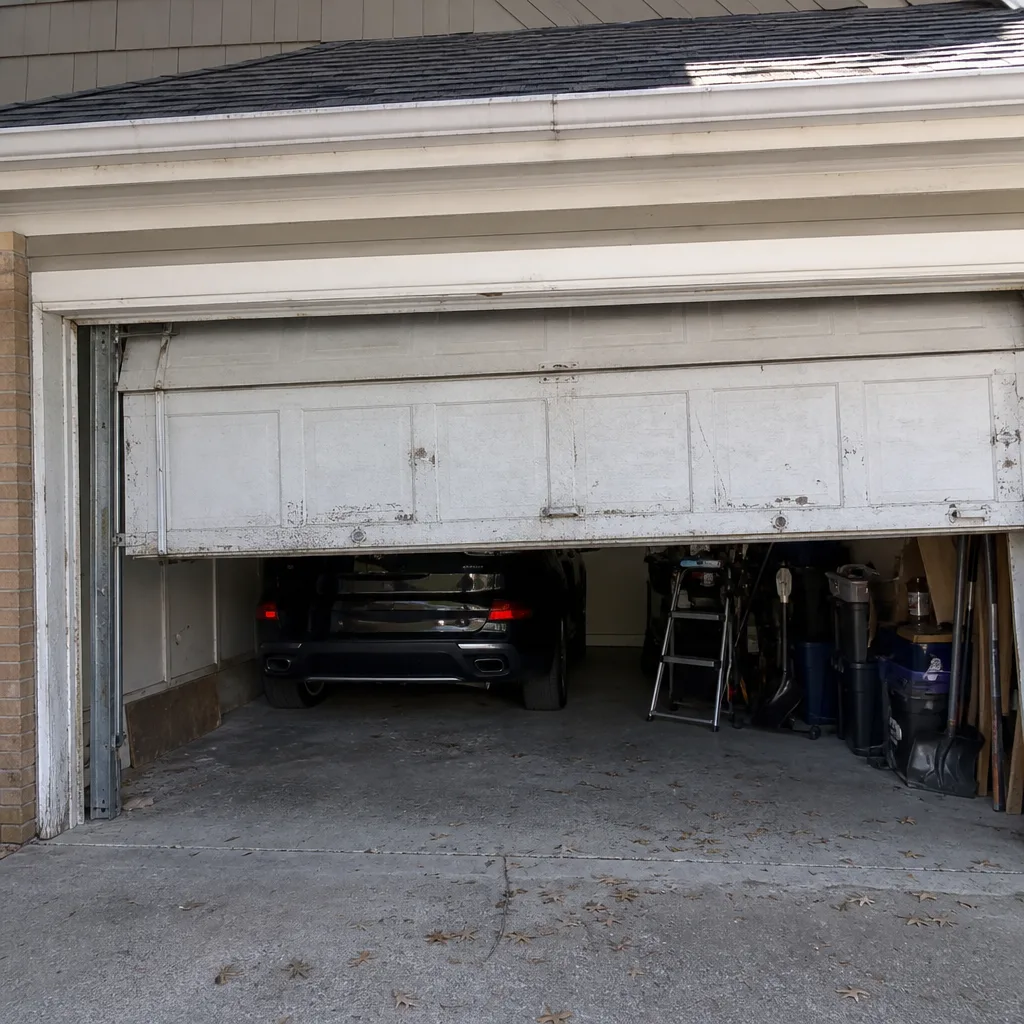 Before
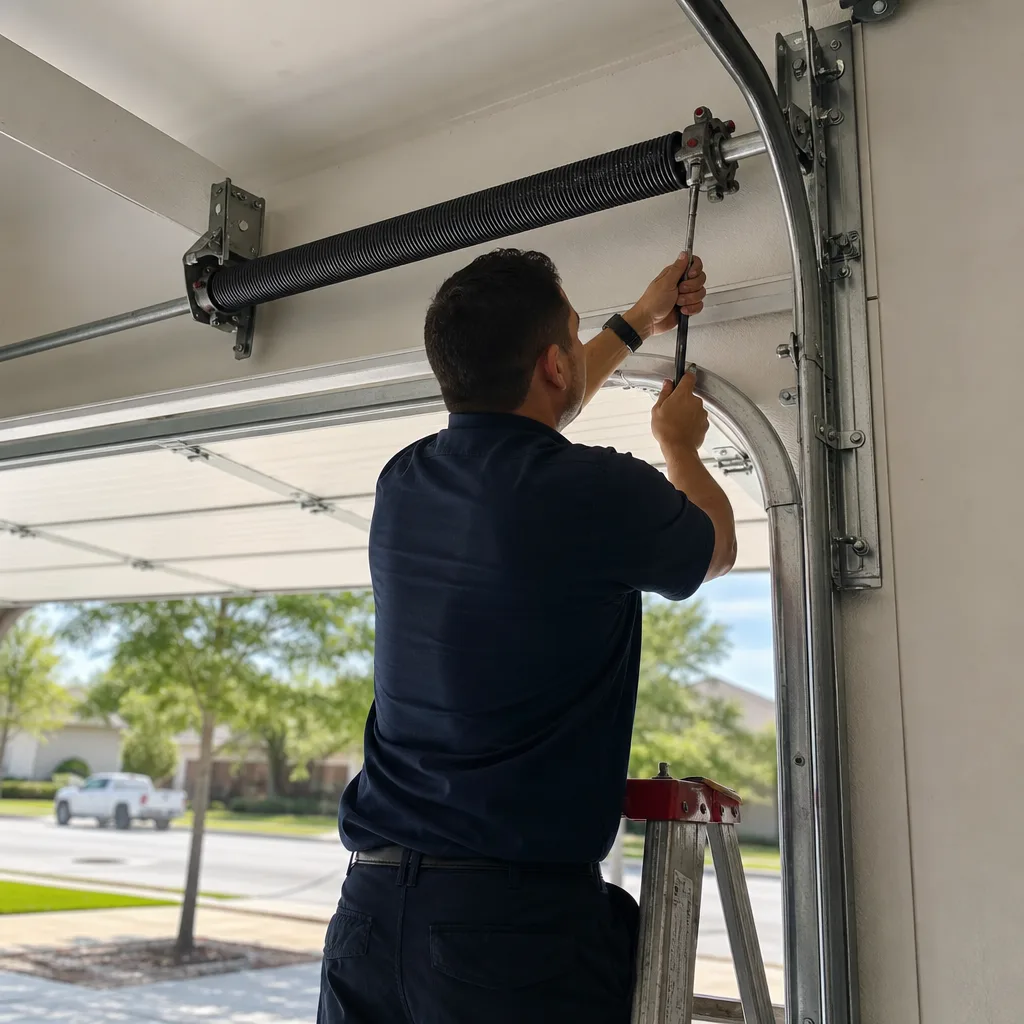 After
After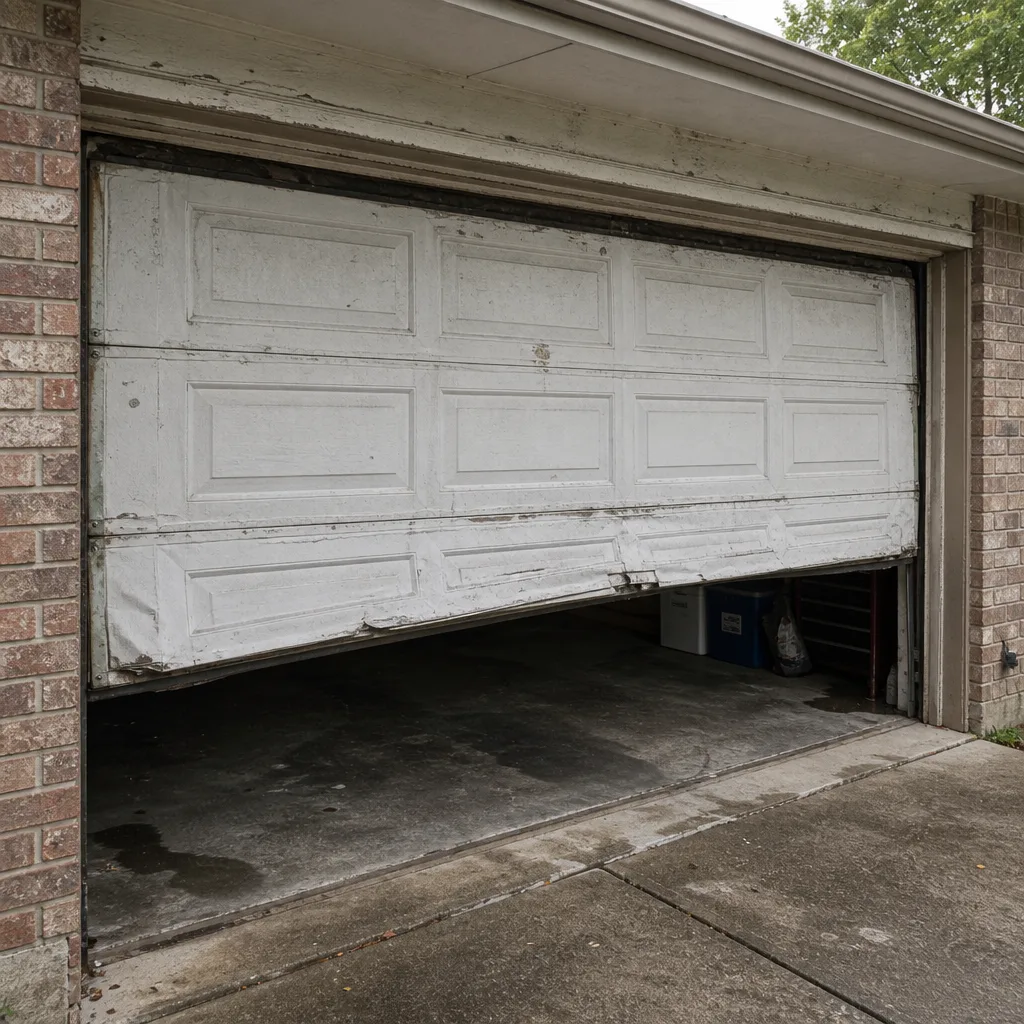 Before
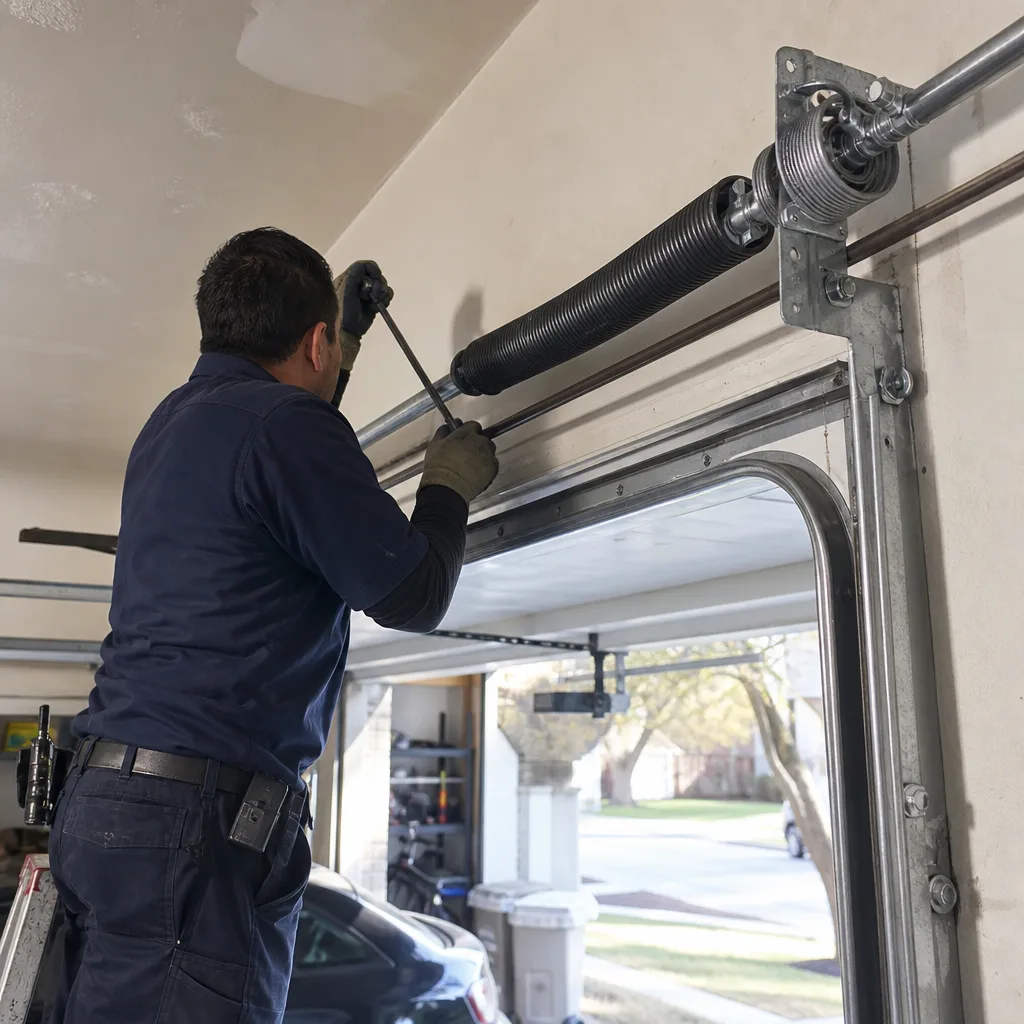 After
AfterSeasonal Garage Door Care for Fort Worth: Year-Round Homeowner’s Guide
Fort Worth recorded a 43-degree temperature swing in a single March day in 2024. That thermal cycle stresses spring metal and track alignment more than a full Northern winter does, and it happens dozens of times each year in North Texas. Most national garage door maintenance advice is written for places with four predictable seasons and a hard freeze. Fort Worth doesn’t work that way, and neither should your maintenance schedule. This guide explains what actually fails on garage doors in Fort Worth, when it fails, and what you can do about it before you’re standing in the driveway at 7 a.m. with a door that won’t open. For The Complete Guide to Garage Door in Fort Worth and more in-depth coverage, see our full resource library.
Quick Answer
Seasonal garage door maintenance in Fort Worth means two annual inspections timed to March and October, because the 40-degree single-day temperature swings in those months expand and contract metal components faster than gradual seasonal shifts, producing the highest rate of spring failure and track misalignment all year. The homeowner tasks that matter most are spring lubrication in October, photo-eye realignment each spring, bottom seal replacement before summer heat, and documenting panel condition before hail season. A full inspection takes about 45 minutes twice a year and catches most failures before they strand a car in the driveway.
Table of Contents
- Why Fort Worth’s Climate Breaks Garage Doors Differently
- The March and October Protocol: Transition Months That Actually Matter
- Summer Protocol: Heat, Duty Cycles, and Photo-Eye Drift
- Winter Protocol: The Freeze Threshold and Grease Viscosity
- Hail Season Preparation: Documenting Your Panel Condition
- Month-by-Month Task Table for Fort Worth
- Common Mistakes to Avoid
- When to Call a Professional
- Frequently Asked Questions
BeforeAfterWhy Fort Worth’s Climate Breaks Garage Doors Differently
Garage doors in Fort Worth don’t fail the way garage doors in Minneapolis fail. A Minneapolis door sees a temperature swing of maybe 15 degrees over a week in January. A Fort Worth door can see 45 degrees between 3 p.m. and 6 a.m. in March. The mechanical difference comes down to thermal expansion rates. Steel expands at roughly 0.0000065 inches per inch per degree Fahrenheit. That sounds trivial until you do the math on a 16-foot torsion spring, which is actually a coiled steel rod under tension. A 40-degree swing moves that spring enough to shift the stress distribution across the coil. Do that 30 times in a single transition month and you get fatigue cracks that no national maintenance checklist accounts for. This is why a Garage Door Repair in Fort Worth call in March is more likely to involve a snapped spring than a call in August.
In our experience, the failure pattern is consistent. Torsion springs rated for 10,000 cycles don’t reach 10,000 cycles in Fort Worth. They reach 6,500 to 7,500 before the metal fatigues. The rapid expansion and contraction during March and October transition months is the accelerant. Track misalignment follows the same pattern. The galvanized steel track sections bolted to the framing expand and contract against the lag bolts holding them. When the wall itself shifts slightly with soil moisture changes, which happens after spring rains, the track moves a quarter inch out of true. That quarter inch is enough to make the rollers bind.
The March and October Protocol: Transition Months That Actually Matter
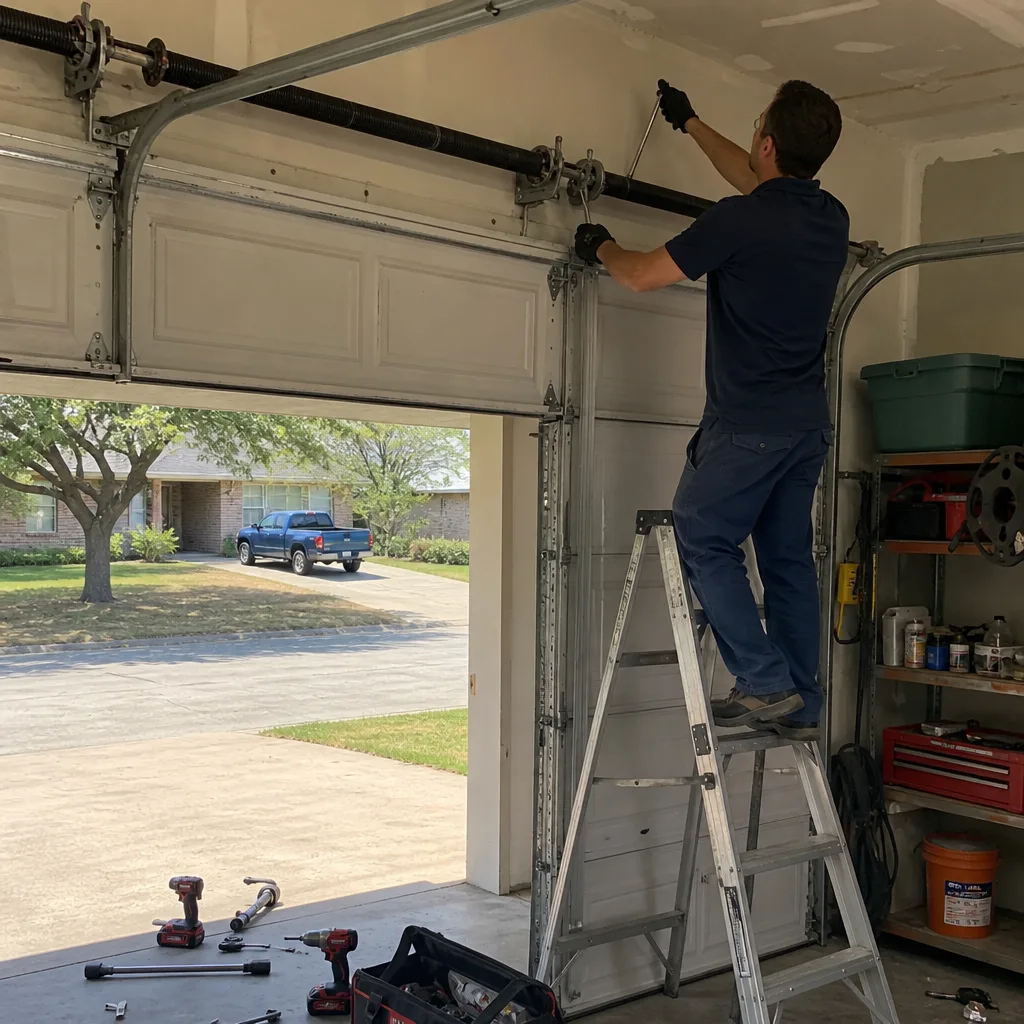
The single most useful thing a Fort Worth homeowner can do for their garage door is inspect it in the first week of March and the first week of October. These are the two times of year when your door has just endured the highest number of rapid temperature swings. Here is the exact protocol, about 45 minutes total.
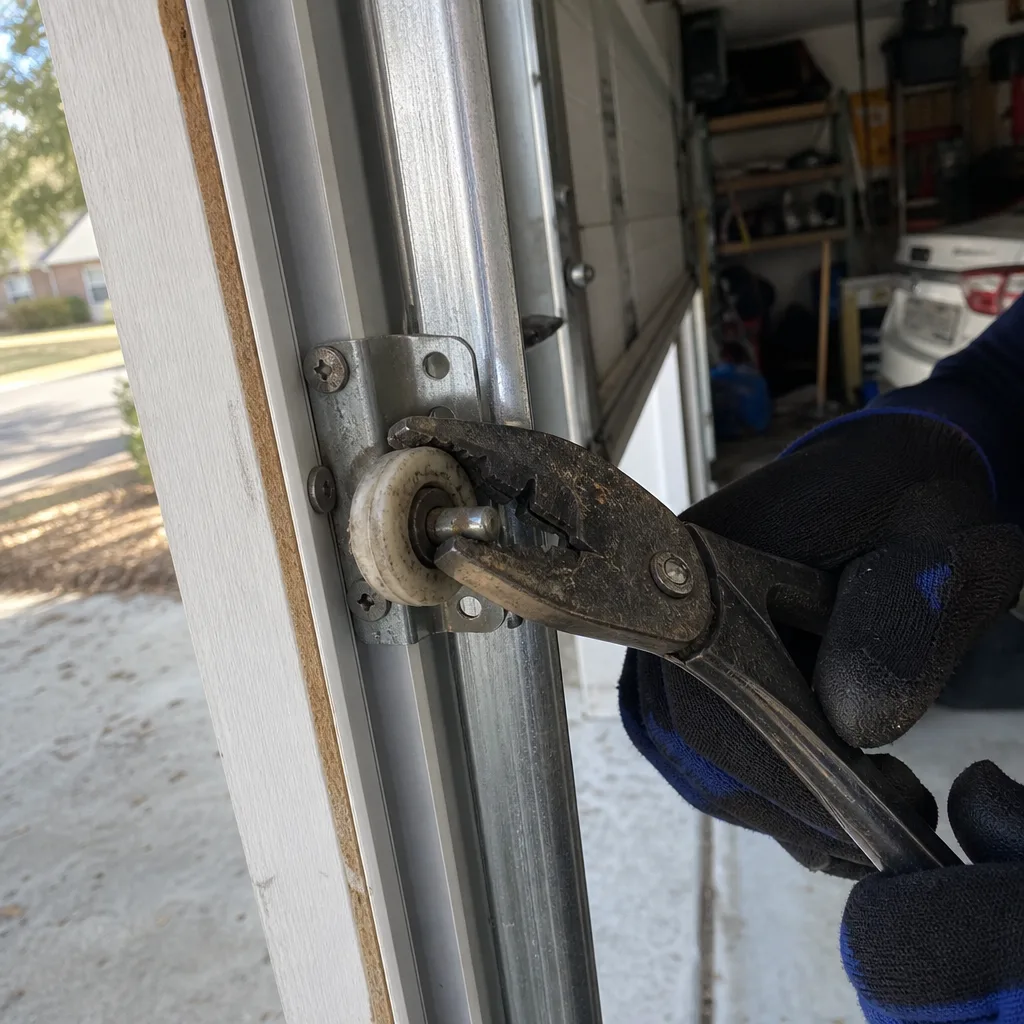
- Run the door through a full cycle and listen. A healthy Fort Worth garage door operation should take about 12 seconds and sound like a steady mechanical hum. Clicking, popping, or a grinding sound from the spring area means the spring is binding under its own movement, which is a precursor to snapping.
- Check the gap between door and opening. With the door closed, stand inside the garage and look at where the door meets the frame on both sides. The gap should be even from top to bottom. If it’s wider at the top or bottom, the track has moved and the door is now riding off-level.
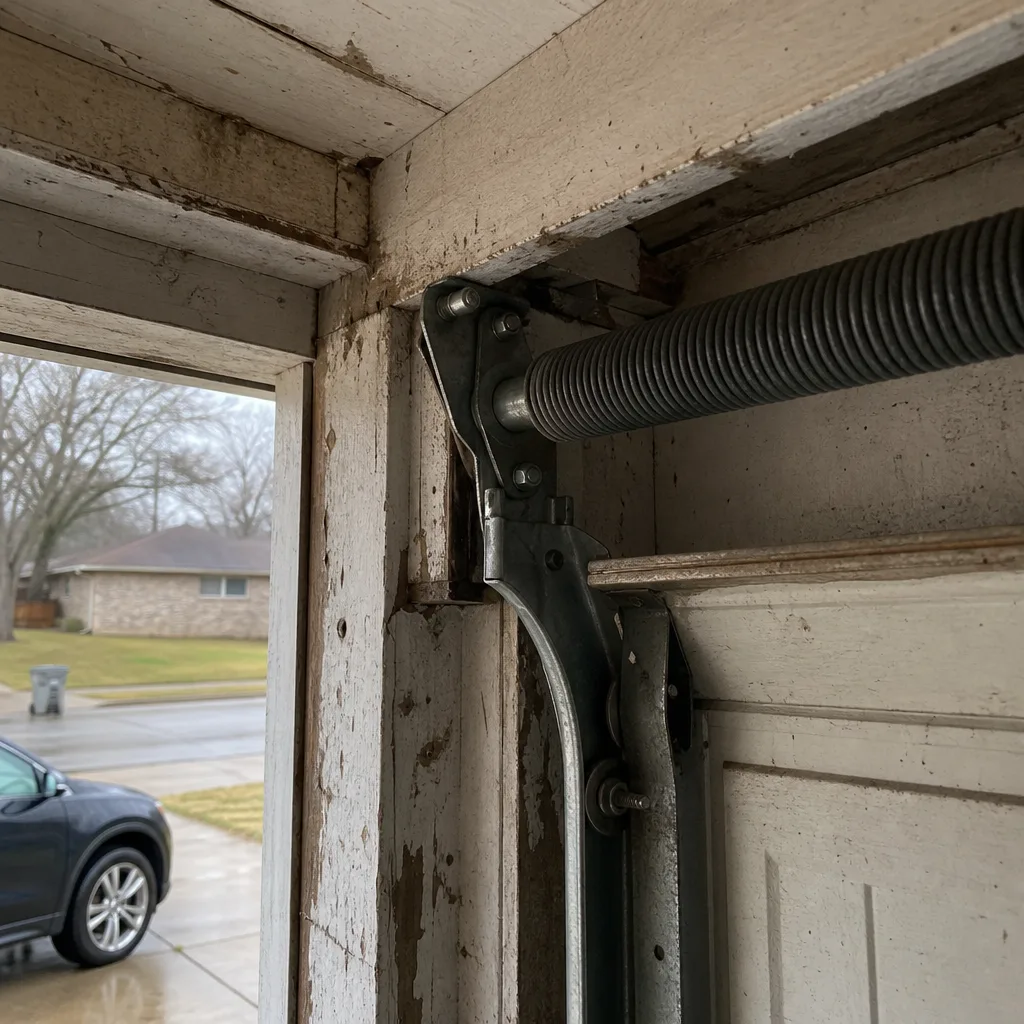
- Inspect the torsion spring for rust and gap. A torsion spring is the coiled steel tube above the door. Rust on the coil is a surface problem. A visible gap in the coil, meaning you can see through the spring where coils have separated, is a structural problem. Do not attempt to fix this yourself. A torsion spring under tension stores enough energy to cause serious injury or death if it releases.
- Lubricate in March, but do it correctly. Use a white lithium grease or a silicone-based garage door lubricant. Apply to the torsion spring coils, the roller bearings, and the hinges. Do not lubricate the track itself, which a surprising number of national guides recommend and which is wrong for Fort Worth. Lubricated tracks collect dust and grit from dry North Texas winds and turn into grinding paste.
- Test the auto-reverse function. Place a 2×4 flat on the ground under the door’s path and close the door. The door should reverse within two seconds of contacting the wood. If it doesn’t, the opener’s force setting needs adjustment. This is a safety system, not a convenience feature.
The October pass is the same list, but with less emphasis on track condition and more on the spring. The cumulative effect of a summer of cycles, plus the first cool snaps of fall, is what ends a spring’s life. If your spring passes inspection in March but fails in October, that’s the normal Fort Worth failure curve, not bad luck.
Summer Protocol: Heat, Duty Cycles, and Photo-Eye Drift
Fort Worth summers push garage door openers past their designed duty cycle more than any other season. An opener’s duty cycle is the percentage of time it can run before the motor needs to cool. Most residential openers are rated for about 5 cycles per hour. But in July and August, a Fort Worth family might run the door 8 to 10 times before noon: out for school drop-off, back for the forgotten item, out again, back for lunch, out for errands. When the ambient temperature inside the garage is 110°F or higher, the motor already starts hot, and the thermal overload protection kicks in sooner. This is the mechanical explanation for the July opener that suddenly won’t run, then works again 20 minutes later. It’s not a faulty motor, it’s a duty cycle trip.
Photo-eye drift is the second summer failure. The photo-eye sensors are the two small units mounted on each side of the door opening, about six inches off the ground. They project an invisible beam across the opening. If the beam is interrupted, the door won’t close. In summer, the steel brackets holding these sensors expand in the heat. A sensor aimed correctly at 8 a.m. can be off by a few millimeters at 3 p.m. when the wall they’re mounted to has been baking all day. The fix is usually a manual realignment, which is done by loosening the bracket screw and repositioning. This is something any homeowner can do. The symptom is a door that reverses or won’t close only in the afternoon.
Bottom seals are the third summer item. The bottom seal, also called a weather seal, is the rubber strip along the bottom edge of the door panel. Fort Worth’s summer heat dries out rubber seals, and once the seal loses flexibility, it cracks. A cracked bottom seal lets hot air, dust, and the occasional scorpion into the garage. A new seal costs roughly $25 to $50 for the material, and installation takes about 20 minutes if the old one slides out cleanly. This is one of the few repairs we recommend a homeowner do themselves, simply because the failure mode is obvious and the consequence of a mistake is cosmetic.
If you’re running a Genie or Chamberlain opener that’s 8 or more years old and you’re noticing summer duty-cycle trips, that’s a signal the motor is near the end of its working life. Our Garage Door Opener Repair & Installation in Fort Worth page covers what replacement costs look like in this market, but the short version is that a new belt-drive opener with installation in Fort Worth typically runs $350 to $650 depending on the model and whether the existing rail can be reused.
Winter Protocol: The Freeze Threshold and Grease Viscosity
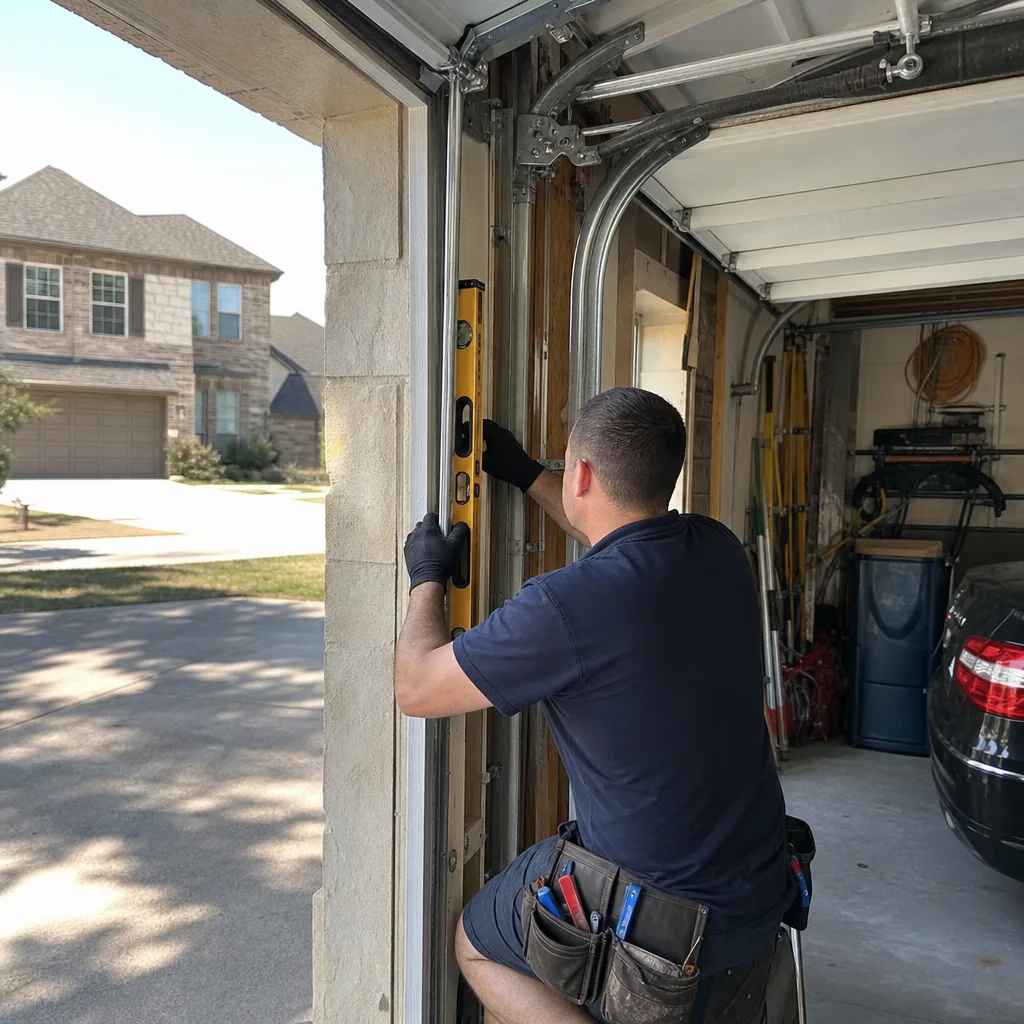
Fort Worth winters are mild by national standards, but they reach a threshold that matters for garage door maintenance. Grease viscosity changes measurably at about 40°F. Below that temperature, the grease on your rollers, bearings, and spring coils thickens. A door that moved easily at 60°F now offers more resistance. The opener motor compensates by drawing more current, which puts strain on the logic board and the capacitor. This is why the coldest mornings of a Fort Worth January produce opener failures on doors that worked fine all fall.
The solution is to lubricate in October, before the first cold snap. Lubrication done in October keeps the grease film fresh and thin enough to work at 35°F. Lubrication done in December, after the grease has already thickened, doesn’t reverse the effect until the temperature rises again. This is a timing mistake that costs homeowners a service call they could have avoided.
The other winter item in North Texas is the thermal bow. When a steel panel door faces south or west and gets afternoon sun in January, the outer skin of the panel heats to 80°F while the inner skin stays at 40°F. The panel bows outward by a fraction of an inch. That bow changes the clearance between the panel edge and the track, and on doors with tight tolerances, it makes the rollers drag. Fort Worth homes with south-facing garage doors see this every winter. It’s not a defect, it’s physics. The telltale sign is a door that only struggles on sunny winter afternoons. This is also why some doors feel stiff in January regardless of lubrication, and why a full track adjustment sometimes gets recommended when the real issue is panel alignment.
Hail Season Preparation: Documenting Your Panel Condition
Fort Worth sits in the highest-risk hail corridor in the United States. Between March and June, the city averages a dozen hail events per year, and larger storms can damage not just roofs but garage door panels, which are the largest exposed metal surface on most homes. Most homeowners don’t think about their garage door until the adjuster shows up, and by then they’re trying to prove the dents weren’t pre-existing. The solution is to document panel condition before storm season.
Here’s the simple version. In late February, take a photo of each garage door panel, close up, in daylight. Do it with your phone. Store those photos in a folder labeled with the date. That gives you a baseline. After a hail event, take the same photos again. The difference between the two sets is what your insurance adjuster needs to see. This is the same documentation principle we follow on every visit, where the customer receives a photo record of what was found and what was changed. It removes the version of the story where the adjuster says the damage was there before the storm and you can’t prove otherwise.
On impact resistance: steel panels carry an impact rating, usually expressed as a Class rating under the UL 2218 standard. A Class 3 or Class 4 panel is designed to withstand higher impact energy without denting or cracking. Clopay and Amarr both offer higher-rated steel panels for the Texas market. If you’re replacing panels or installing a new door in Fort Worth, an impact-rated panel is worth the premium, which is usually $100 to $250 per door depending on the manufacturer and panel thickness. The premium pays for itself in avoided insurance claims, and many Fort Worth homeowners’ policies offer a discount for impact-rated doors, though you’ll need to check your specific policy.
If you’re already in the market for a door that handles hail season better, our Garage Door Installation in Fort Worth page explains the full range of local options, including panel thickness and insulation values for our climate.
Month-by-Month Task Table for Fort Worth
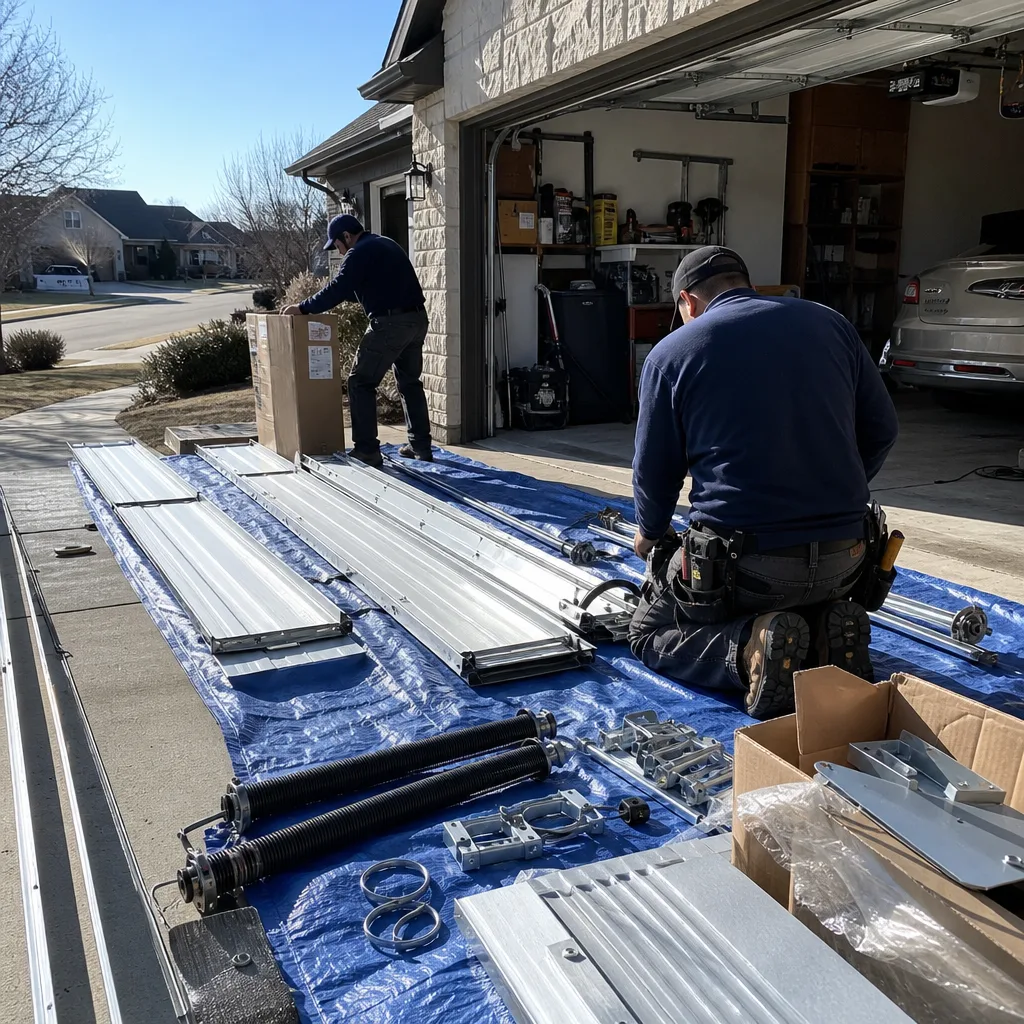
This table is calibrated to the actual Fort Worth climate pattern, not a national average. If you do the tasks in the month listed, you’re ahead of the failure curve.
- January: Listen for opener strain on cold mornings. If the door sounds labored below 40°F, the grease is too thick or the spring is weakening. Time: 5 minutes.
- February: Photograph all door panels for your hail-season baseline. Time: 10 minutes.
- March: Full inspection and lubrication per the March protocol. Time: 45 minutes.
- April: Watch for track misalignment after spring rains, which shift soil moisture and can move framing by a fraction of an inch. Time: 5 minutes.
- May: Realign photo-eyes if the door reverses only on hot afternoons. Time: 15 minutes.
- June: Check the bottom seal for cracking. Replace if brittle. Time: 20 minutes.
- July: Reduce opener cycles during peak heat. Combine trips when possible. Time: none.
- August: Inspect the torsion spring for visible coil gap. If present, call a professional that day. Time: 5 minutes.
- September: Inspect and tighten all hinge and track bolts, which loosen over a summer of expansion cycles. Time: 20 minutes.
- October: Full inspection and lubrication per the October protocol. Time: 45 minutes.
- November: Test the auto-reverse and photo-eye function before the holidays, when garage traffic peaks. Time: 10 minutes.
- December: Watch for thermal bow on south-facing doors. If the door drags only on sunny afternoons, note it and have it checked in the spring. Time: 5 minutes.
Common Mistakes to Avoid
- Lubricating the track. This is the most common mistake we see in Fort Worth. Lubricated tracks collect dust from dry North Texas winds and become abrasive. Lubricate the rollers, hinges, and spring. Leave the track dry.
- Following a national maintenance calendar. National guides say to inspect in spring and fall. In Fort Worth, that means March and October specifically. A May inspection misses the worst of the transition-season stress.
- Replacing one spring when both are worn. Most Fort Worth garage doors use a two-spring system. When one breaks, the other is usually within a few hundred cycles of failing too. Replacing both costs more upfront but avoids a second service call in six weeks.
- Ignoring a door that only misbehaves on hot afternoons. That’s photo-eye drift or thermal bow, not a fluke. Both are fixable. Both get worse if ignored.
- Using WD-40 on the spring. WD-40 is a solvent, not a lubricant. It strips existing grease off the spring coils and makes the metal more likely to bind. Use white lithium grease or silicone spray.
- Documenting hail damage only after the storm. Without a pre-storm photo baseline, you’re arguing with an adjuster about what existed before. The February photo set is cheap insurance.
- Assuming a new door means no maintenance. Even a new Wayne Dalton or Amarr door needs the same March and October attention. The door is new. The climate isn’t.
When to Call a Professional
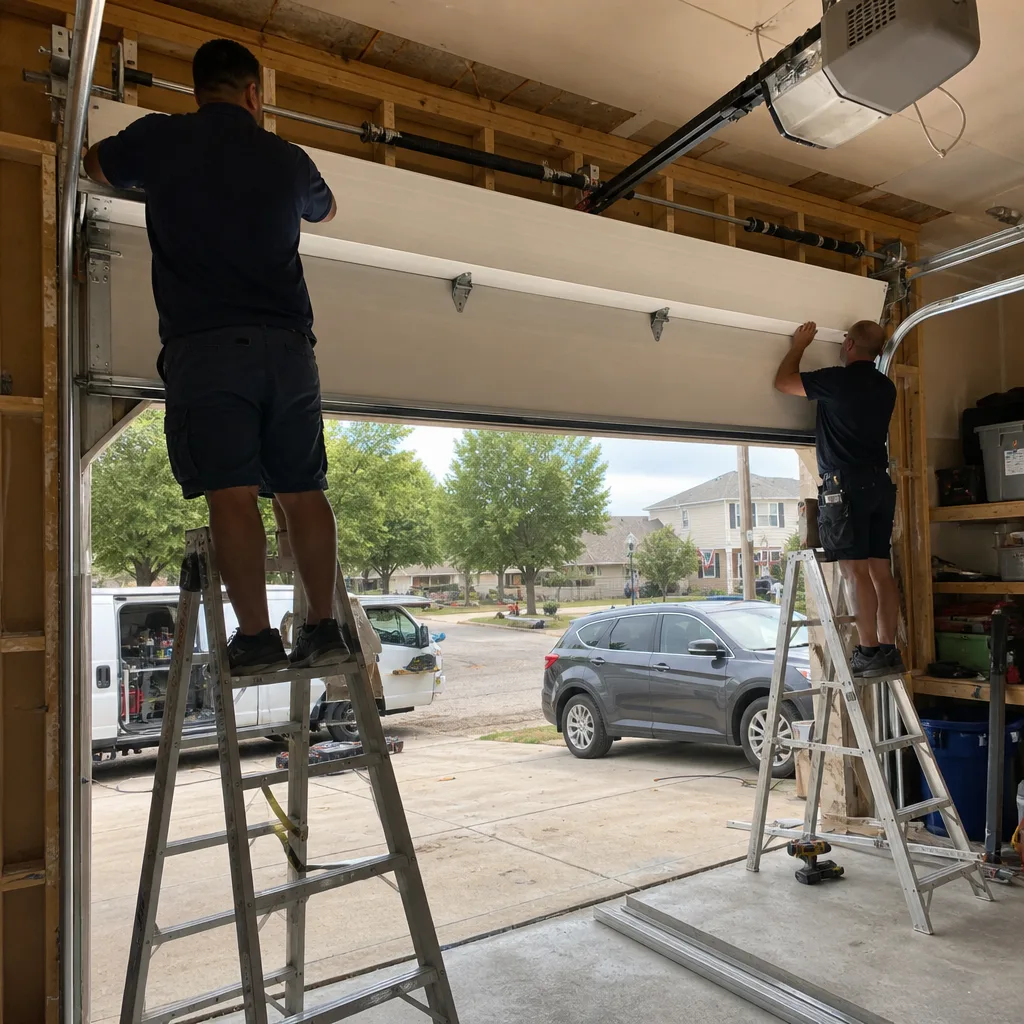
Some tasks are safe for a homeowner and some are not. If your torsion spring has a visible gap, has snapped, or is making a grinding sound, stop and call someone. The energy stored in a torsion spring under tension is enough to cause serious injury or death if it releases while you’re working on it. The same applies to cable replacement and any repair involving the spring assembly itself. These are not DIY projects-read our DIY vs Professional Garage Door: The Fort Worth Homeowner’s Decision Guide to understand why. A trained professional has the winding bars and the experience to do this safely.
For everything else described in this guide, most Fort Worth homeowners can handle the lubrication, photo-eye realignment, seal replacement, and documentation tasks themselves. But if you’d rather hand the whole list to someone who does this every day, Servo Garage Doors Fort Worth offers free estimates in Fort Worth, and every job is quoted with a flat, written price and written scope before any work starts, per Clause 1 of The Haven Standard. Call (682) 297-6476 and a real person answers, not a recording.
Frequently Asked Questions
Twice a year: once in early March and once in early October. Fort Worth’s transition months put more stress on spring metal and moving parts than the rest of the year combined, and fresh lubricant in those months protects against the specific failure modes caused by rapid temperature swings. Call (682) 297-6476 if you want a professional to handle the full inspection and lubrication as part of a maintenance visit.
A professional garage door inspection and lubrication visit in Fort Worth typically runs $75 to $150, depending on the company and whether any parts need replacement. See our Garage Door Cost Breakdown: The Fort Worth Homeowner’s Reference for 2026 for detailed pricing factors. At Servo Garage Doors Fort Worth, the price you’re quoted before work begins is the price you pay, per Clause 1 of The Haven Standard. No call-for-a-quote games.
Yes, for most of the tasks in this guide. Lubrication, photo-eye realignment, bottom seal replacement, and documentation are all within reach of a typical Fort Worth homeowner. The line is the torsion spring. If it has a gap, is making grinding sounds, or has snapped, that is a professional repair, not a DIY project. The stored energy is dangerous.
That’s usually photo-eye drift from thermal expansion. The steel brackets holding the sensors expand in the heat, moving the beam out of alignment by a few millimeters. The fix takes about 15 minutes. If realignment doesn’t solve it, the issue may be thermal bowing on a south-facing panel, which is more involved and worth a professional look.
Yes. Fort Worth’s summer heat dries out rubber seals until they crack, and a cracked seal lets hot air, dust, and pests into the garage. A new seal costs about $25 to $50 and takes 20 minutes to install if the old one slides out cleanly. If the old seal is degraded to the point that it tears during removal, that’s the time to call a professional rather than forcing it.
Not at Servo Garage Doors Fort Worth. The price you’re quoted before work begins is the price on the invoice, per Clause 1 of The Haven Standard. If additional work is needed beyond the original quote, you get a separate written price before anything extra starts. No surprises on the invoice. Call (682) 297-6476 for a free estimate.
The Bottom Line
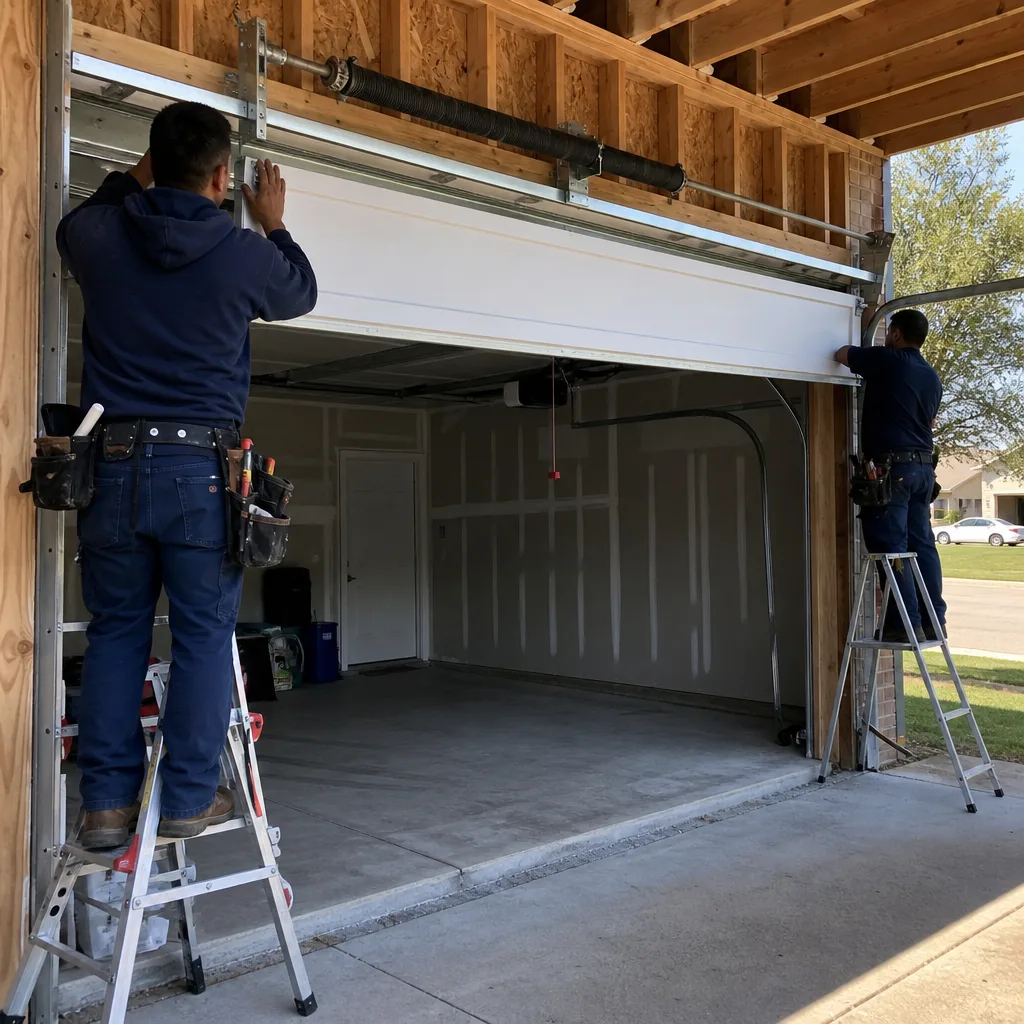
Fort Worth’s garage door problems don’t follow a national playbook. The 40-degree temperature swings in March and October are what break springs and misalign tracks. Summer heat trips opener duty cycles and drifts photo-eyes. Winter’s freeze threshold thickens grease enough to strain motors. The fix is two 45-minute inspections a year, timed to March and October, plus a few seasonal tasks that take minutes. Document your panels before hail season. Lubricate before the first cold snap. And never touch a torsion spring yourself. For more guides & resources, explore our blog. Servo Garage Doors Fort Worth has been serving Fort Worth since 2015, and every job since day one has been quoted with a written price before work starts. That’s Clause 1, and it’s not negotiable.
Written by Marcus Deller, Owner at Servo Garage Doors Fort Worth, serving Fort Worth since 2015.