
Last updated September 20, 2026
Full 25-point door and opener safety check with every visit - springs, cables, rollers, tracks, and your LiftMaster or Chamberlain opener included
You get a price before we start. It does not change when the truck arrives.
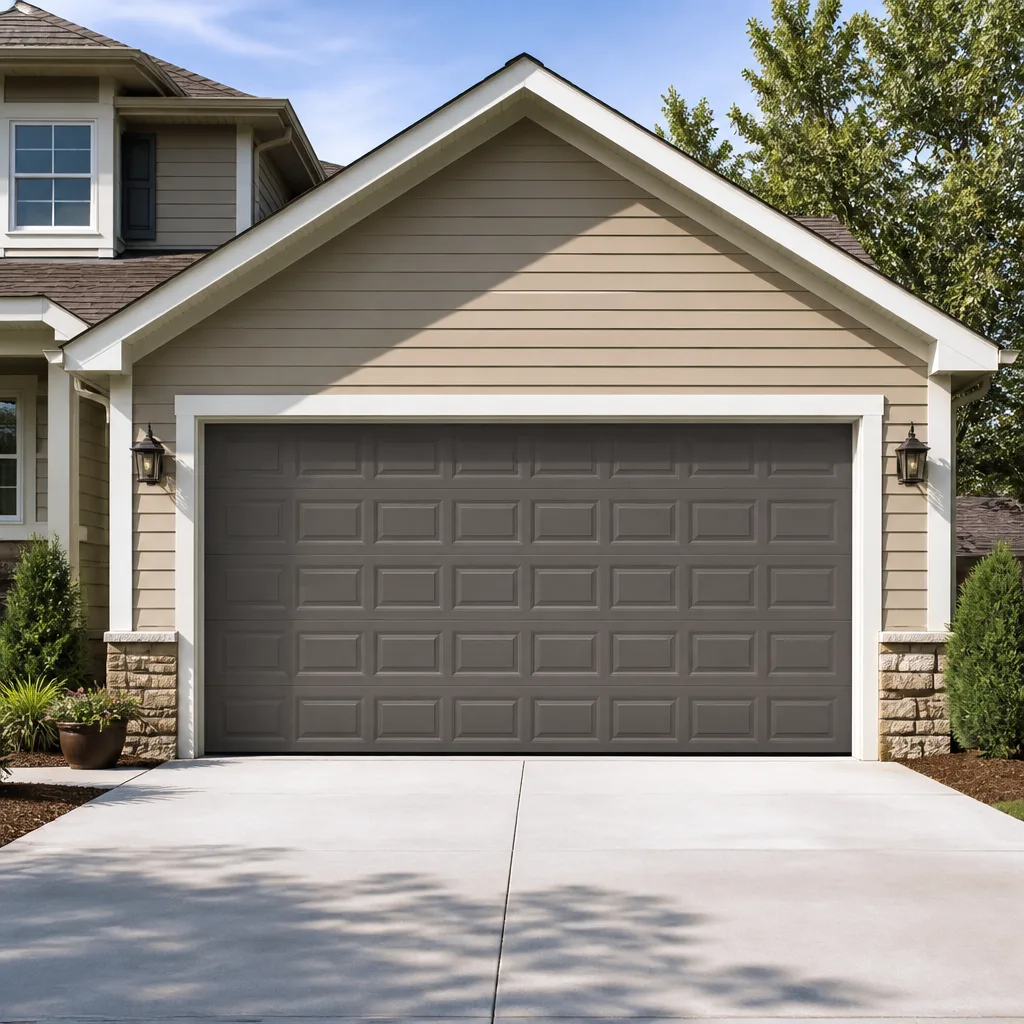
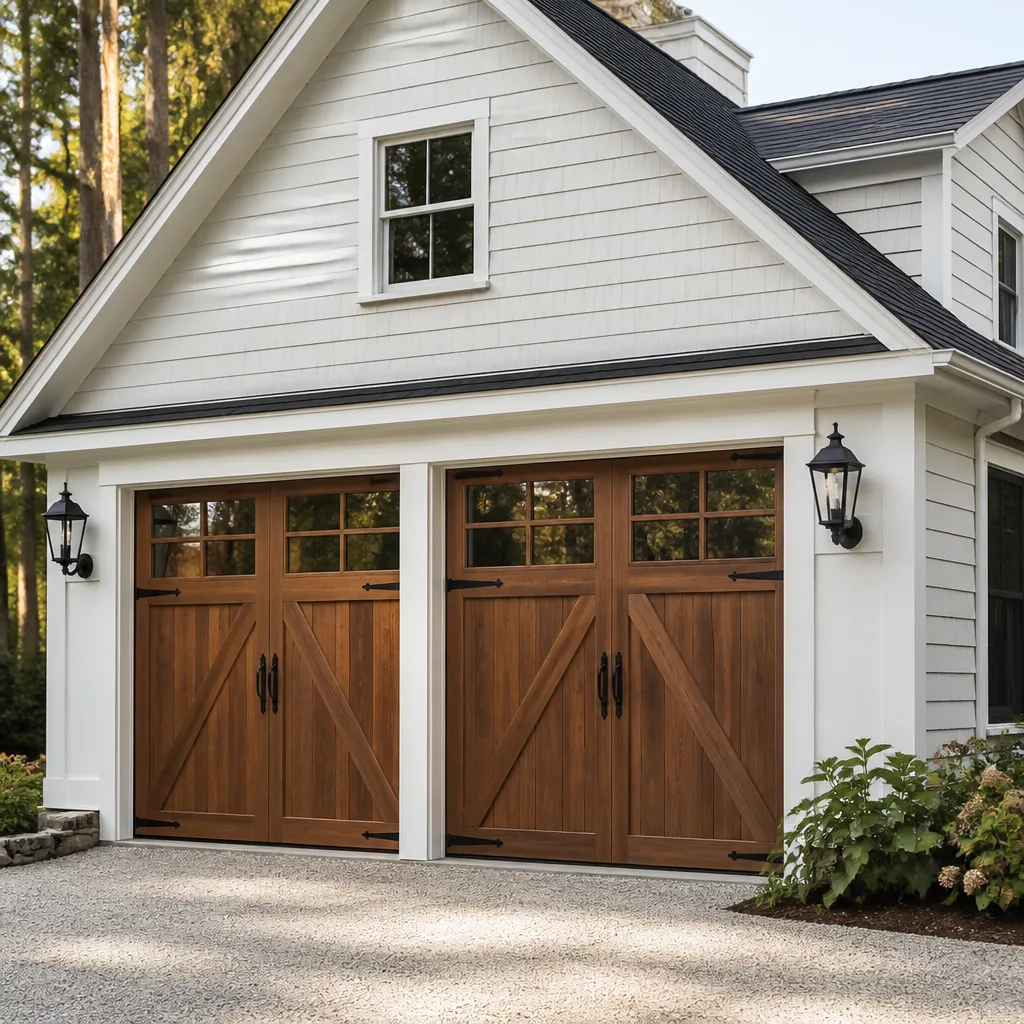
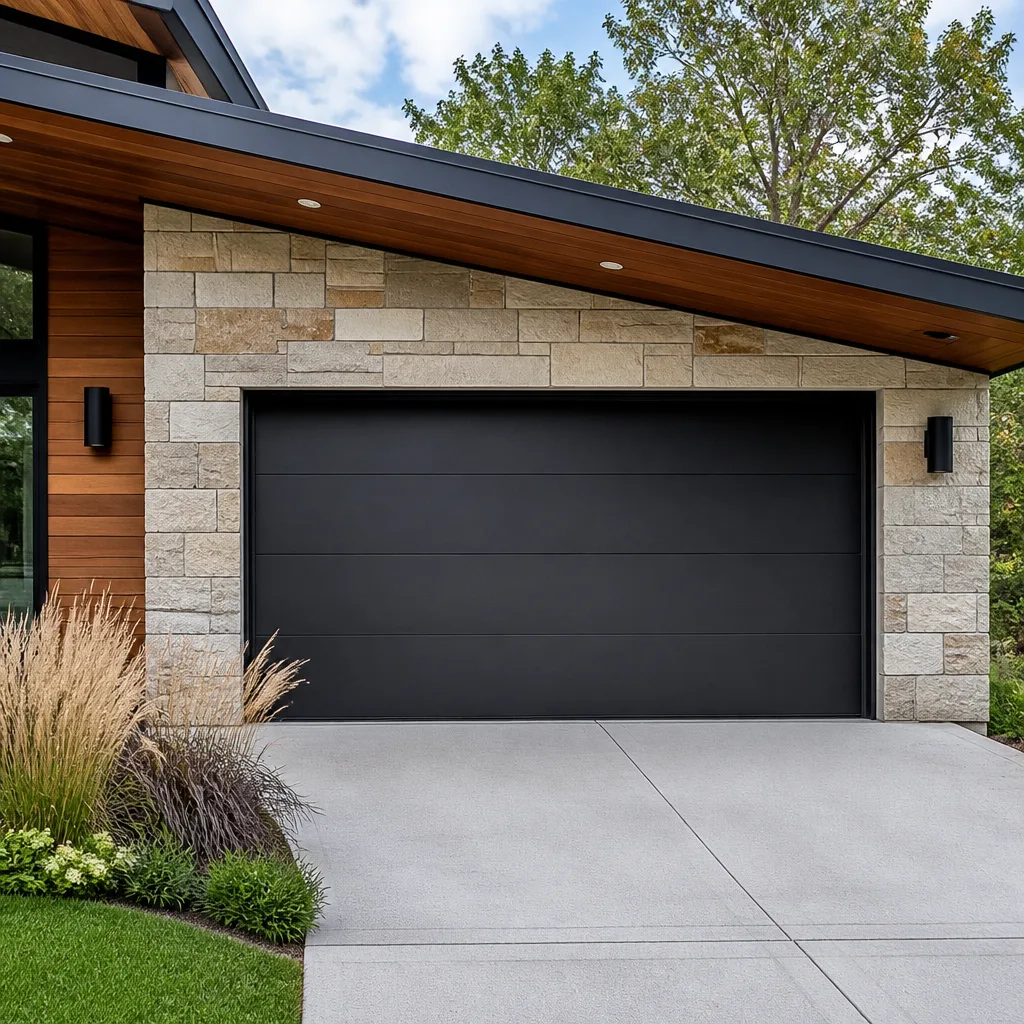
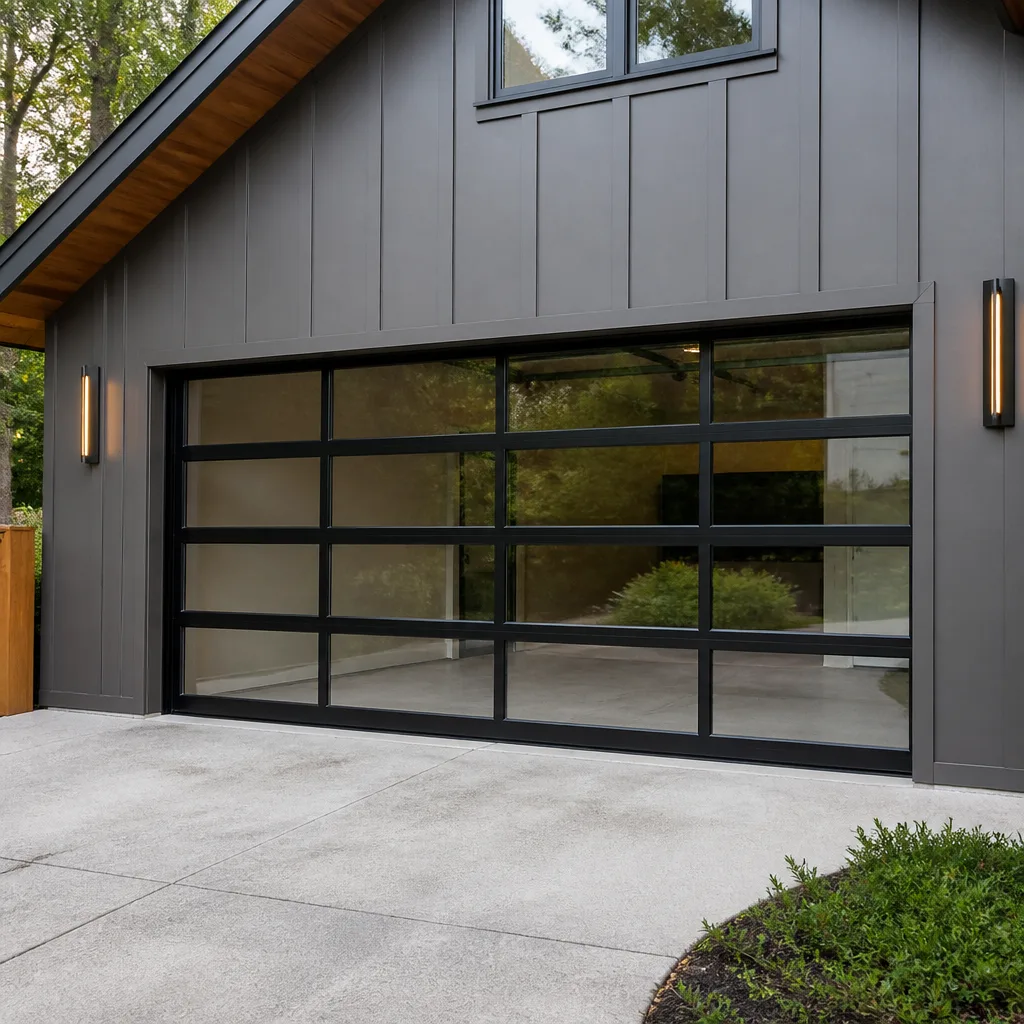
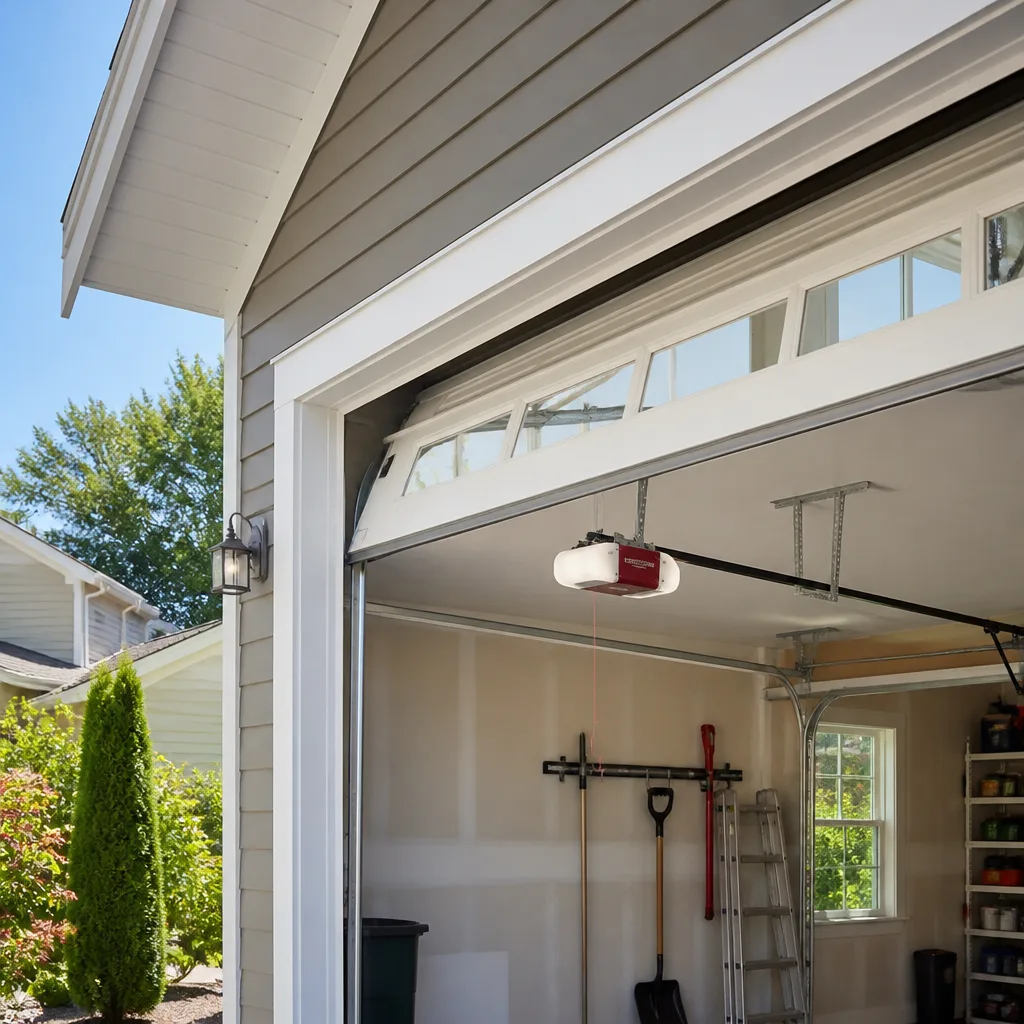
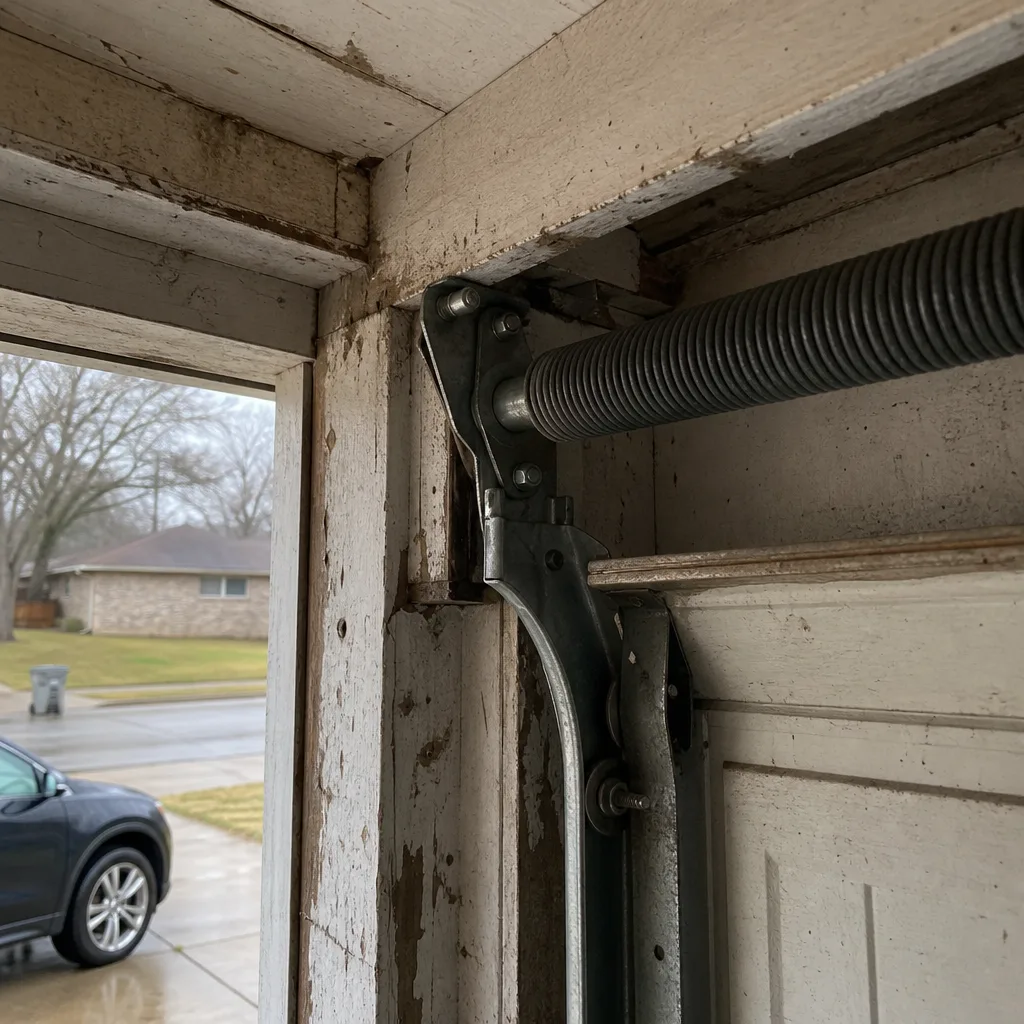 Before
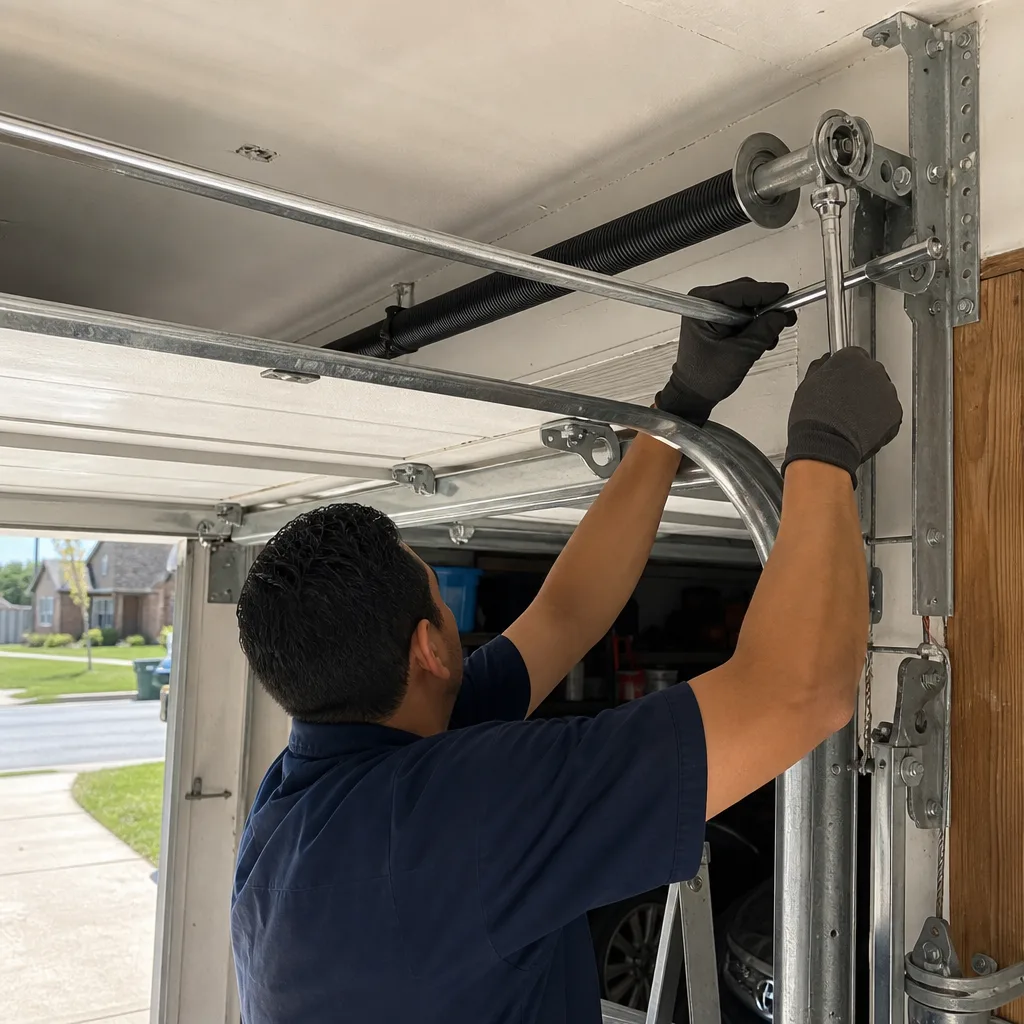 After
After Before
 After
After Before
 After
AfterHow to Hire a Garage Door Contractor in Fort Worth: A Step-by-Step Guide
Here’s a fact most Fort Worth homeowners don’t learn until after they’ve overpaid: Texas does not require a specialty license to install or repair garage doors. A plumber needs a state license. An electrician needs one. The person you hire to tension a torsion spring that holds several hundred pounds of stored kinetic energy above your car? No state license required. That means in Fort Worth, the only credential separating a qualified technician from an unqualified one is the documentation they voluntarily produce. This guide walks through every verification step before you schedule, the four questions that separate a real quote from an upsell setup, and how to read a contract so the price you agree to is the price you pay. For more guides & resources, see our blog.
Quick Answer
To hire a garage door contractor in Fort Worth, verify their Texas business registration and insurance documentation yourself, require a written itemized quote before any work starts, confirm they’ll name the failed part and its part number, and inspect the warranty language for coverage exclusions. A contractor who won’t produce documentation before scheduling is telling you something. Choose one who photographs the failed component before quoting a replacement and delivers a written price and written scope before touching anything. If you want the short version: hire the company that acts like a paper trail matters, because in Texas it’s the only protection you have.
Table of Contents
- Step 1: Verify Business Registration and Insurance Before You Schedule
- Step 2: Require a Written, Itemized Quote Before Work Begins
- Step 3: Ask the Four Questions That Separate Repairs From Upsells
- Step 4: Read the Warranty Language Like a Contract, Not a Brochure
- Step 5: Recognize the Red Flags Specific to the Fort Worth Market
- What Garage Door Work Actually Costs in Fort Worth
- What Your Job File Should Contain When the Technician Leaves
BeforeAfterStep 1: Verify Business Registration and Insurance Before You Schedule
Before a contractor sets foot on your property in Fort Worth, you need three documents. Not promises. Documents. The first is a Texas business registration. The state requires businesses operating under an assumed name (a DBA, or “doing business as” name) to file with the county clerk in the county where they operate. For Fort Worth, that’s Tarrant County. Any contractor using a business name different from their legal name should have a filed Assumed Name Certificate, and you can search the Tarrant County Clerk’s records online. If they’re operating under an LLC or corporation, you can verify their active registration through the Texas Comptroller’s office at mycpa.cpa.state.tx.us using their taxable entity search. The second document is a certificate of liability insurance. This certificate should list the contractor’s business name exactly as it appears on their registration, show coverage of at least $300,000 for general liability (industry standard for garage door work; higher is better), and be dated within the last 12 months. The third is proof of workers’ compensation coverage or a valid Texas Department of Insurance exemption filing. Here’s why the third one matters: if a technician is injured on your property and the company lacks workers’ comp, your homeowner’s insurance can be the target. Ask for the certificate. If they hesitate, that’s not a yellow flag. It’s a red one.
In our experience at Servo Garage Doors Fort Worth home, the contractors who produce these documents without being asked are the ones who also produce written quotes without being asked. The pattern holds because documentation is a habit, not a one-time gesture. We operate as an independently owned business under The Haven Standard, which means our license and insurance are ours, and the documentation system we work under is contractual. We’ll provide our insurance certificate and business registration on request. If a contractor says their insurance information is “on the truck” and then never follows up, you already know everything you need to know.
What to Ask For, In Writing
- Assumed Name Certificate or entity registration matching the name on their quote and invoice.
- Certificate of liability insurance listing your contractor as the named insured, with general liability coverage of at least $300,000.
- Workers’ compensation coverage or exemption filed with the Texas Department of Insurance.
- The technician’s name who will perform the work, before the dispatch.
Step 2: Require a Written, Itemized Quote Before Work Begins
The single most expensive mistake in Fort Worth garage door hiring is accepting a verbal quote. Under Texas law, verbal agreements are enforceable in some cases, but proving their terms is where homeowners lose. A verbal quote of “$250 for a spring replacement” becomes “$480 because the cable needed replacing too” and you have no documentation to dispute it. A written quote that lists the failed part, the part number, the replacement cost, the labor, and the scope of work is a contract, not a suggestion. And here’s what too many homeowners don’t realize: a written quote protects the contractor as much as it protects you. A contractor who writes down what they’ll do and what it costs is making themselves accountable. One who won’t is keeping their options open at your expense.
The binding elements of a written quote in Texas should include: the date, the contractor’s business name and address, a line-item breakdown of parts with part numbers, labor costs, the total, a clear scope of work statement, and the warranty terms. If any of these are missing, the quote isn’t complete. We operate under a rule we call Clause 1 of The Haven Standard: a flat, written price and written scope are delivered before any work starts. “Call for a quote” is not how we work. You get the number in writing, on paper, before a single tool comes out. That’s the only way a quote means anything.
What a Binding Written Quote Must Contain
- The contractor’s legal business name and physical address. Not just a phone number and a first name.
- A line-item parts list with part numbers. “Spring replacement” is vague. “Torsion spring, 0.225 wire diameter, 2-inch inside diameter, 31-inch length, part #243” is a quote.
- Labor cost stated separately from parts. If labor and parts are bundled into one number, you can’t evaluate either.
- The total price in dollars. Not an estimate range. A quote.
- Warranty terms in writing, including what’s covered, what’s excluded, and for how long.
- The contractor’s signature or business stamp. A typed name on a text message is not a written quote.
Step 3: Ask the Four Questions That Separate Repairs From Upsells
Here’s the most useful tool you’ll find in this guide. When a contractor comes to your Fort Worth home and diagnoses a garage door problem, ask these four questions before you approve anything:
- What is the name of the failed part? They should be able to say “your torsion spring” or “the limit switch on your opener’s logic board.” If they say “the thing that makes it go up,” you’re not talking to a technician.
- What is the part number? A real technician who stocks or orders parts can produce this. If they can’t, ask why they’re quoting a replacement they haven’t identified.
- What does the replacement part cost, on its own? This isolates the parts cost from the labor cost. If they won’t separate them, they’re hiding margin.
- Will you leave the old part with me after the replacement? This one matters more than it sounds. A technician who can hand you the failed spring, the worn trolley carriage, or the burned-out logic board is a technician with nothing to hide. If the old part “disappears,” you can’t verify the diagnosis.
These four questions do more than give you information. They tell the contractor what kind of customer you are. You are the customer who checks. The customer who checks gets the quoted price, not the discovered price. Ask them these questions in Fort Worth, and watch what happens. The technicians who answer clearly are the ones who also photograph the failed component before quoting a replacement. That’s not a coincidence. Our founding rule, written into Clause 4 of The Haven Standard, is that the customer sees the failed part before anyone quotes a replacement. We photograph the broken component, show it to you, explain what failed, and then hand you a written quote. That’s the standard. If someone can’t meet it, ask yourself what they’re protecting.
Step 4: Read the Warranty Language Like a Contract, Not a Brochure
A warranty is only as good as its exclusions. Most garage door warranties in Fort Worth follow a similar structure: parts warranty from the manufacturer, labor warranty from the contractor. The part terms come from brands like Chamberlain, Genie, Clopay, or Amarr, and they vary from one year to a lifetime on select components. But the labor warranty is where contractors differentiate themselves, and it’s where you need to read the fine print. Here’s what to look for:
“Parts and labor” is two different things. A “parts and labor warranty” means the contractor covers both the failed part and the time to replace it. A “parts warranty” means the manufacturer covers the part, but you pay the labor to have it swapped. If the labor to replace a warranty part is $150 and the part is covered, a parts-only warranty costs you $150. That’s not a warranty. That’s a discount offer.
Exclusion clauses hide in boilerplate. Common exclusions include: damage from misuse or improper operation, normal wear on specific components like cables and rollers, corrosion from coastal humidity or chemical exposure, and modification by a third party. Fort Worth sees temperature swings that accelerate spring fatigue, so pay attention to what “normal wear” covers. A spring is a wear item. If the warranty excludes “spring fatigue,” it excludes the thing most likely to fail.
Ninety days is the floor for labor, not a selling point. If a contractor leads with “we offer a 90-day labor warranty” as if it’s a premium feature, they’re telling you their standard is low. A 90-day labor warranty means if the install was done wrong and the defect shows up on day 91, you pay again. The Haven Standard’s 365-Day Done Right Promise means if the repair isn’t right, we make it right. That’s not a manufacturer term. That’s our operating rule, and it’s backed by a terms page, not a handshake. The Fort Worth market has contractors offering 30-day labor warranties because garage door repair has a high callback rate and they’re pricing in the expectation that they won’t return. Don’t reward that.
Step 5: Recognize the Red Flags Specific to the Fort Worth Market
Fort Worth has a climate and a market dynamic that create specific contractor behaviors you won’t see in other cities. Hail season runs from March through June, and with it come storm-chaser crews. These are out-of-state or transient operators who follow weather events, knock on doors with “free inspections,” and offer to handle the insurance claim for your dented garage door. The pattern: they collect an insurance assignment, install the cheapest door that meets the claim, and leave. When the cheap door fails eight months later, they’re three states away and the phone number is disconnected. If your garage door is damaged in a Fort Worth hailstorm, file the claim, get the estimate, and hire a local contractor whose physical location you can verify. See our Seasonal Garage Door Care for Fort Worth: Year-Round Homeowner’s Guide for seasonal maintenance tips.
The “same-day” pricing premium. Garage door spring replacement is a legitimate same-day job. It does not cost more because it’s happening the same day. A contractor in Fort Worth who charges a premium for “emergency” spring replacement on a Tuesday afternoon is pricing urgency, not labor. We answer calls 24/7 with a live person, including emergency garage door calls, and the price doesn’t change because the clock says 9 PM. The diagnostic and the quote happen the same way at noon or midnight: the technician looks, we photograph, we quote in writing. Speed doesn’t change the price.
The hardware bundle. This is the most common upsell in the Fort Worth garage door market: a spring replacement quote that “also includes” new cables, new rollers, new hinges, and a new bearing plate, whether they’re needed or not. The pitch sounds comprehensive. The reality is that some of these components wear on different timelines, and bundling them into a spring job means you’re replacing parts with functional life remaining. The clue is in the language: if the recommendation is “while we’re in there,” ask what specifically is wrong with the cable. If the answer is “they’re old,” ask for a photograph showing the failure. If there is no failure, there is no replacement. The failed part gets documented. The healthy parts get left alone.
What Garage Door Work Actually Costs in Fort Worth
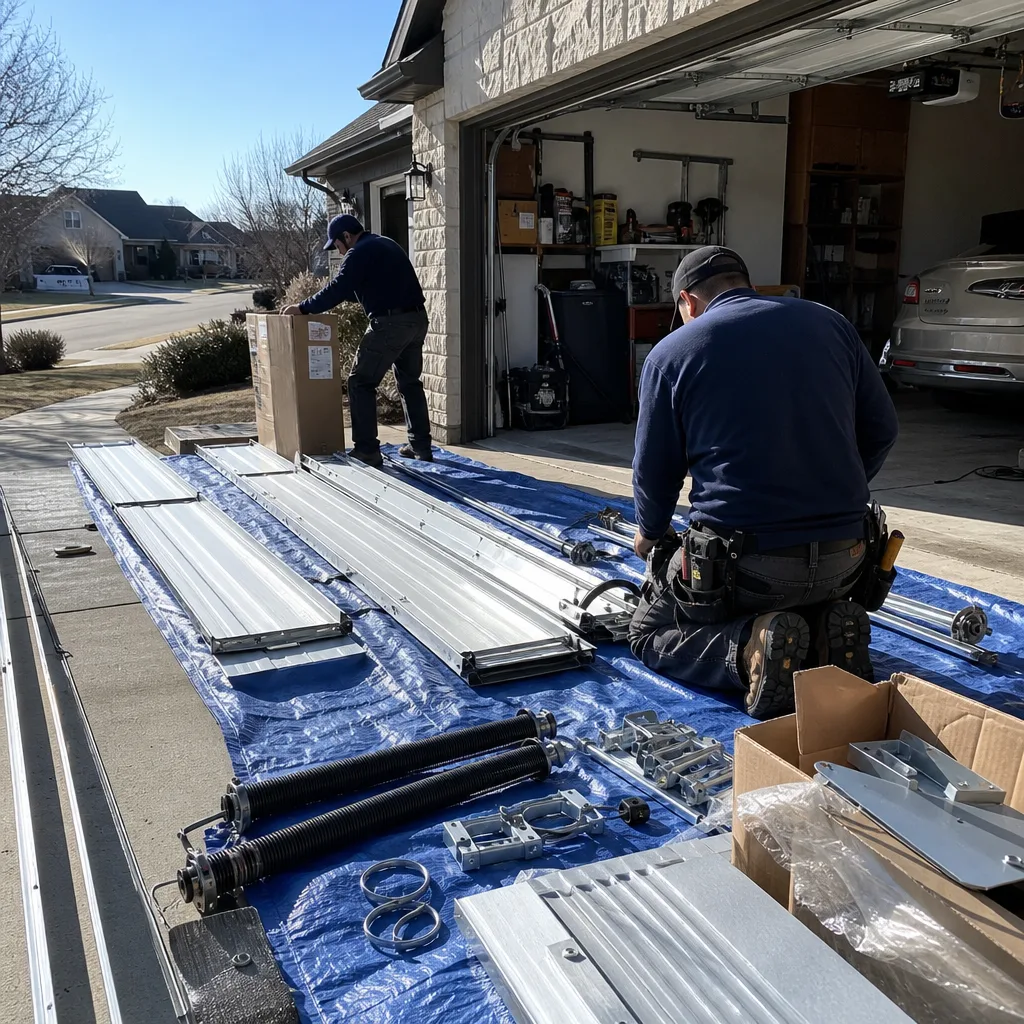
Fort Worth pricing follows national ranges with some local adjustment for part availability and market concentration. Here’s what you should expect to see on a written quote, based on what we’ve seen across the metro area in recent years. These are ranges, not quotes. Your specific door, opener brand, and failure condition determine the final written price:
- Torsion spring replacement (single spring): $180-$320, including parts and labor. Double spring setups run $260-$480.
- Cable replacement (per side): $95-$180, including parts and labor.
- Garage door opener repair (logic board, limit switch, or gear assembly): $120-$350, depending on the brand (Chamberlain, Genie, and LiftMaster are the most common in Fort Worth) and the specific component.
- Garage door opener installation (new unit, belt or chain): $425-$750, including the opener, labor, and basic accessories.
- Full garage door replacement (single door, standard size, steel, insulated): $1,100-$2,800, heavily dependent on the brand (Clopay, Amarr, Wayne Dalton) and insulation level.
- Roller replacement (set of 10, nylon): $85-$160.
One thing that should never appear on a Fort Worth quote: a line item for “service call fee” that’s non-refundable even when you hire the company. Some contractors charge a diagnostic fee that’s waived if you proceed with the work. That’s reasonable. Others charge the fee regardless, which means you pay to receive a quote. We don’t operate that way. The quote is free. The written price and written scope are delivered before any work starts, and if you bring us a written estimate from another company, we’ll provide a Free Second Opinion on it. No coupon required. Bring the paperwork and we’ll review it line by line.
What Your Job File Should Contain When the Technician Leaves
Here’s what the end of a properly-documented garage door job looks like. The technician should hand you or email you, before they leave your Fort Worth driveway, a record that includes: a written description of what was found (the failed part, its condition, the measurement or diagnostic reading that confirmed the failure), the written quote you agreed to, the written work order matching that quote, and a photo record of the completed work. If your tech changed a spring, you should see a photograph of the old broken spring and a photograph of the new one installed. If they replaced a logic board, you should see the old board and the new board in place. If any of this isn’t provided, ask for it before the tech leaves. A contractor who documents their work is a contractor who does their work.
This is the standard we built Servo on. The documented photo record on every visit isn’t an add-on and it isn’t optional. It traces back to the founding rule from 2015: the customer sees the failed part before anyone quotes a replacement. Every job closes with a documented record of findings and completed work delivered to the customer. If you’re comparing contractors in Fort Worth and one offers this as a feature and another doesn’t mention it, that’s your answer. You can also read more about our approach to Garage Door Repair in Fort Worth if you want the details on how we diagnose and price the most common failures. For full door replacements, we have a separate walkthrough on Garage Door Installation in Fort Worth that covers measuring, ordering, and what to expect on install day. And if your opener is the problem rather than the door itself, the guide to Garage Door Opener Repair & Installation in Fort Worth covers the specific brands and failure modes we see most often, including Chamberlain and Genie units that outlast their logic boards.
Common Mistakes to Avoid
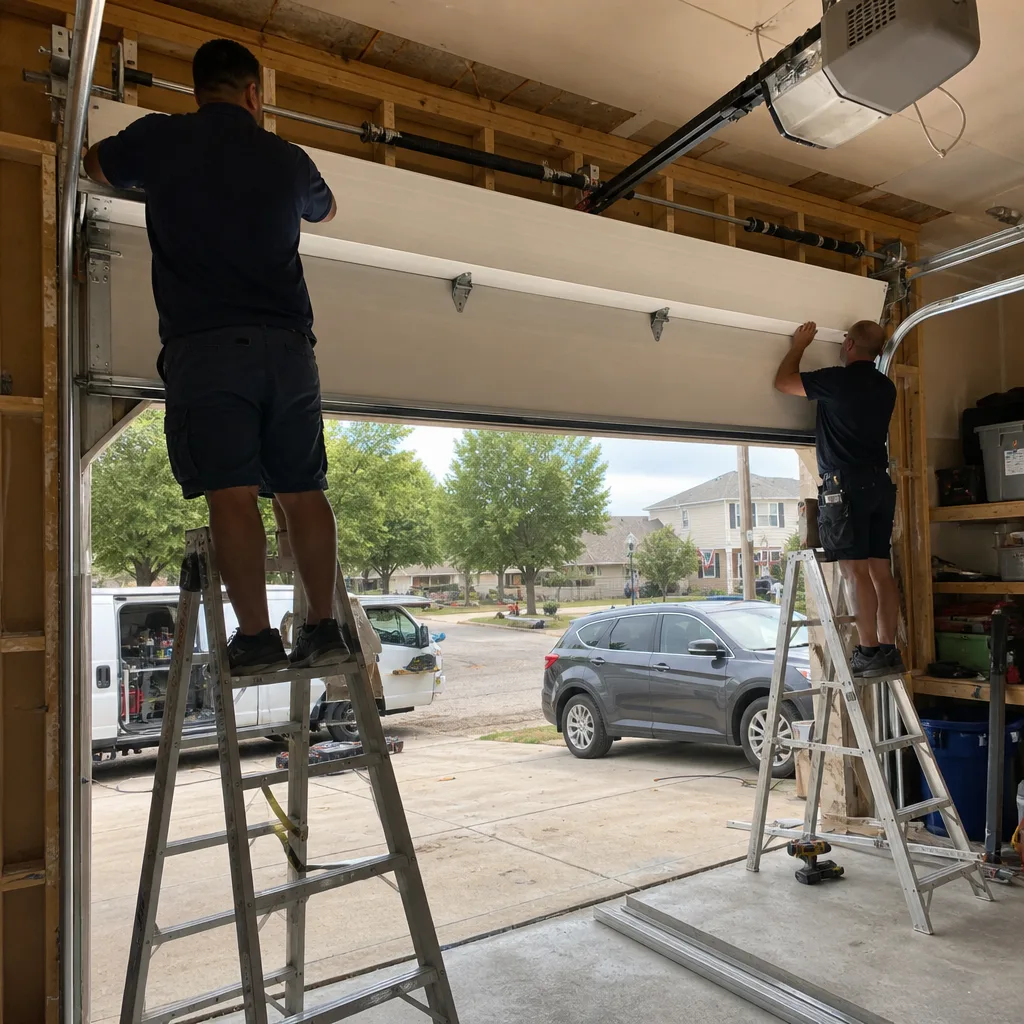
- Accepting a verbal quote. In Fort Worth, if it’s not written and itemized, it didn’t happen. A verbal quote offers you no documentation to dispute a price change, and Texas courts move on documentation, not recollection.
- Skipping insurance verification. General liability insurance is not optional. Asking for a certificate takes two minutes and can save you from paying for damage caused by someone else’s technician.
- Choosing urgency over documentation. “We can be there in 20 minutes” is a scheduling promise, not an expertise credential. A contractor who can arrive fast and still produce a written quote is fine. One who uses the speed to skip the quote is scaling their pricing with your stress.
- Falling for the storm-chaser inspection. After a Fort Worth hailstorm, contractors with out-of-state plates and no local address show up with free inspections and insurance paperwork. Hire a local company with a physical location you can visit.
- Bundling healthy parts. “While we’re in there” is not a diagnosis. If a component hasn’t failed and can’t be shown failing in a photograph, it doesn’t need replacing.
- Signing before reading the warranty exclusion list. The exclusions paragraph is where warranties disappear. Read it before you agree to anything. A 90-day labor warranty is the floor in this industry, not a premium feature.
- Not asking who the technician is. You should know the name of the person who will work on your door before the dispatch. Background-checked, uniformed technicians should be standard, not a selling point. If a company can’t tell you who’s coming, you don’t know who’s on your property.
When to Call a Professional
Some garage door issues are annoying. Others are dangerous. If your door makes a loud bang and stops opening, you likely have a broken torsion spring, and a torsion spring under tension stores an enormous amount of energy that can cause serious injury if it releases unexpectedly. Do not attempt to disassemble a torsion spring yourself. The same applies to cable failures, which often occur alongside spring failures and involve tensioned cable under load. If your door is off its tracks, if the cables are frayed or snapped, or if the opener is making a grinding noise and the door is partially open, call a professional. These are not DIY repairs. Servo Garage Doors Fort Worth offers free estimates in Fort Worth - call (682) 297-6476 for a written quote before any work starts.
Frequently Asked Questions
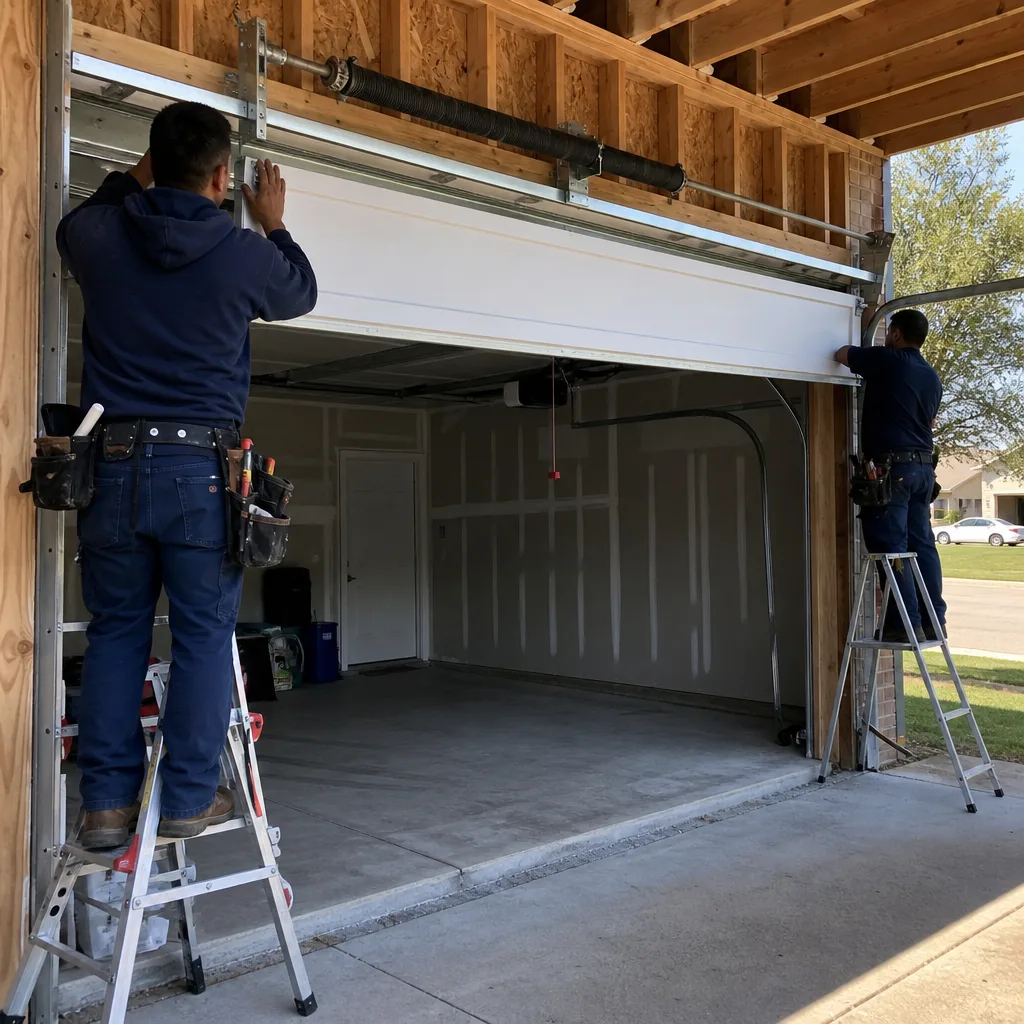
Texas does not require a specialty license for garage door installation or repair, which means there is no state license number to verify for this trade. What you should verify instead is that the contractor operates under a registered business name with Tarrant County, carries general liability insurance, and can provide workers’ compensation coverage or a valid exemption filing. A contractor who voluntarily provides this documentation is demonstrating the standard they hold themselves to. Call (682) 297-6476 and ask us for our documentation if you want to see it before scheduling.
You can expect to pay $180 to $320 for a single torsion spring replacement in Fort Worth, including parts and labor, with double spring setups running $260 to $480. The price depends on the spring wire gauge, door weight, and spring cycle rating. Be wary of $99 quotes that bundle mandatory “required” hardware to reach a realistic total. Get the quote in writing before approving any work. For an exact written quote on your door, call (682) 297-6476 - the estimate is free.
Spring replacements and most cable failures are same-day jobs because the parts are standard and the labor is measured in hours. A broken spring in the Fort Worth heat is also a security risk because the door is the largest unsecured opening to your house. We keep common spring sizes on the truck and answer calls 24/7 with a live person. The price doesn’t change because the repair is same-day. Call (682) 297-6476 and we’ll tell you when the technician can be there and name them by name before they arrive.
Not if the quote is written and itemized in the first place. The point of a written quote is that the diagnostic has already been done, the failed part identified, and the price documented. If a contractor quotes verbally and then revises after they “see more,” that’s not a revision. That’s bait. Our process under Clause 1 of The Haven Standard is a flat, written price and written scope before any work starts. If your door needs additional work beyond the original scope, you get a second written quote before that work begins, never after. Call (682) 297-6476 for a quote that’s fixed when you approve it.
Usually yes, and it’s not an upsell. Torsion springs are installed in pairs on most Fort Worth residential doors because they share the same cycle rating. If one spring broke at 10,000 cycles, the other spring has been through the same 10,000 cycles and is likely close to failure. Replacing one means your door is tensioned unevenly and the second spring will fail soon. Replacing both restores balanced tension and resets the cycle clock for both springs. The old broken spring should be left on-site or photographed so you can verify the diagnosis. For an exact assessment of your spring condition, call (682) 297-6476.
The most effective negotiation strategy is to require written quotes from multiple companies and compare them line by line. Bring a competing written estimate to us and we’ll provide a Free Second Opinion on it, with no coupon or code required. A contractor who gives you a written, itemized quote is giving you the information you need to evaluate the market. A contractor who won’t isn’t negotiating in good faith. Call (682) 297-6476 for a written quote you can use as a comparison baseline.
The Bottom Line
Texas puts the burden of verification on the homeowner, which means hiring a garage door contractor in Fort Worth is a documentation exercise, not a vibes exercise. Verify the business registration and insurance before you schedule. Require a written, itemized quote before any work starts. Ask the four questions and insist on seeing the failed part photographed and left on-site. Read the warranty exclusions like a contract. Avoid storm-chasers after hail season and “same-day” pricing premiums that weren’t disclosed upfront. The contractor who documents everything is the contractor who charges what they quote and fixes what they diagnose. For a full overview, read The Complete Guide to Garage Door in Fort Worth. In a state with no garage door license requirement, the paper trail is the license. That’s the standard we built Servo on in 2015, and it’s the standard you should hold every contractor in Fort Worth to.
Written by Marcus Deller, Owner at Servo Garage Doors Fort Worth, serving Fort Worth since 2015.