
Full 25-point door and opener safety check with every visit - springs, cables, rollers, tracks, and your LiftMaster or Chamberlain opener included
You get a price before we start. It does not change when the truck arrives.
 Before
 After
After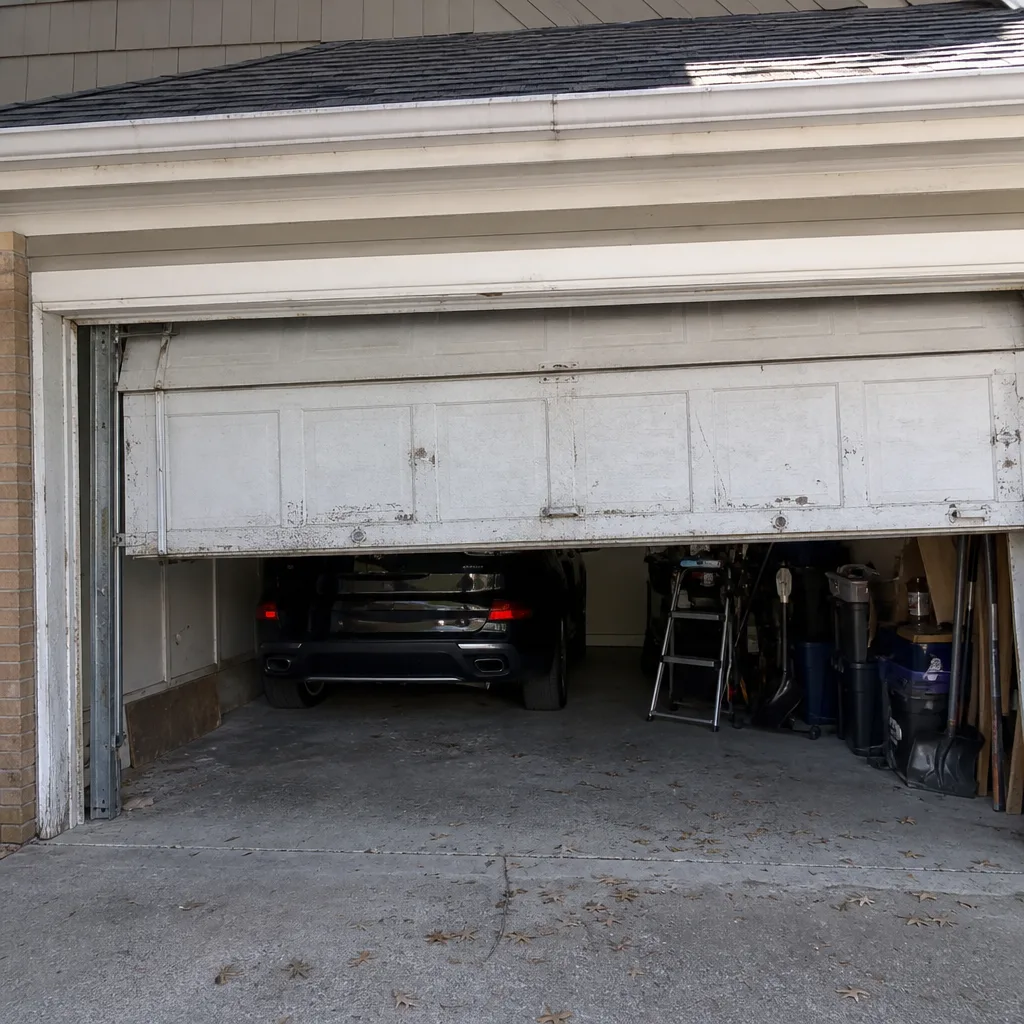 Before
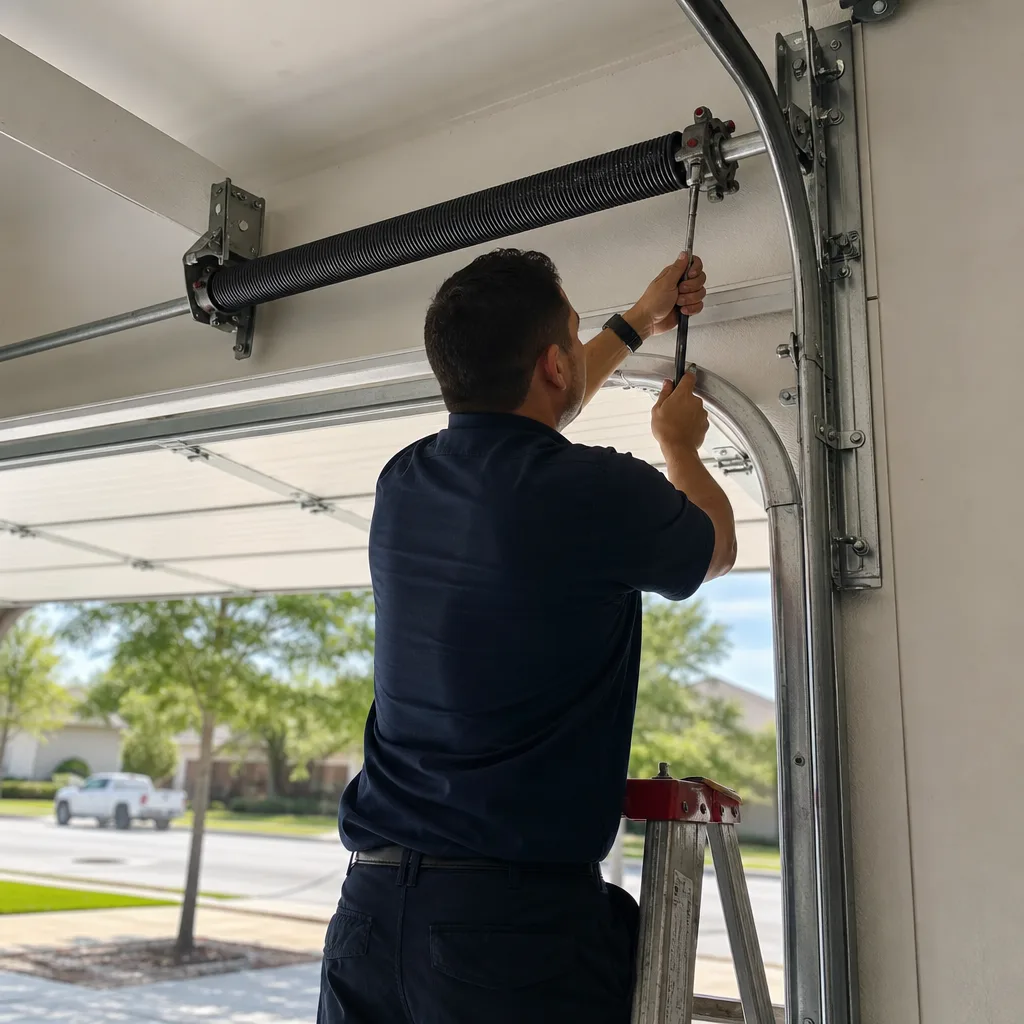 After
After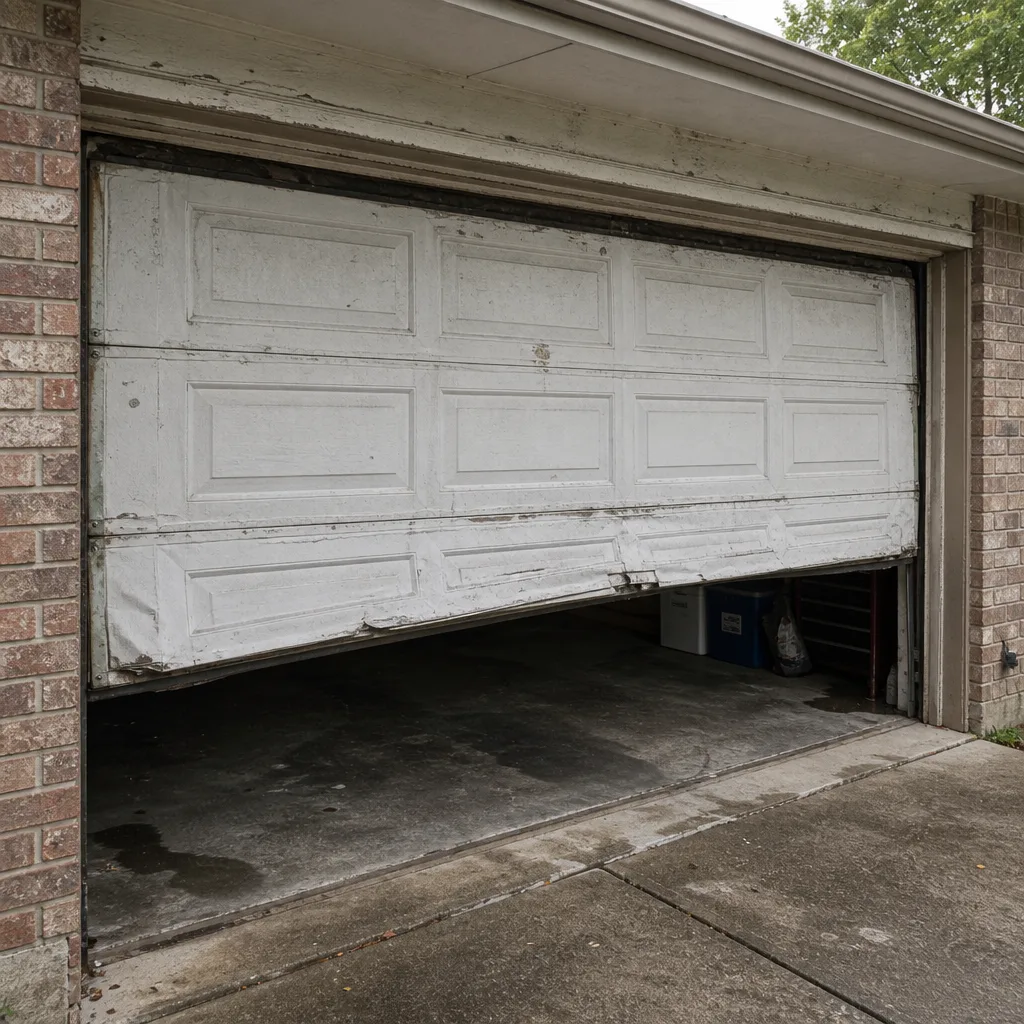 Before
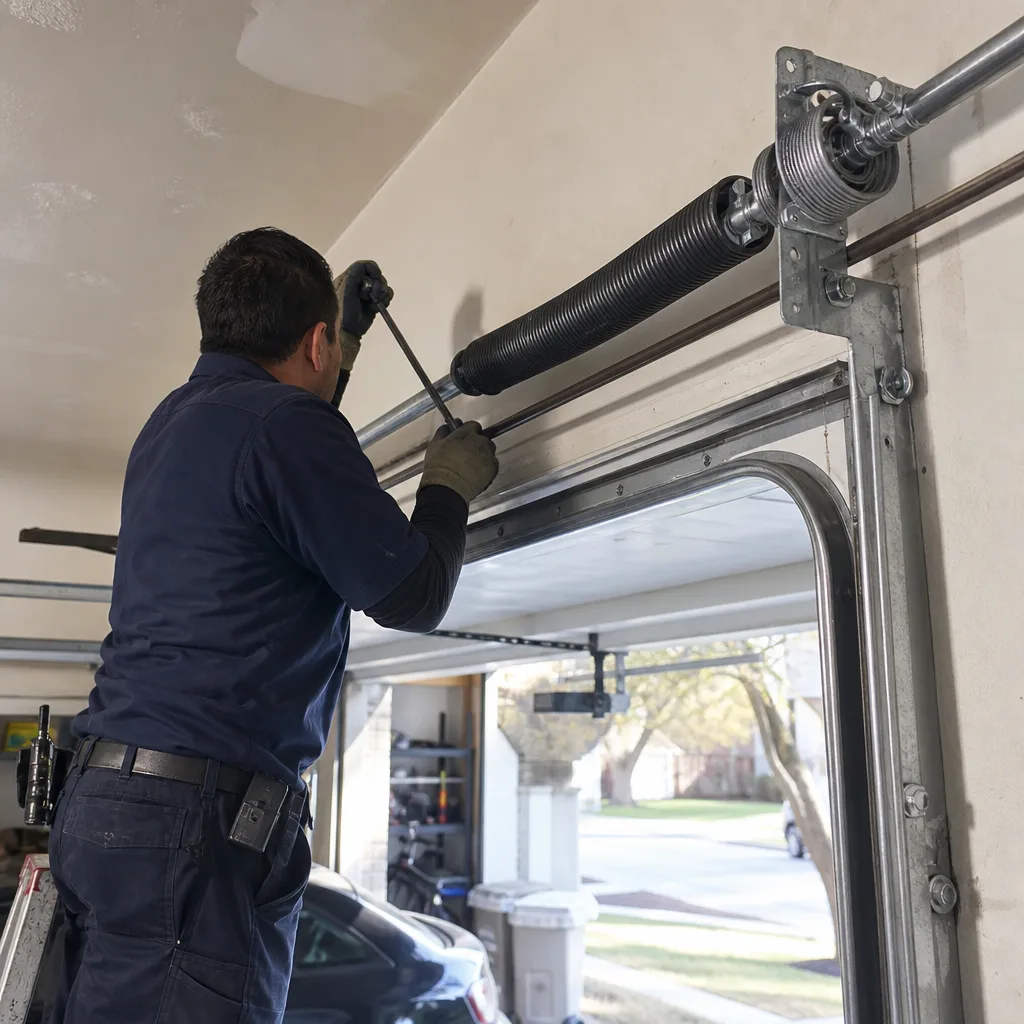 After
AfterWayne Dalton Weather Seal Replacement: The Fort Worth Owner’s Guide
We stock and install Wayne Dalton-compatible weather seal replacement throughout Fort Worth, with most jobs running $110-$220 for parts and labor, and same-day service available when it’s called in before early afternoon. You’ll know this part has failed when you can see daylight under the bottom of a closed door, or when a fine line of dust and crushed leaves has worked its way across your garage floor after every north wind. The bottom seal on a Wayne Dalton door takes more abuse than any other component, because it’s the only part of the system that touches the ground thousands of times a year.
In Fort Worth, we replace this part because the rubber compound hardens. The Texas sun raises the surface temperature of a closed door well past 140 degrees on an August afternoon, and the seal loses its flex within four to six years. Once it can’t compress, it stops conforming to the slab, and the gaps start where the concrete has settled. Marcus Deller and his crew see this on Wayne Dalton doors all over the metro: an owner assumes the door is out of square, but the seal is simply spent.
Which Wayne Dalton Models This Applies To
Wayne Dalton uses a T-style bottom weather seal as its standard profile across most residential lines. If your door is a Classic Steel Model 9100, 9600, or 9700, a ThermoMark Model 5150 or 5155, or a carriage-house door from the 8000 or 9000 series, you almost certainly have the T-channel design: a single vertical stem that slides into a retainer at the bottom of the panel, with a bulb below that folds when the door closes. The retainer itself is aluminum or vinyl, and it is the part that corrodes first when fertilizer, salt, or pooled rainwater sits against it. The seal itself is a wear item; the retainer often gets replaced alongside it at no extra labor.
There is one compatibility gotcha worth knowing before you order a seal yourself: Wayne Dalton changed the T-stem width between older and newer production runs, and a seal that fits a 2005-era 9100 may not seat in a 2018-era door without the matching retainer. This is why we carry both the current T-profile and the legacy width on the truck. On the OEM versus aftermarket question, we install a US-made aftermarket equivalent that matches Wayne Dalton’s durometer rating (the measurement of rubber hardness) and outlasts the factory seal in North Texas heat by roughly two years, for about the same price. If you have a written estimate from anyone referencing an OEM-only part number, bring it in; a free second opinion on it costs you nothing.
Signs Your Wayne Dalton Weather Seal Replacement Is Failing
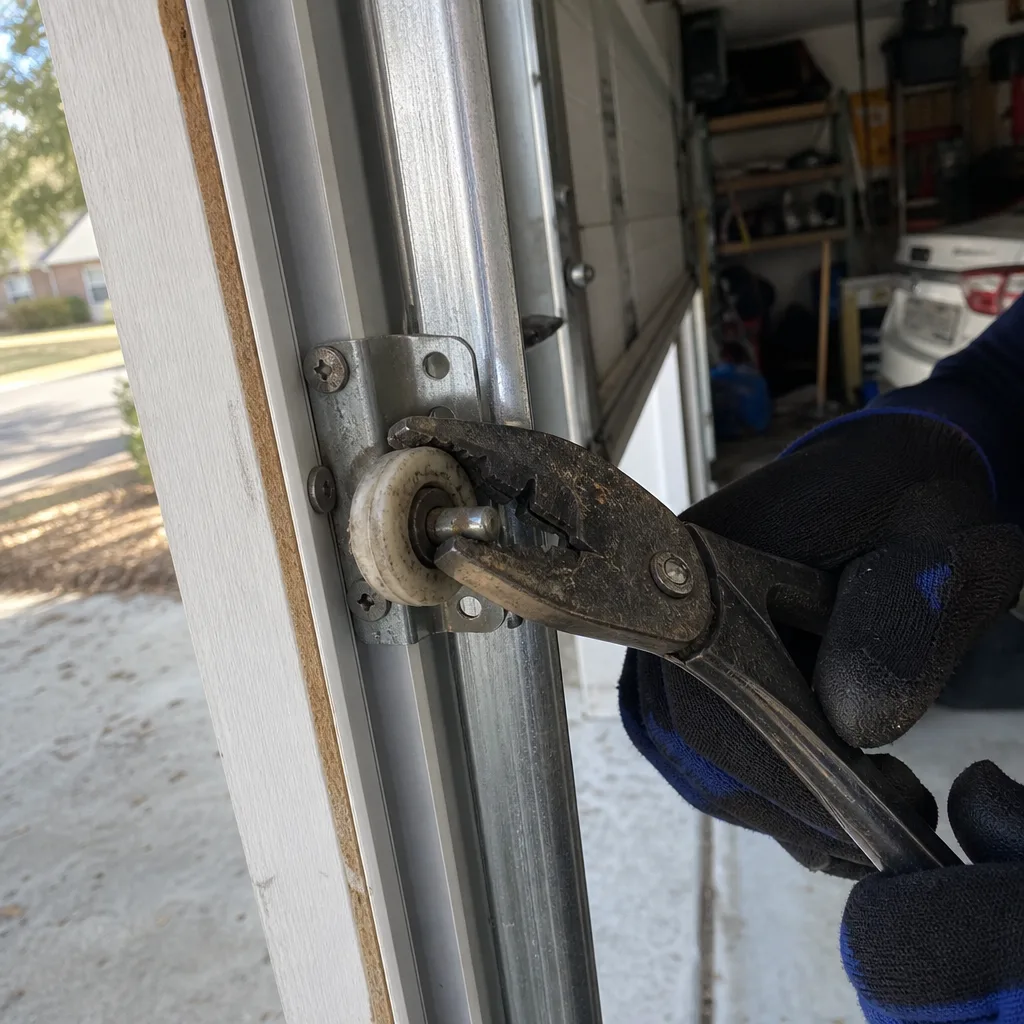
- Daylight under the door. If you can see a sliver of light beneath a closed door, the seal has torn, compressed past recovery, or the retainer has pulled away from the panel. Energy loss and pest entry start the same day this gap appears.
- Dust lines across the floor after wind. A fine, straight line of grit or leaf fragments on the garage floor points to a specific gap, not general draft. Run a dollar bill under the door; if it slides freely in spots and drags in others, the slab has settled and the seal is no longer making contact where it used to.
- The bottom edge of the door shows impact damage. If a child’s scooter or a kicked stone has torn a chunk out of the rubber, the seal must be replaced, not patched. A torn seal catches on the slab and worsens with every cycle.
- The seal is visibly flattened or cracked. A healthy Wayne Dalton bottom seal feels pliable to the touch, even in January. If it feels stiff and shows surface cracks, the compound has oxidized past the point of recovery.
- Water comes in under the door during rain. Fort Worth storms are often sudden and heavy. If water seeps under a closed door, the seal is no longer shedding water to the outside edge, and the weatherproofing has been compromised. The fix is a new seal and, often, a retainer realignment.
BeforeAfterReplacement Cost & What’s Included
In Fort Worth, a Wayne Dalton weather seal replacement typically runs $110-$220 installed. That range is parts and labor together, not an estimate that climbs after we arrive. The spread depends on three things: whether we are replacing only the rubber seal or the retainer as well, the door width (a 16-foot door uses more material than a single-car 8-foot door), and whether the retainer has corroded to the point that it needs to be re-anchored rather than reused.
Every weather seal replacement includes a written flat price before any work starts, per Clause 1 of The Haven Standard. You’ll also receive a documented photo record: the failed seal as found, the new seal seated in the retainer, and the closed door with a gap gauge proving full contact along the slab. The labor is covered by our 365-Day Done Right Promise. If the seal does not perform, we make it right.
DIY or Call Us?
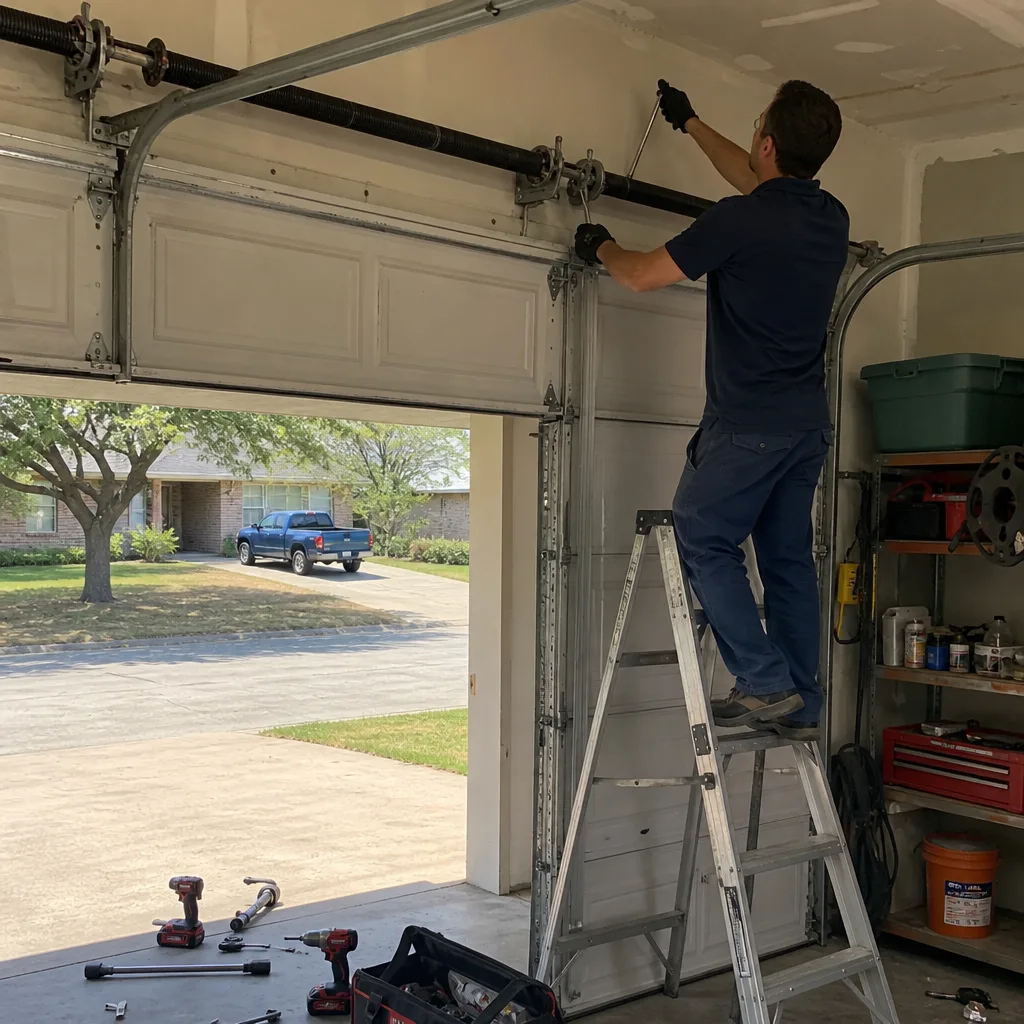
Weather seal replacement on a Wayne Dalton does not involve torsion spring tension, so it is among the few garage door parts an owner can safely attempt. The genuine risk is compatibility: buying a seal with the wrong T-stem width or the wrong retainer profile and discovering it only after the old seal has been cut out. Removing a Wayne Dalton bottom seal takes about ten minutes if you know which retainer you have; reseating the wrong part takes a lot longer, and the door will not close cleanly until it is corrected.
What you can safely check is the condition. Slide a dollar bill under the door at three points: left, middle, right. If it drags everywhere, your seal is doing its job. If it slips free in a spot, you need a replacement. From there, we’re at (682) 297-6476. Wayne Dalton parts are what we stock; we also carry parts for LiftMaster, Chamberlain, and Genie openers, so if the issue turns out to be something beyond the seal, the truck already has what we need.
Name the part. Quote the range. Do the work.
FAQs
In Fort Worth’s climate, a Wayne Dalton bottom seal lasts 4 to 6 years, and the heat is the primary reason it degrades. Constant UV exposure and 140-degree surface temperatures on the door panel harden the rubber compound until it can no longer compress against the slab. Aftermarket equivalents of the correct durometer rating often add two years over the factory seal. Call (682) 297-6476 if you’re seeing daylight under your door; we’ll give you a written price before any work starts.
No. Once the rubber has torn, cracked, or lost its flex, there is no repair that restores it. Adhesives and patching compounds fail within weeks because the seal flexes on every single door cycle. Replacement is the repair. The only decision is whether to also replace the retainer, and our technicians will show you photographs of both parts before you decide.
A standard single or double garage door seal replacement takes 30 to 60 minutes on site, including removing the old seal, cleaning the retainer channel, seating the new seal, and testing the closed door for full contact along the slab. If the retainer needs replacement as well, add 20 to 30 minutes. We quote the job flat, so the time does not change your price.
Yes. We carry Wayne Dalton-compatible T-style seals in both the current and legacy stem widths, along with matching retainers, on every service vehicle. That means most Fort Worth weather seal replacements are completed on the first visit, not scheduled for a second trip. Call (682) 297-6476 and we’ll match the part to your model before we arrive.
Written by Marcus Deller, Owner, Servo Garage Doors Fort Worth, serving Fort Worth and nearby areas.
Servo Garage Doors Fort Worth is an independent service provider and is not affiliated with Wayne Dalton. All brand names are used for compatibility identification only.